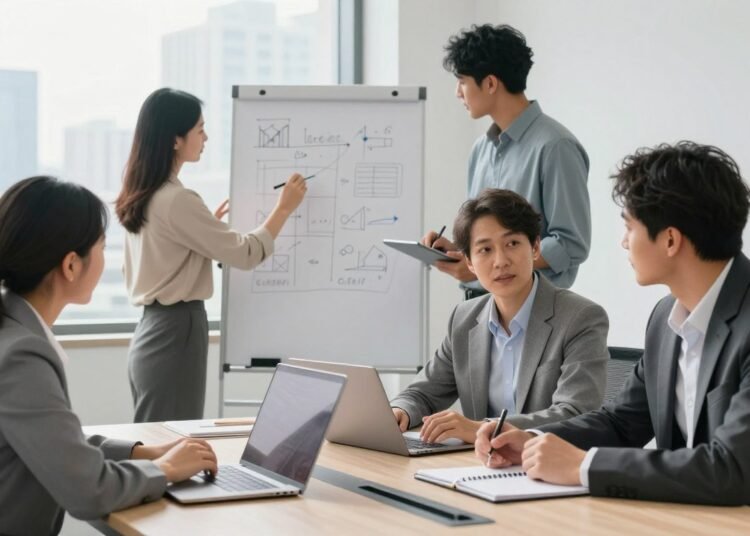
What if the most valuable asset in your career isn’t something you do alone, but how you connect and cooperate with others?
Industry standards confirm that collaborative effort is the heart and soul of any modern workplace. It’s the engine that drives projects forward and turns individual ideas into collective success.
Developing these essential interpersonal abilities allows you to unlock your full potential while maintaining the independence needed to excel. Research shows that these soft skills are what enable every group to have productive interactions and achieve shared goals effectively.
When you master these cooperative habits, you help create an environment where every member feels safe, valued, and empowered to innovate. Building this capacity requires consistent effort, especially with many people working on the same fast-paced project.
Learning about the different types of collaborative techniques and how to build them is your first step toward significant professional progress. This guide explores how to refine your approach to ensure every group endeavor results in high-quality output and personal growth.
Key Takeaways
- Collaborative abilities are fundamental to success in today’s professional environment.
- Strong interpersonal skills enable groups to interact productively and meet organizational objectives.
- A supportive workplace culture fosters safety, value, and innovation among members.
- Developing these competencies requires ongoing dedication, particularly in dynamic, multi-person projects.
- Understanding various cooperative methods is crucial for advancing your career.
- Refining your collaborative approach leads to better project results and professional development.
- Effective teamwork balances individual contribution with group synergy.
Introduction to Teamwork Skills and Their Impact
Consider the sheer volume of time dedicated to group interaction in the modern professional landscape. Recent studies show the average employee spends over 11 hours weekly in meetings. At larger companies, this number climbs to nearly 13 hours.
This significant time investment underscores why collaborative abilities are critical. Gallup research identifies strong teamwork as a primary antidote for dropping engagement rates. It significantly enhances trust, communication, and cooperation across the staff.
The Agile Manifesto principles echo this priority. They value “individuals over processes and tools,” highlighting the human element in any cooperative effort. When this collective time is used properly, it yields major benefits.
Employees gain a clearer understanding of their individual tasks. This clarity boosts overall productivity for the entire organization. Developing this capacity is a continuous process that transforms how a group functions.
By focusing on these core abilities, you ensure every member contributes to shared success. Your workplace becomes a hub of innovation, not a collection of isolated departments.
Defining the Core Elements of Effective Collaboration
Breaking down collaborative success reveals two primary categories of abilities: those you cultivate within yourself and those you direct toward others.
Personal skills are internally focused. They allow an individual to manage their role and responsibilities effectively within a collective effort.
Affiliative skills are outwardly focused. They promote positive cooperation and interaction with other members of the group.
This specific mix of soft skills is the engine that powers any group’s effort. It ensures every contribution is recognized and utilized.
Communication acts as the central nervous system connecting these elements. It keeps everyone aligned on shared goals and moving in the same direction.
When a team builds trust through this defined process, a powerful shift happens. Members feel safe to share ideas and solve complex problems without friction.
Understanding these components lets organizations tailor their learning programs. The result is a strong culture where every person participates fully in the journey.
Enhancing Communication for Better Collaboration
The bridge between a good idea and a great outcome is built with the bricks of clear, attentive conversation. Without strong dialogue, even the most talented group can struggle to meet its objectives.

Active Listening Techniques
True listening is more than hearing words. It involves giving your full attention to the other person. Use nonverbal cues like eye contact and nodding to show you are engaged.
This practice means focusing on understanding the speaker’s message, not just planning your next reply. It makes every member feel valued and understood.
Clear and Concise Messaging
Express your ideas and instructions in a simple, direct way. This clarity keeps everyone on the same page, especially during complex projects.
When information is siloed, others lack a complete picture of progress. This leads to confusion and errors. Frequent, straightforward updates are essential for smooth operation.
By mastering these two core communication skills, you build a foundation of trust. Your team will collaborate more effectively and achieve better results together.
Building Trust and Accountability in Teams
The foundation of any high-performing group isn’t just talent; it’s the invisible bond of trust and personal responsibility. When individuals take ownership of their work, the entire unit operates with greater efficiency and purpose.
This creates a culture where people feel safe and valued. A key part of this foundation is developing mutual respect among all participants.
Developing Mutual Respect
Accountability means completing your tasks with care and on time. When everyone does this, trust grows naturally among team members.
This organized approach prevents a damaging blame game in the workplace. Building this trust requires time and a combination of other soft skills.
Respectful colleagues avoid negative reactions during challenges. They approach disagreements with openness, not hostility.
This is especially vital for managers. Disrespected staff may withhold their full effort or innovative ideas.
By fostering these values, you keep the group united. Every member feels valued for their unique contributions, powering collective success.
Conflict Resolution and Problem-Solving Strategies
Disagreement within a group is not a sign of failure, but a natural byproduct of diverse perspectives working toward a common goal. The key is to manage these moments productively.
Constructive conflict surfaces opposing ideas. This encourages a team to try new ways of working and think outside the box. It can be a powerful catalyst for innovation.
Negotiating Compromises Effectively
Individuals with solid conflict resolution skills listen without judgment. They address issues promptly and focus on finding solutions, not winning arguments.
When an agreement seems out of reach, knowing how to respectfully negotiate a compromise is vital. This keeps the entire group moving forward toward its objectives.
Problem-solving is a core teamwork skill that helps teams overcome challenges efficiently. A collaborative group working together on solutions saves valuable time and resources.
This approach also leads to better decision-making. It allows a team to think clearly and select the most effective path to reach its goals. Addressing small issues early prevents them from becoming major obstacles to productivity.
Essential Teamwork Skills for Effective Group Collaboration
Several established models exist to diagnose a team’s health and provide a clear roadmap for enhancing its collective performance. These frameworks help you move beyond guesswork to target specific areas for development.
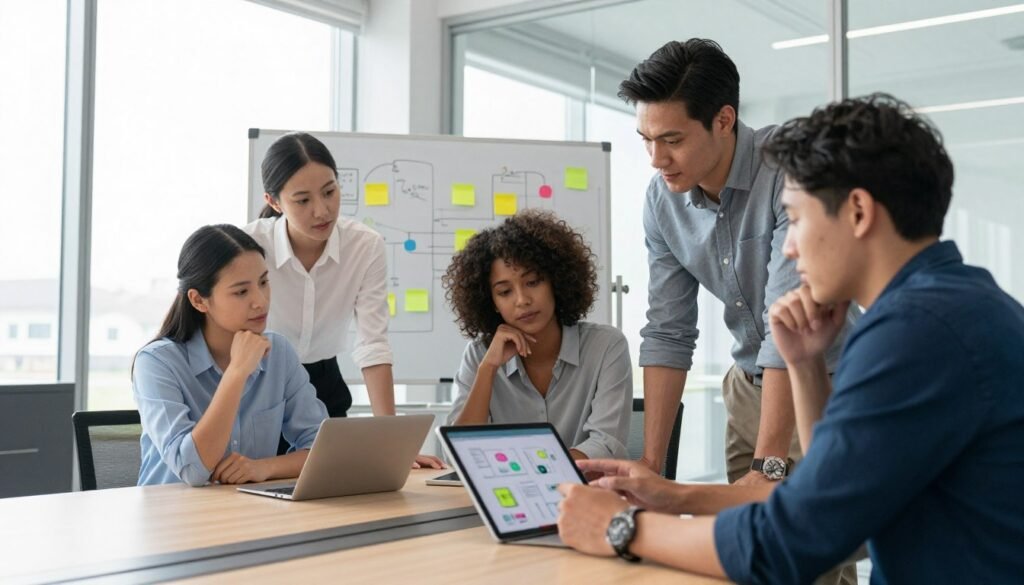
The GRPI model is a foundational tool. It ensures a group aligns on goals, roles, procedures, and interpersonal relationships before a project even begins. This clarity prevents confusion from the start.
Another classic model describes the natural stages groups experience. Teams form, storm through initial conflicts, norm by establishing rules, and finally reach a performing state. Understanding this process helps members navigate challenges.
More advanced models like T7 and Hackman identify critical success factors. They look at elements like trust, talent, clear direction, and expert coaching. A troubled team often lacks one of these core conditions.
Google’s Project Aristotle research highlighted psychological safety as a top factor. People must feel safe to share ideas without embarrassment for a team to excel. Using these models allows for precise analysis and targeted improvement strategies to help your team work together better.
Leveraging Technology and Organization for Team Efficiency
Modern collaboration hinges on more than just good intentions. It requires a strategic blend of technology and disciplined organization. This combination is the backbone for coordinating the efforts of a whole group.
Utilizing Digital Tools and Scheduling
Digital platforms like Notion create a central workspace for everyone. They help with project planning, delegating tasks, and monitoring progress in real time. Proper time management means coordinating with others, not just making a personal list.
Eliminating distractions is a major challenge during complex digital work. These tools keep information shared and organized. This ensures every member has the resources needed to complete their tasks.
Platforms like Growthspace strengthen the underlying soft skills. They use matching algorithms to connect employees with expert coaches. This develops the collaborative abilities needed to use technology effectively and help the team succeed.
Leadership, Delegation, and Role Clarity
The effectiveness of any group hinges on clear roles and the intelligent distribution of work. Even talented individuals can hinder progress if ego conflicts with cooperation.
McKinsey Consulting notes that “superstars” might have ego issues that get in the way of productivity. Leaders must monitor dynamics closely.
Sometimes, replacing a conflicting member is necessary for the team’s health. This ensures the collective goal remains the priority.
Empowering Team Members
Empowerment involves giving people the autonomy to make decisions. This builds confidence and improves the overall quality of the work.
When individuals feel trusted, they invest more effort. They are more likely to share ideas and solve problems creatively.
This trust is a core leadership skill. It transforms a group of people into a cohesive, high-performing unit.
Effective Delegation Strategies
The strongest leaders know how to delegate workloads appropriately. This prevents any single person from having too many tasks.
Overload leads to errors and burnout. Team members must also know when they are taking on too much.
Saying “no” to a surplus of work prevents major workflow issues. Start by clearly defining roles and responsibilities.
Open communication about everyone’s bandwidth is essential. This balanced approach ensures every member contributes to the best of their ability.
Personal Development and Soft Skills Improvement
Your ability to contribute to a group’s success is directly tied to your commitment to continuous self-improvement. Focusing on your interpersonal attributes transforms how you engage with colleagues and complete shared tasks.
Self-Awareness and Emotional Intelligence
Being self-aware helps you track your own feelings. You can recognize when you are reacting harshly in tense situations at work. This awareness is the first step toward better self-regulation.
Ask for honest feedback about your soft skills. This can feel vulnerable, but weaknesses are just areas for growth. You can also improve by observing peers who excel at active listening.
Setting clear goals is essential for personal development. Change will not come if you do not know what you are working toward. Developing emotional intelligence lets you understand how your actions affect others.
This builds respect and smoother communication within the team. By focusing on these improvements, you become a more effective member who can positively impact any project.
Practical Examples and Real-World Case Studies
Concrete examples from major organizations demonstrate how focusing on individual talents fuels collective achievement. These real-world stories provide the best blueprint for applying collaborative principles.
Success Stories in Team Collaboration
Consider the work of Jason Ho, founder of Strengths School. As Southeast Asia’s first Gallup StrengthsFinder Certified Platinum Coach, he brings over 11,000 hours of experience.
His workshops for firms like DHL and VF Corp show a proven method. The process helps people discover their innate talents rather than forcing a generic mold.
This focus allows individuals to contribute their best. A group where everyone understands their strengths collaborates with more trust and purpose.
These case studies offer a clear roadmap. Investing in professional development helps any team set shared goals and improve performance.
Conclusion
Ultimately, the strength of any organization lies in its people’s ability to unite around common objectives and support one another. These collaborative abilities are fundamental for improving dialogue and boosting output across all company sizes.
With strong listening, trust, and problem-solving, any group can perform with greater confidence in daily tasks. These interpersonal habits help teams stay organized and complete projects effectively.
By practicing these cooperative habits daily, you help your group grow more connected. Remember that soft skills form the foundation of a high-performing, inclusive workplace.
We encourage you to continue your professional journey. Seek feedback and observe the successful habits of your peers to foster ongoing improvement.
FAQ
What are the most important elements for a group to function well?
The foundation of any successful group is built on a few key parts. Clear, shared goals give everyone a common target. Open communication and active listening ensure all ideas are heard. Mutual trust and clear accountability mean each person takes ownership of their tasks. Finally, a focus on respectful conflict resolution keeps the process moving forward.
How can I become a better listener during meetings?
Great listening is an active skill. Give the speaker your full attention, avoid interrupting, and watch for non-verbal cues. Ask clarifying questions to confirm understanding. Summarize what you heard before responding. This practice builds trust and ensures you fully grasp feedback and shared ideas, preventing misunderstandings that slow down work.
What does ‘accountability’ really mean in a collaborative setting?
Accountability means each member takes responsibility for their commitments to the group. It’s about reliably completing your tasks on time and to the agreed standard. When everyone is accountable, trust grows because people know they can depend on one another. It turns shared goals into tangible results through consistent individual effort.
How can a team handle disagreements constructively?
View conflict as a chance for improvement, not a problem. Address issues directly but respectfully, focusing on the situation, not the person. Use active listening to understand all perspectives. The ability to negotiate and find a compromise that serves the shared goal is key. Companies like Google train their teams in these soft skills to maintain a productive workplace.
What tools can help a distributed team stay organized?
Digital tools are essential for modern collaboration. Platforms like Slack centralize communication, while Trello or Asana visualize tasks and deadlines. Scheduling with Google Calendar or Calendly streamlines meetings. Using these tools creates a single source of truth for the work, boosting overall efficiency and keeping all members aligned on the process.
Why is emotional intelligence important for working with others?
Emotional intelligence is your ability to understand your own emotions and those of your colleagues. This self-awareness helps you manage reactions, offer supportive feedback, and navigate stressful tasks. It directly fuels mutual respect and smooth interaction, making you a more adaptable and effective member of any group.