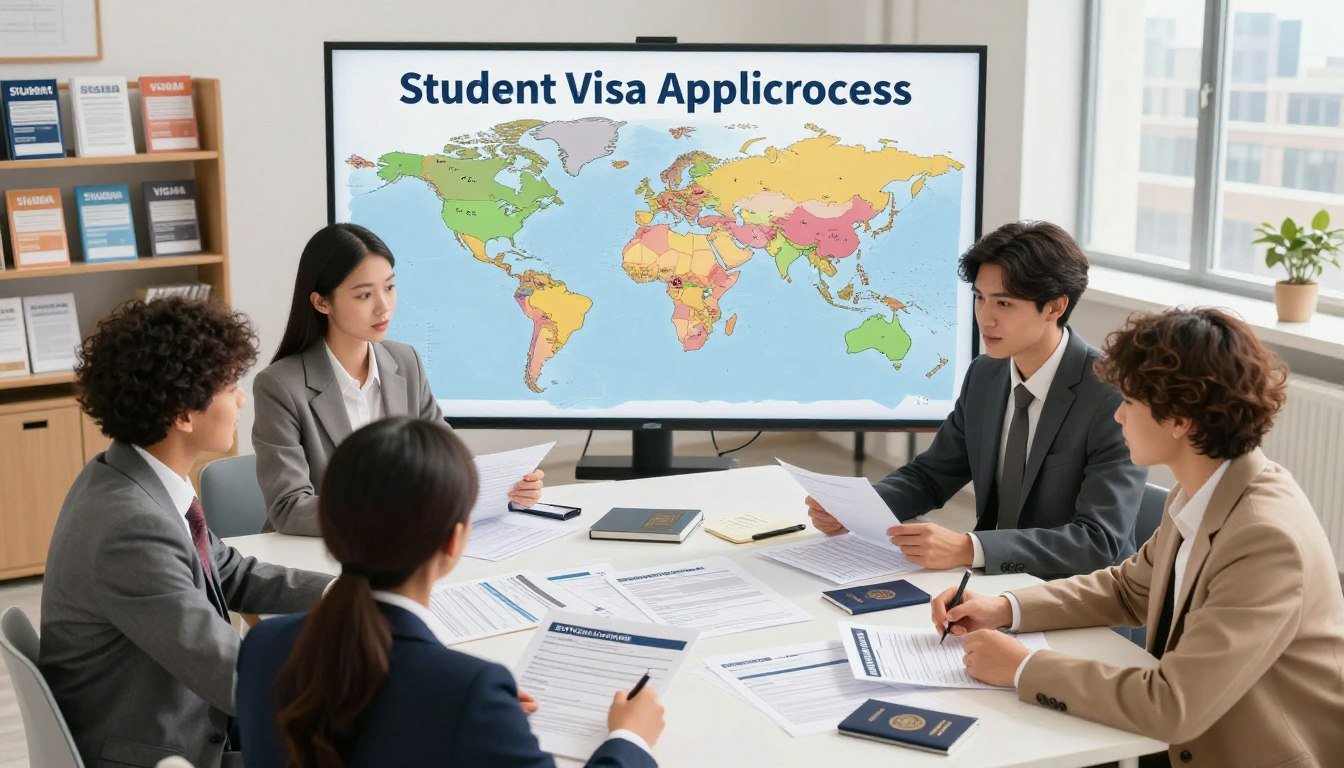
What if the biggest hurdle to your American education isn’t the coursework, but the paperwork? Many aspiring international scholars discover that gaining admission is only the first step. The correct travel authorization is absolutely essential for a successful academic journey in the United States.
Foreign nationals cannot use tourist permits or the Visa Waiver Program for academic purposes. The U.S. government requires specific documentation for study. Your chosen program and institution directly determine which category you need.
There are three primary categories: F-1, J-1, and M-1. Each one serves a distinct educational path. Selecting the right one is critical for maintaining legal status throughout your stay.
This guide provides the essential information to navigate this process. We will cover eligibility, application steps, and required documents. Understanding these details from the start sets the foundation for a smooth experience.
Key Takeaways
- International scholars must obtain specific travel authorization to study in the United States.
- Standard tourist permits or the Visa Waiver Program are not valid for academic programs.
- The type of school and course of study determines the appropriate documentation category.
- There are three main categories: F-1, J-1, and M-1, each with unique requirements.
- Choosing the correct category is vital for maintaining legal status during your academic stay.
- Proper classification affects the entire application process and compliance obligations.
Introduction to Student Visas and Their Importance
Before packing bags for American universities, international scholars must secure the right legal permission to study. This authorization serves as the official gateway to U.S. educational institutions.
A student visa represents more than just paperwork. It is a mandatory legal requirement for academic pursuits in the United States. This document specifically authorizes entry for educational purposes.
Customs and Border Protection officers make the final admission decision at U.S. ports of entry. Visa approval does not guarantee entry into the country. Officials verify credentials and intentions before granting access.
Studying without proper authorization carries serious consequences. Violations can lead to deportation and future immigration ineligibility. Maintaining valid status throughout your program is essential for compliance with U.S. regulations.
These travel documents enable access to world-class education. They create pathways for academic and professional growth. Understanding requirements early prevents delays that could impact educational plans.
Overview of U.S. Student Visa Types
When planning educational endeavors in America, international learners encounter three distinct authorization categories. Each serves specific academic purposes with unique requirements.
F-1 Visa for Academic Programs
The F-1 classification is the most common option for academic pursuits. It covers universities, colleges, high schools, and language training programs.
This authorization allows funding from personal resources or family support. F-1 holders can work part-time on campus during academic terms. They may work full-time during breaks, making this a flexible option for many learners.
M-1 and J-1 Visa Options Explained
The M-1 category serves vocational or technical training at nonacademic institutions. Employment authorization is more restricted than the F-1 program.
M-1 holders can work for maximum six months with special documentation. The J-1 exchange visitor program involves government-approved cultural exchanges. These programs require sponsorship from educational or nonprofit organizations.
Eligibility Criteria for F-1 Student Visas
Qualifying for an F-1 visa involves more than just a school acceptance letter; it requires meeting strict criteria. The U.S. government has established specific benchmarks to ensure applicants are genuine scholars.
These requirements help immigration officials verify your intent and capability. Meeting each one is essential for a successful application.
SEVP Certification and Full-Time Enrollment
Your first step is acceptance to a Student and Exchange Visitor Program (SEVP)-certified school. This certification means the institution is authorized to host international learners.
Your I-20 form must confirm you are pursuing a full course of study. Part-time enrollment does not meet the visa requirements. Maintaining full-time status is critical for keeping your legal status active.
Proof of Financial Resources and Home Ties
You must demonstrate sufficient funds to cover your first year of expenses. This includes tuition, housing, and personal costs.
Equally important is showing strong connections to your home country. Family, job prospects, or property can serve as proof you plan to return. Consular officers assess whether education is your primary purpose for entry.
Proper documentation for each requirement strengthens your application significantly.
Understanding the “visas for students” Process
The journey toward academic pursuits in the United States initiates a structured documentation process following school admission. This sequence unfolds in specific stages that cannot be rearranged or accelerated. Each step builds upon the previous one, creating a clear pathway toward authorization.
Your designated school provides the foundational document for your visa application. For F-1 and M-1 categories, this is the I-20 form. J-1 exchange visitors receive a DS-2019 form instead. These documents contain critical program information including start dates, costs, and financial support options.
Processing times vary significantly by location and season. Embassy appointment availability can be limited during peak application periods. Beginning the process early is essential for meeting academic start dates without complications.
Accuracy and completeness at each stage prevent unnecessary delays. Missing information or errors can jeopardize your enrollment timeline. Careful preparation ensures a smooth progression through the entire authorization procedure.
Step-by-Step Guide to the Visa Application Process
The official application process begins once you have your Form I-20 or DS-2019 in hand. This phase involves three critical actions that must be completed in sequence.
Accuracy during this stage is essential for avoiding delays that could impact your academic start date.
Completing the DS-160 and Paying the Application Fee
Your first task is the Online Nonimmigrant Visa Application, Form DS-160. This detailed form requests personal, travel, and educational history.
You must upload a recent photo and print the confirmation page. This page is required for your interview.
Next, you will pay two separate fees. The I-901 SEVIS fee of $350 is paid online using details from your I-20.
You also pay a visa application fee of $185. Payment methods vary by embassy. Keep receipts for both payments.
Scheduling and Preparing for Your Visa Interview
After fee payment, schedule your visa interview at the nearest U.S. Embassy or Consulate. Use their official online system to book a date.
Wait times for an interview appointment can vary greatly. They depend on your location, the season, and visa category.
It is crucial to schedule this step well in advance. Some wait times extend for weeks or even months.
Before your interview date, review all your information. Ensure every form is complete and accurate.
Essential Documentation for a Successful Application
Your visa interview success depends heavily on having all required documents organized and ready. Proper preparation demonstrates your seriousness and attention to detail.
Missing any required paperwork can lead to delays or even denial. A complete file shows you understand the process requirements.
Passport, Photographs, and I-20/DS-2019 Forms
Your passport must be valid for at least six months beyond your intended stay. This is the most fundamental requirement for entry.
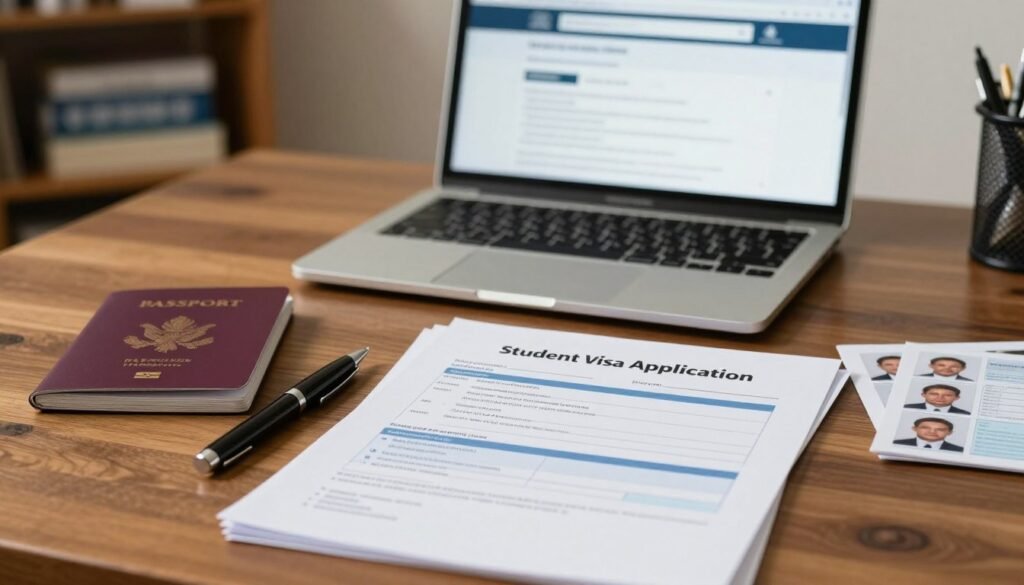
The I-20 form for F-1/M-1 applicants or DS-2019 for J-1 participants serves as your certificate of eligibility. Both you and your school official must sign this critical document.
Bring the DS-160 confirmation page and a passport-style photograph. These items complete your basic application package.
SEVIS Fee Receipt and Supporting Financial Documents
The SEVIS fee payment receipt proves you’ve completed this mandatory step. Keep this document with your other important papers.
Financial proof is equally crucial. Bank statements or scholarship letters demonstrate your ability to cover educational costs.
Strong financial documentation provides essential support for your application. It shows you can maintain yourself during your studies.
Organize all documents systematically before your appointment. Bring originals and copies to facilitate the interview process. Proper preparation significantly increases your chances of approval.
Navigating U.S. Embassy and Consulate Procedures
Your scheduled appointment marks the final procedural step before potential approval. This face-to-face meeting at a U.S. embassy or consulate is mandatory.
A consular officer conducts the session to verify your eligibility. They assess your documentation and evaluate your intent to return home after studies.
What to Expect During the Interview
The officer will ask about your educational plans and financial capacity. Questions often focus on your ties to your home country and post-graduation goals.
Digital fingerprint scanning is a standard security procedure during this meeting. Answer all questions clearly and honestly to demonstrate your qualifications.
Dressing professionally and remaining calm can positively influence the outcome. This conversation is your opportunity to personally support your application.
Post-Interview Processing and Visa Issuance
Some applications require additional administrative review after the interview. This extra step can extend the processing time significantly.
If approved, you may need to pay an issuance fee based on your nationality. The embassy or consulate will then arrange for your passport’s return with the new visa.
Recent policy changes now require most applicants to attend in person. This includes younger and older individuals who were previously exempt.
Recent Policy Updates and Their Impact on Students
Policy modifications in 2025 have reshaped key aspects of the student authorization process. These changes affect both application procedures and long-term stay requirements.
New Interview Waiver Policies and Timeline Changes
The September 2025 update eliminated most interview waivers. Now nearly all applicants must attend in-person meetings with consular officers.
This change applies regardless of age, including younger and older individuals. The new requirement makes proper scheduling more critical than ever.
A proposed rule from June 2025 would replace the “duration of status” system. Instead, fixed admission periods tied to program completion dates would be implemented.
Extensions through USCIS would be necessary for studies exceeding initial authorization. This adds an important administrative step to the process.
Current timing rules allow authorization issuance up to 365 days before program start. However, entry remains restricted to no more than 30 days before the start date.
These policy developments require careful planning and consultation with school officials. Staying informed ensures compliance throughout your educational journey.
Maintaining Your Visa Status During Your Studies
Once you arrive on campus, maintaining your legal standing becomes an ongoing responsibility that requires careful attention. Your compliance journey continues throughout your entire educational experience.
Complying with U.S. Immigration Regulations
F-1 category holders must depart within 60 days after their program end date. This timeline includes any authorized practical training periods. Extensions require proper documentation.
Falling out of status carries severe consequences. Your documentation becomes automatically void under U.S. law. Future entry becomes impossible with a voided multiple entry visa.
Early entry restrictions are strict. You cannot arrive more than 30 days before your program start date. This rule applies to all F and M category holders.
M-1 participants face additional limitations. They cannot change their program or transfer institutions after six months of enrollment. This restriction requires careful initial program selection.
The Student and Exchange Visitor Information System (SEVIS) tracks your compliance status. Keeping your information current is essential. Designated school officials serve as your primary resource for questions.
Understanding all conditions is critical for maintaining legal standing. Seek proper authorization before any action affecting your immigration status.
Additional Considerations for Family and Dependents
Dependent visa applications follow a parallel but distinct pathway from the primary applicant’s. Bringing family members requires coordination with your educational institution and careful documentation preparation.
Spouses and unmarried minor children can join you through F-2 or M-2 dependent status. Each family member needs their own Form I-20 from your school. This individual form is essential for their application process.
Applying for F-2 or M-2 Visas
Your dependents do not need to pay the SEVIS fee. However, they must enroll in the Student and Exchange Visitor Information System. The school issues separate I-20 forms for each accompanying family member.
Same-sex spouses receive equal treatment during the adjudication process. U.S. embassies apply consistent standards regardless of gender. This ensures fair consideration for all family applications.
Preparing Documentation for Family Members
Proof of relationship is critical for dependent approvals. Marriage certificates and birth certificates establish family connections. You must provide copies of your primary visa alongside these documents.
Minor children on F-2 or M-2 status may attend primary or secondary school. Timing coordination ensures all family members travel together with proper authorization. Complete documentation prevents delays in the approval process.
Conclusion
Navigating the authorization process for international education demands careful coordination of documentation and timelines. This guide has outlined the essential steps from initial application to maintaining legal standing throughout your academic program.
Remember that approval is never guaranteed. Avoid making final travel arrangements or purchasing tickets until you receive official authorization. New applicants can obtain documentation up to 365 days before their program begins but cannot enter the United States more than 30 days prior to the start date.
Complete honesty throughout the process is absolutely essential. Any misrepresentation or fraud can result in permanent refusal of entry. Utilize available support resources and begin your application early to ensure a smooth transition to your educational journey.
FAQ
What is the main difference between an F-1 visa and an M-1 visa?
An F-1 visa is for individuals pursuing academic studies at a U.S. college, university, or high school. An M-1 visa is for those enrolled in vocational or other recognized non-academic programs. The primary distinction lies in the type of educational institution and program.
When should I apply for my student visa?
You can apply for your visa as soon as you receive your Form I-20 from your SEVP-certified school. It is recommended to apply early, but you cannot be issued a visa more than 120 days before your program start date listed on the I-20.
What is the SEVIS fee, and who must pay it?
The SEVIS fee is a mandatory U.S. government fee that supports the Student and Exchange Visitor Information System. Every student applying for an F-1, M-1, or J-1 visa must pay this fee before their visa interview. You need the I-20 or DS-2019 form to complete the payment.
What documents do I need to bring to my visa interview?
A> Essential documents include a valid passport, the Form DS-160 confirmation page, your Form I-20 or DS-2019, the visa application fee receipt, the SEVIS fee receipt, and a passport-style photograph. You should also bring financial evidence and proof of strong ties to your home country.
Can my family come with me to the United States?
Yes, your spouse and unmarried children under 21 may apply for F-2 or M-2 dependent visas. They must provide proof of their relationship to you, such as a marriage or birth certificate, and you must demonstrate sufficient financial support for them during your stay.
What happens if my visa application is denied?
If your application is denied, the consular officer will provide the reason. You can reapply if your circumstances change or if you can address the reason for the initial denial. There is no limit to the number of times you can apply, but you must pay the application fee each time.
How long can I stay in the U.S. on a student visa?
Your duration of stay is tied to your academic program. F-1 students can stay for the length of their program plus an additional 60 days. You must maintain your student status by being a full-time student and following all U.S. immigration regulations.
Can I work while studying in the United States?
F-1 students may be eligible for limited on-campus employment. Off-campus work requires authorization from the U.S. Citizenship and Immigration Services (USCIS) and is typically related to severe economic hardship or practical training. M-1 students are generally only authorized for practical training after completing their studies.