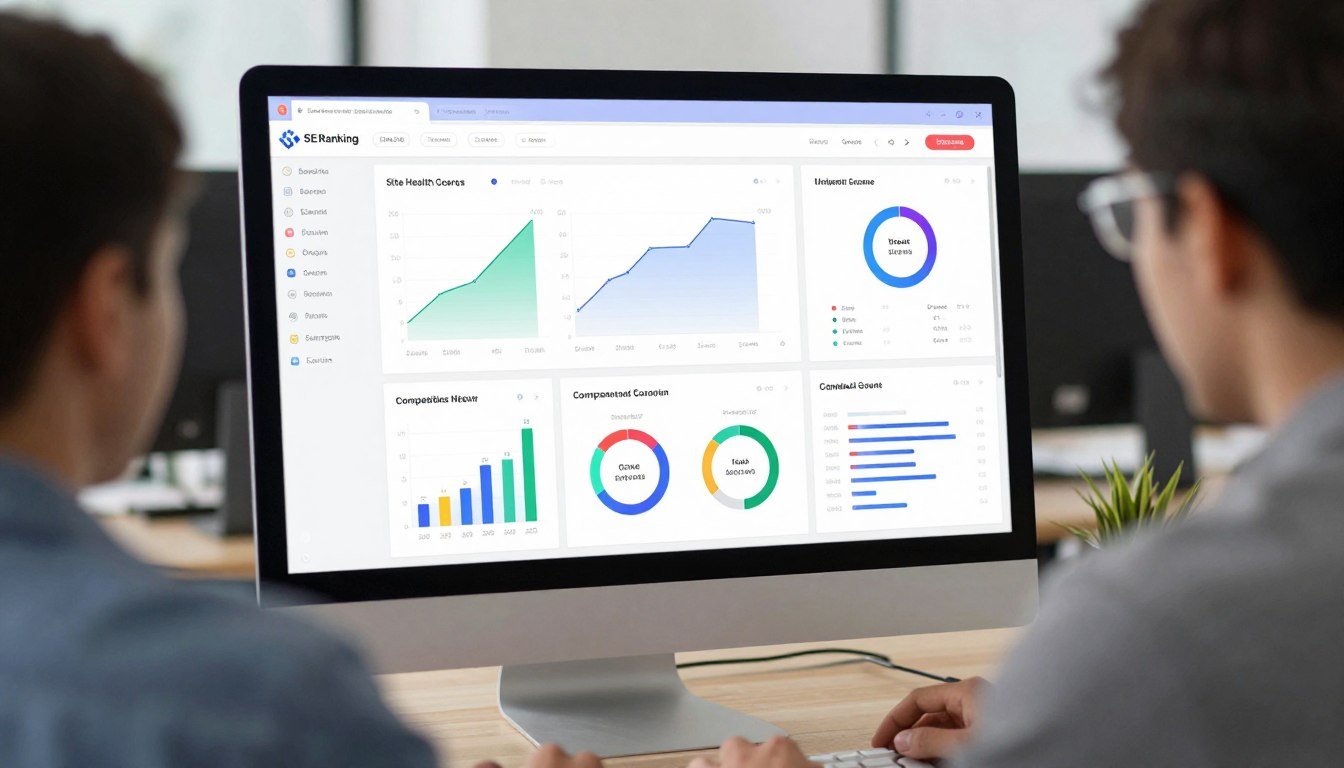
Is your current SEO platform giving you all the data you need without breaking the bank? Many digital marketers and business owners struggle to find a tool that balances powerful features with an affordable price.
SE Ranking is a comprehensive SEO platform designed for this exact challenge. It helps businesses, freelancers, and agencies optimize their online presence.
Founded over a decade ago, this tool has evolved from a simple rank tracker into a full-featured suite. It now handles technical audits, competitor analysis, and content optimization.
SE Ranking serves as a cost-effective alternative to premium options. It maintains robust functionality for tracking keyword positions and site performance.
This review provides a detailed, unbiased look at its features, pricing, and recent updates. We will examine how it integrates with Google Search Console for comprehensive tracking.
Our goal is to help you decide if this is the right SEO solution for your needs and budget.
Key Takeaways
- SE Ranking is an all-in-one SEO platform that has grown from a rank tracker to a full suite of tools.
- It is designed to be an affordable option for freelancers, SMBs, and agencies.
- SE Ranking offers capabilities for technical site audits, in-depth competitor analysis, and keyword tracking.
- This review will provide a current, detailed analysis of its features, strengths, and limitations.
- It integrates with essential data sources like Google Analytics for complete performance insights.
- SE Ranking includes recent AI-driven updates to enhance its functionality.
- It is positioned as a serious contender in the competitive market for SEO software.
Introduction: A Comprehensive Look at an All-in-One SEO Platform
In a landscape filled with specialized tools and expensive suites, a unified approach to SEO management offers distinct advantages. SE Ranking positions itself as this balanced solution. It delivers comprehensive functionality without premium pricing.
The platform serves as a centralized hub for multiple SEO functions. This eliminates the need for disparate tools and streamlines workflows. Marketers can manage their entire strategy from one interface.
This solution has evolved significantly since its 2013 public release. It began as a simple rank-tracking tool. Today, it offers a full suite of capabilities for complete website optimization.
The architecture is cloud-based with automated data collection. A network of global servers processes information. This approach helps reduce search personalization bias in results.
Practical improvements have followed this evolution. Mobile applications and API access increase usability. Interface enhancements make complex data more accessible to all users.
Recent developments include AI-driven tools introduced in 2023. The AI Writer and AI Results Tracker respond to evolving search technologies. These features keep the platform competitive in a changing digital landscape.
Scalability addresses different organizational sizes effectively. Individual freelancers benefit from core features. Agencies can manage multiple client projects with advanced tools.
Integration capabilities connect with essential third-party services. Standard connections to Google Analytics and Search Console enhance data correlation. This provides more complete performance insights for informed decisions.
The platform maintains multinational operations with global reach. Its user base spans diverse geographic regions and industry verticals. This widespread adoption validates its approach to search optimization.
This introduction sets the stage for detailed exploration. Subsequent sections will examine specific features and pricing considerations. Practical applications for different business needs will also be covered.
What is SE Ranking? An SEO Tool Overview
The story of how a specialized application grows into a complete business solution often mirrors broader industry shifts. SE Ranking exemplifies that transformation perfectly.
It began with a focused mission to solve specific problems. Today, it serves diverse professional needs across the digital landscape.
From Rank Tracker to Full SEO Suite
SE Ranking started as a simple rank-tracking tool. It was developed internally to address specific search optimization requirements.
The public launch happened in 2013. The core function was monitoring keyword positions across search engines.
Between 2014 and 2016, significant expansion occurred. The developers added website auditing capabilities to check technical health.
Backlink monitoring tools joined the suite next. This allowed users to analyze their link profiles and competitor strategies.
Competitor research functions became available during this period. Page change tracking completed this phase of growth.
The shift was clear: from a single-purpose tracker to an all-in-one SEO solution. This evolution reflects a major industry trend.
Marketers increasingly prefer integrated platforms. They consolidate multiple functions into single, streamlined interfaces.
This approach saves time and reduces subscription costs. Having interconnected modules creates workflow efficiencies.
SE Ranking maintained its original strength in accurate ranking data. New features built upon this reliable foundation.
Target Audience: Freelancers, Agencies, and In-House Teams
Different user groups benefit from this versatile tool. Each finds value in specific aspects of its design.
Freelancers appreciate the unlimited client reporting. They need professional deliverables without per-report fees.
The flexible pricing structure suits variable income streams. Core features handle most common optimization tasks effectively.
Marketing agencies require white-label capabilities. Presenting reports under their own brand is essential.
Scalable project management tools support multiple client accounts. Customizable reporting adapts to different client needs.
In-house teams seek cost-effective solutions for ongoing work. They benefit from having all essential tools in one platform.
The software serves beginners through guided workflows. Experienced practitioners access advanced settings for deeper analysis.
Some advanced features have a learning curve. However, the overall interface aims for accessibility.
The main advantage is consolidation. Budget-conscious users avoid juggling multiple specialized subscriptions.
For enterprise operations, some limitations exist. Highly granular data or specialized analytics may require additional tools.
Practical use cases illustrate its value. A freelancer might track local keywords for several small business clients.
An agency could perform technical audits across dozens of websites. An in-house team might monitor competitor content strategies.
This platform has matured significantly since its early days. It remains focused on delivering accurate, actionable data for search success.
Core Features and Capabilities: The SE Ranking Toolkit
Effective search optimization demands a toolkit that addresses every stage of the workflow, from technical foundation to content creation. This platform delivers eight interconnected modules designed for this purpose. Each feature serves a specific function while contributing to a unified strategy.
Marketers gain access to rank tracking, website auditing, and competitor research tools. The system also includes backlink analysis and content marketing utilities. Local SEO management completes this comprehensive feature set.
Rank Tracking and SERP Monitoring
The rank tracker forms the backbone of the platform’s monitoring capabilities. It checks keyword positions across different locations and devices. You can select daily, tri-weekly, or weekly tracking frequencies.
Location-specific data accounts for geographic search variations. This ensures accurate position tracking for local businesses. The tool supports multiple search engines beyond Google.
Historical data comparison reveals trends over time. You can see how algorithm updates affect your visibility. This information helps validate optimization efforts.
SERP feature tracking provides additional insights. It monitors featured snippets, local packs, and site links. Understanding these elements helps improve click-through rates.
These rich snippets often appear above traditional organic results. Tracking them shows opportunities for enhanced visibility. The data informs content structuring decisions.
Website Audit and Technical SEO Checker
Technical health directly impacts search performance. The website audit tool performs comprehensive scans. It examines crawlability, indexing, and internal linking structures.
The scanner identifies common technical issues efficiently. Broken links, duplicate content, and redirect loops get flagged. Slow-loading pages and mobile usability problems also surface.
A categorization system prioritizes discovered issues. Errors demand immediate attention for critical problems. Warnings indicate important but less urgent concerns.
Notices provide general recommendations for improvement. This triage approach helps teams address impactful problems first. The tool assigns an overall health score for quick assessment.
Site speed analysis checks both desktop and mobile performance. Mobile usability evaluations ensure compliance with best practices. These factors contribute directly to user experience and search visibility.
Competitor Analysis and Keyword Gap Insights
Understanding competitor strategies provides a competitive edge. This analysis module reveals both SEO and PPC activities. You see their keyword rankings and estimated traffic volumes.
The tool examines competitor backlink profiles and top-performing pages. This intelligence informs your own strategic decisions. You learn what content resonates with your shared audience.
Keyword gap analysis identifies valuable opportunities. It shows terms competitors rank for that your site doesn’t. These gaps represent low-hanging fruit for content creation.
The system compares your domain against multiple competitors simultaneously. You see overlapping keywords and unique strengths. This data helps refine your target keyword list.
Estimated traffic calculations provide performance context. You understand which terms drive the most valuable visits. This prioritizes your optimization efforts effectively.
Backlink Checker and Profile Monitoring
Link profiles significantly influence domain authority. The backlink checker provides a comprehensive overview. It shows total backlinks and referring domains count.
Anchor text analysis reveals how others describe your content. This helps maintain a natural-looking link profile. Unnatural concentrations might trigger search engine penalties.
Country distribution data shows your geographic link footprint. Link toxicity assessment identifies potentially harmful connections. These metrics guide link-building and cleanup campaigns.
Regular monitoring detects new links as they appear. You can identify which content attracts organic links naturally. This informs future content development strategies.
The tool also analyzes competitor link profiles. You discover where they acquire their backlinks. These sources become potential targets for your own outreach.
Content Marketing Tools: Idea Finder and Editor
Content creation requires both inspiration and optimization. The content idea finder generates topic clusters based on seed keywords. It identifies related questions and subtopics audiences search for.
This research ensures comprehensive coverage of subject matter. You build topical authority within your niche. The platform suggests content angles you might have overlooked.
The content editor provides real-time optimization feedback. It analyzes top-ranking pages for your target keyword. The system generates specific guidelines for your draft.
Recommended word count targets come from competitor analysis. Keyword usage suggestions ensure proper density and placement. Structural recommendations improve readability and scannability.
You receive advice on header tag usage and internal linking. The tool even suggests image optimization practices. This guidance helps create content that performs from day one.
Local SEO and Marketing Management
Local businesses require specialized optimization approaches. These tools manage Google Business Profile listings efficiently. You monitor local search rankings by specific ZIP codes.
Consistency across business listings improves local visibility. The system checks name, address, and phone number uniformity. Inaccurate information harms local search performance.
Review monitoring tracks customer feedback across platforms. You can respond to reviews directly from the interface. This engagement positively influences local search algorithms.
Local rank tracking shows position changes for geographic searches. You understand how visible you are to nearby customers. This data informs local advertising and outreach decisions.
The tools integrate with other platform features seamlessly. Local keyword research informs content creation. Competitor analysis reveals local market dynamics.
These interconnected features create a complete optimization workflow. Technical audits establish a solid foundation. Competitor research identifies strategic opportunities.
Keyword tracking measures campaign effectiveness over time. Content tools ensure new pages meet search intent. Backlink monitoring protects and builds domain authority.
The platform’s integration is its greatest strength. Insights from one module directly inform actions in another. This creates a cohesive, data-driven approach to search marketing.
SE Ranking Pros: Where the Platform Excels
A tool’s true value becomes clear when you examine where it consistently delivers for its users. This platform shines in several key areas that matter for daily SEO work.
These strengths justify its position in a competitive market. They provide real advantages for businesses managing their search presence.

Affordable and Transparent Pricing Structure
Cost is a major factor for most teams. This tool offers a clear advantage here.
Plans start at an accessible point. This makes professional-grade SEO functionality available to smaller operations.
The pricing model is straightforward. You pay based on the number of keywords you track and the features you need.
This transparency helps with budget planning. There are no hidden fees or surprise charges.
You can also optimize costs by choosing your tracking frequency. Daily, every three days, or weekly checks are available.
This flexibility is useful for different campaign urgencies. It prevents paying for data you don’t necessarily need.
Compared to premium alternatives, the value is significant. You get generous data limits for keyword and competitor research.
Powerful, Visual Reporting and White-Label Options
Reporting can make or break client relationships. This platform handles it well.
Dashboards use color-coded charts and graphs. This makes complex data easy to understand at a glance.
Reports are highly customizable. You can add your own notes and insights alongside the platform’s data.
Automated report scheduling saves valuable time. You can set them to generate and send on a regular basis.
For agencies, the white-label options are a major benefit. You can present reports under your own brand name.
Multiple output formats like PDF and Excel are supported. This meets various client preferences.
Unlimited user seats on most plans is another strong point. Teams can collaborate without extra per-seat licensing costs.
Excellent Customer Support and Responsive Team
Good support is crucial when working with complex data. Users consistently praise the team behind this software.
Response times are quick for reported issues. The support staff is knowledgeable and helpful.
The team shows a willingness to listen to user feedback. They actively implement sensible feature requests.
This responsiveness is reflected in review scores. Aggregates show positive ratings across major platforms.
High scores on G2 and Capterra indicate user satisfaction. It builds trust in the product’s ongoing development.
AI Overview and SERP Feature Tracking
The search landscape is always changing. This tool adapts by tracking new elements like Google’s AI Overview.
You can monitor how often your site appears in these AI-generated answers. This is unique functionality in the current market.
It also tracks traditional SERP features like featured snippets and local packs. This gives a complete picture of your search visibility.
Understanding these placements is key to modern SEO strategy. They often capture more clicks than standard listings.
The platform provides historical data for trend analysis. You can benchmark performance over months or years.
This long-term view is essential for measuring real progress. It connects daily tactics to overall strategy.
In summary, the platform’s strongest advantages are clear. It combines cost-effective pricing with robust, visual reporting.
Responsive support and forward-looking features like AI tracking add significant value. For teams needing a comprehensive yet affordable SEO tool, these pros are compelling.
SE Ranking Cons: Limitations and Drawbacks
Despite its comprehensive feature set, this SEO platform exhibits several notable limitations that users should consider. These drawbacks become apparent during extended use, particularly for teams with complex workflows or specialized needs.
Understanding these constraints helps set realistic expectations. It also informs whether supplemental tools might be necessary for a complete digital marketing strategy.
Cumbersome Interface and Navigation Challenges
The platform’s dashboard presents navigation hurdles that can frustrate users. A multi-tiered menu system expands and collapses, making functions difficult to locate.
Even experienced practitioners report spending extra time hunting for specific tools. This design choice impacts daily efficiency for managing multiple projects.
The billing portal adds another layer of complexity. Users describe it as counter-intuitive compared to the main workspace. Simple tasks like updating payment methods require unnecessary clicks.
New users face a steeper learning curve than anticipated. The interface lacks the intuitive flow found in some competing solutions. This initial friction can delay productivity gains.
Gaps in Analysis: Missing PPC and Forecasting Tools
A significant limitation is the absence of paid advertising modules. Teams must maintain separate platforms for comprehensive campaign management.
This fragmentation breaks the all-in-one promise for complete digital marketing. Integrating PPC data with SEO insights requires manual workarounds.
The platform also lacks trend forecasting capabilities. You cannot predict emerging keyword opportunities within the tool itself. This forces supplementation with external services for forward-looking research.
Competitor analysis has depth limitations for advanced segmentation. Real-time updates and granular keyword gap identification could be more robust. Some reports offer surface-level insights without deeper contextual analysis.
Content Editor Requires Manual Tweaking
The content optimization tool generates briefs that often need significant adjustment. Users must manually tweak parameters to achieve accurate scoring.
Compared to specialized alternatives, the guidance can feel generic. It may lack necessary context for complex optimization scenarios.
Target scores sometimes conflict with practical writing best practices. The algorithm prioritizes certain metrics over readability and user intent. This creates tension between technical optimization and quality content creation.
The editor’s complexity demands a trial-and-error approach. Writers spend time adjusting settings rather than focusing on their message. This reduces the tool’s efficiency for rapid content production.
Data Accuracy Concerns in Some Modules
Several users report inconsistencies in rank tracking precision. Discrepancies appear when comparing data with Google Search Console or other sources.
Backlink index completeness occasionally raises questions. The platform might miss certain referring domains that specialized tools detect. This affects the reliability of competitive link analysis.
Traffic estimation models show variance from actual analytics data. While all platforms use approximations, the gaps here can be noticeable. This impacts confidence in performance forecasting and ROI calculations.
The credit system for advanced features adds pricing complexity. Tools like the Keyword Grouper require extra payments beyond the base subscription. This creates unexpected costs for users who need these capabilities.
These limitations exist within the context of the platform’s affordable pricing. For the cost, users receive substantial value, but should acknowledge where specialized alternatives might excel.
SE Ranking Pricing Plans: Breaking Down the Costs
The true cost of an SEO tool extends beyond its monthly subscription fee to include hidden expenses and scalability factors. Understanding the complete pricing structure helps businesses make informed decisions about their search optimization investments.
This platform offers three main tiers with transparent pricing. Each plan scales according to tracked keyword volume and desired feature access.
Annual billing provides significant savings over monthly payments. This commitment reduces the effective monthly rate for budget-conscious users.
Essential Plan: Core Features for Individuals
The Essential plan starts at $55 per month with annual billing. This entry-level option targets individual practitioners and small business owners.
Core functionality includes comprehensive keyword rank tracking tools. Users can monitor their search positions across different locations and devices.
Basic website SEO audit capabilities identify technical issues. The backlink checker provides fundamental link profile monitoring.
Unlimited reporting makes this plan valuable for freelancers. They can generate client deliverables without per-report fees.
The plan supports essential competitor research functions. Users gain insights into rival strategies and keyword gaps.
Tracking frequency options offer cost flexibility. Daily, tri-weekly, or weekly checks adjust to campaign urgency.
This tier works well for solopreneurs managing a handful of projects. It covers fundamental optimization needs without advanced extras.
Pro Plan: Enhanced Tools for Growing Businesses
The Pro plan represents the mid-tier option for expanding operations. It adds substantial functionality over the Essential level.
Historical keyword data access becomes available here. This allows trend analysis and performance benchmarking over time.
White-label reporting transforms client deliverables. Agencies present findings under their own brand identity.
Content marketing suite integration enhances creation workflows. The idea finder and editor tools support optimized content production.
Local marketing tools manage Google Business Profile listings. Social media management pack extends beyond pure search optimization.
Insights reports provide deeper competitive intelligence. These analyses reveal strategic opportunities in the market.
Growing agencies benefit most from this feature set. The balance of advanced tools and reasonable pricing supports scaling operations.
Business Plan: Full Suite for Agencies and Enterprises
The Business plan delivers enterprise-level functionality for large teams. This top tier includes all platform capabilities.
API access enables custom integrations and automated workflows. Technical teams build connections with other business systems.
AI Overviews rank tracker monitors emerging search features. This forward-looking tool addresses evolving search engine results.
Advanced functionality supports complex, multi-project management. Large agencies handle numerous client accounts efficiently.
Priority support ensures rapid issue resolution. Enterprise teams maintain uninterrupted service for critical campaigns.
Enhanced user permission systems provide granular access control. Managers assign specific capabilities to team members.
This plan suits organizations with substantial keyword tracking needs. The comprehensive feature set justifies the higher investment.
Add-Ons and Credit System: Understanding the Extras
Additional features operate on a credit system beyond base subscriptions. This affects the total cost of ownership significantly.
The Keyword Grouper requires extra payments for advanced clustering. Content Editor and Local Marketing Tool also need additional credits.
Users must budget for these extras when planning their investment. The base price alone doesn’t cover all desirable functionality.
Monthly versus annual billing presents a clear financial choice. Annual commitments reduce monthly rates by approximately 20-25%.
Scalability considerations impact pricing directly. Costs increase with higher keyword volumes and more frequent tracking.
Reduced tracking frequency lowers expenses for less urgent campaigns. Weekly checks cost less than daily monitoring.
The value proposition remains strong against competitor offerings. Similar functionality often costs more in other platforms.
Practical guidance helps users select the appropriate plan. Individual freelancers typically start with the Essential tier.
Small agencies managing multiple clients often choose the Pro plan. Enterprise operations require the Business level for full functionality.
Real-world cost scenarios illustrate pricing implications. A freelancer tracking 500 keywords might pay $55 monthly.
A small agency with 2,000 keywords could invest $135 per month. Enterprise teams with 10,000 keywords face costs around $455 monthly.
Budget constraints should align with actual feature requirements. Avoid overpaying for unused capabilities or underinvesting in essential tools.
The platform’s pricing structure offers flexibility for different needs. Careful evaluation ensures optimal value for your search optimization budget.
Usability and Interface: Is SE Ranking Beginner-Friendly?
The user experience of any SEO platform significantly impacts how effectively teams can execute their search optimization strategies. This section examines how this tool balances powerful functionality with navigational accessibility for different skill levels.
Newcomers face specific challenges when adopting comprehensive software. The interface design determines how quickly they can become productive with the platform’s capabilities.
Learning Curve for New SEO Practitioners
Beginners encounter a noticeable learning curve with this SEO tool. Unlike some competitors, it lacks in-interface guidance tips or interactive tutorials.
New users must explore features independently to understand their functions. This self-directed approach works better for those with prior SEO experience.
Intermediate marketers adapt more quickly than complete newcomers. They recognize standard SEO terminology and workflow patterns. The platform assumes some foundational knowledge of search optimization concepts.
Colorful charts and graphs make reports relatively easy to read once found. Visual data presentation helps users interpret complex metrics. However, locating specific reports initially proves challenging.
Practical onboarding requires setting aside dedicated learning time. New users should prioritize core features before exploring advanced modules. This focused approach reduces initial overwhelm.
Dashboard Navigation and the “Favorites” Solution
The platform employs a collapsing, multi-tiered menu system for navigation. Users frequently forget where specific reports reside even after extended use.
This design contrasts with competitors like Semrush and Ahrefs. Those platforms use always-open menus that provide constant visual orientation.
The “favorites” functionality offers a practical workaround for navigation limitations. Users can pin frequently accessed reports to a custom toolbar. This creates one-click access to essential features.
Customization helps streamline individual workflows significantly. Each user tailors their interface to match their specific SEO tasks. This personalization improves daily efficiency over time.
Visual design elements enhance data interpretation across the platform. Color-coding differentiates metric types and performance trends. Chart clarity makes complex information more accessible.
Interface patterns show reasonable consistency between different modules. Common controls appear in predictable locations as users move between features. This reduces cognitive load for routine operations.
Mobile accessibility supports on-the-go SEO management effectively. Dedicated applications provide core functionality for smartphones and tablets. Responsive web design ensures usable browser access from any device.
Workflow efficiency varies across different common tasks. Simple monitoring functions proceed smoothly once configured. Complex analysis sometimes requires navigating through multiple menu layers.
New users should start with these practical steps. First, configure the favorites bar with essential reports. Second, complete one full project setup to understand the workflow structure.
Third, focus on mastering rank tracking before exploring advanced analysis. This gradual approach builds confidence with the tool’s capabilities.
The interface proves most manageable for intermediate to experienced SEO practitioners. They leverage existing knowledge to navigate the platform’s structure effectively.
Complete beginners might struggle without supplemental learning resources. Technical professionals generally adapt more quickly than those new to digital marketing concepts.
This balanced assessment helps determine if the platform matches your team’s proficiency level. Consider both current skills and available training time when evaluating usability.
Customer Support and Community Reputation
Beyond features and pricing, a software platform’s long-term value is often shaped by the responsiveness of its support team and the strength of its user community. These elements determine whether users feel supported during challenges and can maximize their investment over time.
Responsive Support and Feature Request Implementation
Multiple support channels ensure users can get help when needed. Email support handles detailed technical questions effectively. Live chat provides immediate assistance for urgent issues during business hours.
A comprehensive knowledge base offers self-service resources. Tutorials and documentation help users troubleshoot common problems independently. This reduces wait times for simple questions.
Response times consistently meet user expectations across different channels. Most queries receive initial replies within a few hours. Complex issues may require slightly longer investigation periods.
The support team demonstrates strong product knowledge. They understand both basic functions and advanced features. This expertise leads to effective problem resolution.

Feature request implementation shows genuine responsiveness to user feedback. A notable example involved the Content Editor tool. Users reported issues with plural word recognition in optimization scoring.
The development team addressed this concern within days. They updated the algorithm to properly handle plural variations. This quick fix improved the tool’s accuracy significantly.
Premium plan subscribers may receive enhanced service levels. Priority support ensures faster response times for critical issues. This tiered approach matches service intensity with user needs.
Compared to competitors, the support experience holds up well. Some alternatives offer more extensive knowledge bases. Others provide faster response times for premium customers.
Transparency builds trust within the user community. The company communicates openly about platform updates and known issues. Roadmap discussions help users understand future developments.
Review Aggregates: G2, Capterra, and Trustpilot Scores
Review platforms provide valuable insights from actual users. Aggregate scores reveal overall satisfaction levels. They also highlight consistent strengths and weaknesses.
G2 shows a perfect 5 out of 5 star rating. This indicates high satisfaction among verified users. Gartner reviews average 4.8 out of 5 stars.
Trustpilot displays a 3.6 out of 5 score. Capterra maintains a strong 4.7 out of 5 rating. Gizmodo reviews average 4.2 out of 5 stars.
The combined average across major platforms reaches approximately 4.5 stars. This consistency suggests reliable performance meeting most user expectations. Variations between platforms reflect different reviewer demographics.
Positive reviews frequently mention several key strengths. Ease of use receives consistent praise from new users. Customer service quality stands out in many testimonials.
Keyword research tools help users identify valuable opportunities. Reporting features simplify client communication and performance tracking. These elements contribute to positive experiences.
Critical reviews reveal common pain points worth considering. Some users mention platform limitations compared to premium alternatives. Accuracy concerns occasionally appear regarding specific data points.
Data organization challenges frustrate certain users. The interface learning curve proves difficult for complete beginners. These patterns help prospective users make informed decisions.
The SEO professional community discusses this tool in various forums. Social media sentiment generally trends positive. Industry peers often recommend it for budget-conscious teams.
Educational resources help users maximize platform value. Documentation covers most features comprehensively. Video tutorials demonstrate practical workflows for common tasks.
Negative review analysis identifies improvement opportunities. Interface navigation remains a frequent concern. Data accuracy questions occasionally surface in technical discussions.
The support experience significantly impacts overall satisfaction. Users who receive helpful assistance tend to renew their subscriptions. Those facing unresolved issues may explore alternatives.
Community reputation influences long-term adoption decisions. A strong support system builds user confidence. Responsive development teams create loyal customer bases.
Prospective users should consider both review scores and specific feedback. The 14-day free trial allows hands-on evaluation before commitment. This testing period helps assess real-world usability.
Monthly subscription decisions benefit from thorough research. Understanding community experiences informs smarter purchasing choices. The platform’s reputation supports its value proposition effectively.
SE Ranking vs. Key Competitors: How Does It Stack Up?
When evaluating SEO platforms, a side-by-side look at market leaders reveals critical differences in data depth and usability. This comparison helps you identify the right tool for your budget and workflow needs.
We will examine how this platform measures against Semrush and Ahrefs. The focus is on core features, pricing, and overall value.
SE Ranking vs. Semrush: Depth of Data and PPC Tools
Semrush is renowned for its massive database and granular insights. It offers unparalleled depth in keyword research and competitive intelligence.
The platform excels in tracking precise search volumes and trend forecasting. Its PPC advertising tools are fully integrated, providing a complete digital marketing suite.
In contrast, SE Ranking takes a different approach. It provides robust functionality for keyword tracking and website audits at a lower cost.
Some tests indicate SE Ranking can surface more PPC keyword data during competitor analysis. This can be valuable for understanding paid search strategies.
However, it lacks comprehensive PPC campaign management modules. You would need a separate tool for that function.
Data accuracy is comparable for core SEO metrics. Both platforms connect to Google Search Console for validation.
Reporting capabilities are strong in both, with white-label options. Semrush may offer more template variety, but SE Ranking’s reports are highly visual and customizable.
SE Ranking vs. Ahrefs: Backlink Analysis and Interface
Ahrefs is the industry benchmark for backlink analysis. Its index size and data freshness are exceptional for discovering linking opportunities.
The tool provides deep analytical insights into link profiles and anchor text. Its site explorer is a powerful resource for dissecting any website’s strategy.
SE Ranking’s backlink checker is competent for most users. It identifies key referring domains and monitors new links effectively.
The primary advantage here is cost. You get capable link analysis at a fraction of Ahrefs’ subscription price.
Interface design is another differentiator. Ahrefs is praised for its intuitive, clean layout that simplifies complex data.
SE Ranking’s interface has a steeper learning curve, as noted. Users often rely on the “Favorites” feature to streamline navigation.
For content research, both platforms offer strong tools. Ahrefs might provide more historical data on how pages perform over time.
Mobile app support is available from both vendors. They allow for basic monitoring and reporting on the go.
The Value Proposition: Affordability vs. Comprehensiveness
The final choice often hinges on budget versus feature requirements. Calculating the total cost of ownership is essential.
SE Ranking’s pricing is transparent and scalable. You pay based on tracked keywords and desired feature access.
For equivalent functionality, it can cost significantly less than its competitors. This makes professional-grade SEO accessible to smaller teams and freelancers.
The platform delivers similar power in areas like rank tracking and technical audits. It covers the fundamental needs for improving search visibility.
Semrush and Ahrefs justify their higher price with unmatched data breadth. They are ideal for agencies and enterprises needing the deepest possible analysis.
Scalability is a key consideration. SE Ranking accommodates growth well within its Business plan, which includes API access for custom workflows.
Community support and learning resources are abundant for all three platforms. Semrush and Ahrefs may have more extensive educational academies.
Choose SE Ranking if your priority is a cost-effective, all-in-one suite for core SEO tasks. It is perfect for budget-conscious agencies, SMBs, and consultants.
Opt for Semrush or Ahrefs if you require best-in-class data granularity, advanced PPC tools, or the most sophisticated backlink analysis. Your investment will be higher, but so will the depth of insight.
Ideal Use Cases: Who Benefits Most from SE Ranking?
Not all SEO platforms serve every type of user equally well. This makes it crucial to identify which tool fits your specific operational context.
Different organizations extract unique value based on their needs and budgets. The platform’s design caters to several distinct user profiles effectively.
Small to Medium-Sized Businesses and Local SEO
Local companies need affordable solutions with specific geographic tracking. This platform delivers exactly that functionality.
Google Business Profile integration streamlines local listing management. You can monitor reviews and update information from one dashboard.
Local keyword tracking by ZIP code provides precise visibility data. This helps restaurants, contractors, and retail stores understand their neighborhood presence.
Multi-location management supports businesses with several branches. Each location gets separate tracking and reporting capabilities.
The pricing structure avoids enterprise-level costs. Small teams get professional features without premium expenses.
Digital Marketing Agencies on a Budget
Agencies require scalable tools that grow with their client portfolio. This solution offers exactly that flexibility.
White-label reporting presents findings under your agency’s brand. Clients see your logo and colors on all deliverables.
Unlimited user seats eliminate per-seat licensing fees. Your entire team can access the platform without extra costs.
Client management features organize multiple projects efficiently. You can switch between accounts with minimal friction.
Scalable pricing adjusts as your keyword tracking needs expand. This prevents budget surprises during agency growth periods.
Freelancers Needing Unlimited Client Reporting
Independent consultants operate with tight budgets and diverse projects. This platform supports their business model perfectly.
Unlimited reports mean no per-client fees for deliverables. You can create as many client presentations as needed.
Affordable entry pricing starts at a manageable monthly rate. This makes professional tools accessible to solo practitioners.
The comprehensive toolset handles most common optimization tasks. Freelancers avoid juggling multiple software subscriptions.
Multiple project management organizes different client workstreams. You can track progress across various campaigns simultaneously.
In-house marketing teams also find significant value here. Companies building internal SEO capabilities need robust tools.
They avoid premium software costs while gaining essential functionality. The platform serves as their central optimization hub.
International businesses benefit from the global server network. Multi-region tracking accounts for geographic search variations.
E-commerce applications include product page optimization features. Category structure analysis improves online store navigation.
Competitor monitoring reveals what other retailers are doing successfully.
Content-focused organizations use the editorial tools extensively. The Idea Finder generates topic clusters based on seed terms.
The Content Editor provides real-time optimization guidance. This helps writers create search-friendly articles from the start.
Technical SEO specialists rely on the comprehensive website audit. They identify crawlability issues and indexing problems.
The on-page checker evaluates individual page optimization levels. This detailed analysis informs technical improvement plans.
Specific implementation examples illustrate practical applications. A local bakery might track “wedding cakes” plus their city name.
They would monitor Google Business Profile reviews and local rankings. The platform shows their visibility to nearby customers.
A marketing agency could manage fifteen client websites from one dashboard. Each client receives branded monthly performance reports.
Keyword tracking reveals which campaigns drive the most valuable traffic.
A freelance consultant might support five small business clients. Unlimited reporting allows customized deliverables for each business.
The affordable plan covers all essential tracking and research needs. This makes professional SEO services financially viable.
An e-commerce site would analyze product category structures. Competitor monitoring reveals pricing and promotion strategies.
The platform helps optimize thousands of product pages efficiently.
Each user type finds specific features that match their workflow. The key is aligning platform strengths with organizational needs.
This alignment maximizes return on investment for the software subscription. Practical testing during the free trial confirms fit.
Making the Decision: Key Factors to Consider Before Buying
Before committing to any SEO software subscription, several critical factors demand your attention. The right choice depends on matching platform capabilities with your specific operational context.
Start by evaluating your core search optimization requirements. Consider how each platform supports your daily workflow and long-term strategy.
Your Primary SEO Needs and Workflow
Identify which functions matter most for your search optimization efforts. Do you need robust rank tracking or comprehensive technical audits?
Competitor analysis and keyword gap insights might be your priority. Content optimization tools could drive your content marketing strategy.
Map each platform’s features against your essential tasks. This reveals which tool delivers the necessary functionality.
Workflow compatibility is equally important. Test how intuitive the interface feels during your daily operations.
Consider team collaboration requirements. User permissions and client sharing capabilities affect multi-user coordination.
Integration with existing systems streamlines data flow. Check connections to your CMS, analytics platforms, and other marketing tools.
Budget Constraints and Scaling Requirements
Your financial parameters guide the selection process significantly. Different platforms cater to various budget ranges effectively.
For under $100 per month, you access capable entry-level solutions. These cover fundamental tracking and research needs.
Mid-range budgets from $100 to $300 monthly offer enhanced functionality. White-label reporting and advanced features become available.
Enterprise investments above $300 provide comprehensive suites. These include API access and priority support services.
Scalability considerations impact long-term tool selection. Keyword volume growth directly affects monthly costs.
Team size expansion may require additional user seats. Client portfolio increases demand robust project management features.
Evaluate how pricing adjusts with your evolving needs. Some platforms offer more flexible scaling options than others.
The Importance of PPC Integration and Advanced Analytics
Holistic digital marketing management benefits from unified platforms. Separate tools for paid and organic search create workflow fragmentation.
This platform focuses specifically on search optimization capabilities. It does not include comprehensive PPC campaign management modules.
You must decide if integrated paid advertising tools are essential. Maintaining separate platforms increases subscription costs.
Advanced analytics needs also influence your decision. Predictive forecasting helps identify emerging keyword opportunities.
Sophisticated segmentation allows deeper performance analysis. Custom metric development supports unique reporting requirements.
Premium tools offer these advanced capabilities at higher price points. Evaluate whether your strategy demands this level of insight.
Create a checklist of critical questions before purchasing. Cover features, pricing, support, and long-term suitability.
Practical next steps include utilizing free trial periods effectively. Compare multiple platforms side-by-side during evaluation.
Gather requirements from all stakeholders involved in the decision. This ensures the selected tool meets collective needs.
The right platform balances current functionality with future scalability. It should support your search optimization goals efficiently.
Getting Started with SE Ranking: Tips for New Users
Conclusion: Is SE Ranking the Right SEO Tool for You?
Choosing the right SEO platform depends on your budget and workflow needs. This tool offers a strong value proposition for cost-conscious marketers.
Its transparent pricing and unlimited reporting are major assets for growing agencies and freelancers. The platform delivers robust rank tracking, website audits, and competitor research.
Consider the 14-day free trial to test the interface and data accuracy. Compare its features directly against your current marketing strategy.
For comprehensive SEO management without a premium price tag, this subscription is a compelling choice. It provides the core functionality needed to improve website visibility and performance.
FAQ
What are the main features of this SEO platform?
This all-in-one platform offers a complete toolkit. Core features include rank tracking, website auditing, competitor analysis, and backlink monitoring. It also provides content marketing tools and local marketing management features to support a full digital strategy.
Is this tool suitable for beginners?
Yes, the platform is designed to be accessible. While there is a learning curve with any professional software, its structured marketing plan and visual reports help new users. Some navigation can feel complex, but using the “Favorites” function streamlines the workflow.
How does the pricing work?
Pricing is subscription-based with three main plans: Essential, Pro, and Business. Costs scale with the number of keywords you track and projects you manage. A transparent credit system handles extra tasks like deep backlink analysis.
Can I use it for client reporting?
A> Absolutely. The platform excels in reporting with powerful, customizable, and visually appealing reports. White-label options are available across all paid plans, making it a strong choice for freelancers and agencies managing multiple clients.
How accurate is the data provided?
Data accuracy is generally reliable for core functions like rank tracking and site audits. Some users note occasional discrepancies in competitor analysis modules. It’s always good practice to cross-reference critical data points.
Does it include PPC or advertising tools?
No, this is a notable gap. The platform focuses exclusively on organic search and content marketing. If your workflow requires integrated pay-per-click campaign management, you will need a supplementary tool.
What kind of customer support is offered?
Support is a major strength. Users report responsive and helpful service via live chat and email. The development team is also noted for actively considering and implementing user feature requests.
Is there a free trial available?
A> Yes, a 14-day free trial is offered. It provides full access to all features on the Business plan, allowing you to test the complete suite without any payment information required upfront.