What if the most powerful tool for improving your neighborhood isn’t a new law or a big budget, but the collective action of people who live there?
Across the country, residents are taking charge. They are using community-based approaches to tackle complex challenges that affect daily life. From potholes to park safety, people are proving that change often starts right on their own street.
This movement is about more than just complaining. It’s about identifying specific issues and partnering with civic leaders to create effective strategies. The goal is a better quality of life for everyone in the area.
Whether you’re concerned about housing, public health, or infrastructure, the right approach matters. Success requires a clear understanding of what your community needs and what tools are available.
Our guide is designed to empower you with that knowledge. We’ll show you how to organize, advocate, and use existing systems to drive meaningful change where you live.
Key Takeaways
- Grassroots, community-led efforts are creating real impact across the United States.
- Clearly defining a problem is the essential first step toward finding an answer.
- Working directly with municipal leaders and officials can significantly amplify your results.
- Practical frameworks and tools exist to help you navigate civic processes successfully.
- Effective action can address a wide range of issues, from public spaces to essential services.
- Being empowered comes from understanding both community needs and available resources.
- Every individual has the potential to contribute to positive change in their own area.
Introduction to Local Solutions and Community Impact
When state governments overrule local decisions, it can undermine a community’s ability to govern itself. This practice, called state preemption, often blocks towns and cities from passing laws their residents want.
The Local Solutions Support Center (LSSC) coordinates a national response to this challenge. It connects advocates and officials who are working to protect municipal authority.
This defense of local power is crucial. It allows for laws that protect public health, improve workers’ rights, and address environmental threats.
Strengthening this democratic process ensures policies meet specific resident needs. This is the core mission of effective local solutions.
Understanding the Need for Local Solutions in the United States
From bustling metropolitan centers to quiet, sprawling counties, the landscape of challenges varies dramatically. A single national policy cannot effectively manage such diversity.
Current challenges in urban and rural areas
Big cities often struggle with rapid population growth. This pressure strains housing, transportation, and public services.
Many rural regions face a different set of issues. Economic decline and limited access to healthcare are common concerns. These distinct environments require tailored approaches.
Failing to use the right approach hurts vulnerable residents the most. It can create deep systemic inequities.
The importance of addressing local needs
Meeting the specific needs of a population is critical. It maintains social stability and fosters economic growth everywhere.
When municipal leaders are empowered, they can manage unique pressures. They identify and prioritize the most urgent issues in their area.
Effective governance depends on this ability. The right action ensures the well-being of all diverse communities.
The Role of Local Governments in Addressing Community Needs
The power to shape daily life often rests not with distant capitals, but with the city council or county board closest to home. These municipal bodies are uniquely positioned to understand and act on the specific requirements of their residents.
Preventing State Preemption and Protecting Autonomy
A major threat to this direct governance is state preemption. This occurs when a state legislature blocks towns and cities from passing laws.
It can halt progress on vital issues like public health and worker safety. Municipal leaders must actively resist this overreach.
Their role is to protect the authority to govern in line with the democratic will of their constituents.
Strengthening Local Democracy Through Policy
The best defense is a strong, proactive approach. Collaborative policy-making at the municipal level builds a resilient framework.
It directly tackles the pressing issues faced by the community. This process turns public input into actionable rules.
It ensures long-term health and prosperity for everyone in the area. This is how democracy functions at its most essential level.
Key “local solutions” for Community Improvement
The blueprint for meaningful community advancement combines smart policy, resident involvement, and focused resource use. Effective municipal approaches require innovative design and strategic engagement from the start.
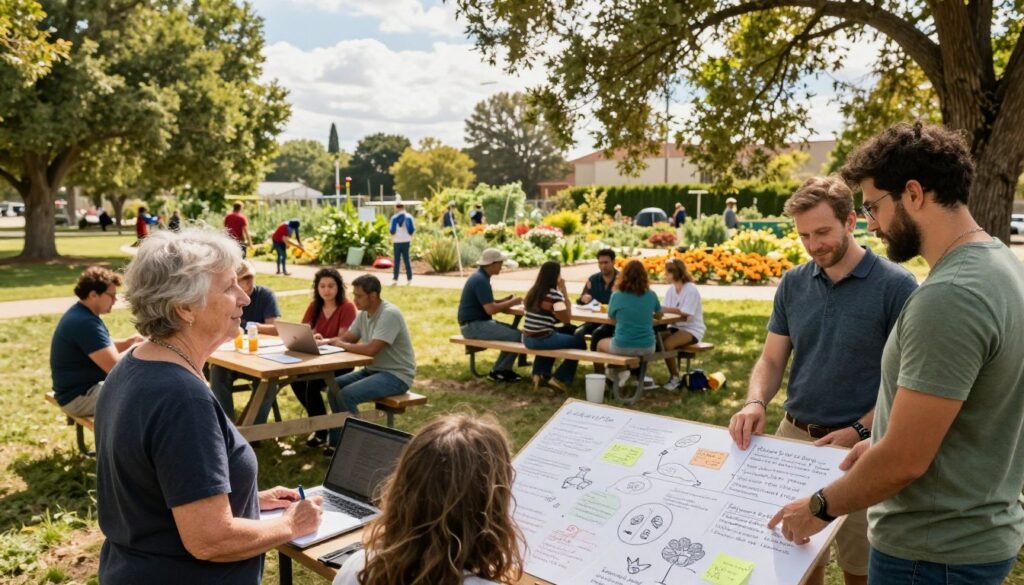
Successful initiatives build partnerships between city agencies, private firms, and non-profit groups. These collaborations work toward a shared vision for neighborhood progress.
Focusing on tangible outcomes, like better parks or reliable services, shows residents the value of community-led action. Data-driven decision-making helps leaders use every dollar for maximum area betterment.
Continuous program evaluation is necessary. It ensures these strategies adapt to new challenges and meet evolving resident needs.
Housing: Strategies for Affordable Living
The Housing New York initiative stands as a powerful case study in how a major city can tackle its housing crisis head-on. This comprehensive plan set a clear goal to increase affordable living options across all five boroughs.
Lessons from the Housing New York initiative
Launched in 2014, the plan delivered remarkable results. The final progress report confirmed the city built or preserved 200,000 affordable homes by 2021.
This effort preserved 114,386 existing units and constructed 49,818 new ones. It also projected the creation of 194,000 temporary construction jobs.
Innovative local approaches and best practices
The strategy targeted a wide income range. A strong 68.2% of homes were for low or very low-income households.
Success required deep coordination. Over 200 stakeholders provided input, and 13 city agencies worked together. This model shows how focused planning can meet critical community needs.
Community Health and Safety Initiatives
A community’s vitality is measured not just by its economy, but by the well-being and security of every person who calls it home. These two pillars are fundamental to quality of life and require dedicated, proactive strategies from municipal leadership.
Enhancing Public Health Services
Municipal health departments play a critical front-line role. They enact regulations that protect residents from environmental hazards and ensure access to medical care.
Integrating these services into broader development plans is a best practice. This approach creates neighborhoods that support long-term wellness for everyone.
It actively works to reduce health disparities among different population groups. This integration is key to building a resilient population.
Promoting Safety Through Community Policies
Effective safety initiatives go beyond traditional law enforcement. They involve collaboration between police, public health experts, and neighborhood leaders.
This partnership tackles the underlying causes of insecurity. It allows for a faster, more tailored response during public crises.
Such policies build trust and make areas safer for all families and businesses. They turn reactive systems into proactive community shields.
Resource Hub: Connecting People, Communities, and Information
In an age of information overload, a dedicated hub that curates essential tools can transform how residents engage with civic issues. It cuts through the noise to provide clear, actionable guidance.
This centralized platform aggregates the best practices and strategies developed by experts. It ensures every neighborhood has access to the same high-quality resources.
Providing a single, accessible point allows people to quickly find the data and policy templates they need. They can address their specific challenges with confidence.
The platform fosters a stronger sense of community. It enables the sharing of successful initiatives and lessons learned from various cities.
Empowering people with accurate information is the critical first step. It builds a more informed and active citizenry capable of shaping its own future.
Leveraging Funding and Financial Tools for Local Projects
The gap between a great idea and a finished project is frequently bridged by creative and collaborative financing. Major community improvements demand significant capital and a strategic plan to secure it.
Public and Private Partnerships in Financing
Public-private partnerships are a powerful model for this work. They combine municipal commitment with private sector investment and expertise.
This blend creates a robust resource pool for large-scale development. It spreads risk and aligns goals for lasting community benefit.
Specialized financial tools are key for incentivizing construction. Tax-exempt bonds and property tax exemptions lower costs for developers.
These mechanisms make building affordable housing projects more feasible. They attract the necessary investment to meet urgent community needs.
Successful models also involve regional banks and philanthropic groups. This collaboration maximizes the impact of every dollar spent on housing.
It ensures a diverse mix of financial resources supports sustainable growth. Strategic funding turns vital plans into tangible assets for the area.
Legal and Policy Frameworks That Enable Progress
Legal frameworks provide the essential tools for cities to defend their right to self-governance against external interference. These structures are vital for protecting municipal authority from state overreach.
Tools and strategies to counteract state overreach
Developing strong legal and policy frameworks is necessary. They give municipal leaders the resources to protect their autonomy.
Advocates and attorneys use these frameworks to challenge restrictive state laws. This protects the ability of towns to pass beneficial policies.
Strategic litigation and policy advocacy are key tools in this effort. They ensure governments retain the power to govern their own affairs.
Organizations like the LSSC build libraries of legal resources. This helps officials navigate complex state and federal regulations.
These frameworks provide a foundation for sustainable progress. Communities can implement innovative answers without constant state-level interference.
Innovative Approaches from Across the United States
Recent legislative actions in states like Indiana and Tennessee underscore the dynamic struggle over municipal authority. Across the country, towns and cities are testing unique local solutions to meet their specific needs.
Examples from diverse cities and communities
In Indiana, the state legislature became the 19th state to ban ranked-choice voting. This move sparked debate about who should control election methods in each city.
Meanwhile, Tennessee lawmakers are weighing a dozen new anti-LGBTQ+ bills. These proposals could limit the ability of a city to protect its own residents through inclusive policies.
These cases show the tension between state decisions and municipal innovation. They highlight how top-down rules can clash with grassroots governance strategies.
By studying these diverse approaches, advocates gain crucial insights. They can develop stronger plans to protect democratic processes in every community.
The Impact of State Policies on Local Resources and Autonomy
A top-down policy from a state legislature can instantly redirect funding and authority away from a community’s priorities. This dynamic creates a constant tension between broader political agendas and the specific requirements of a town or city.
Managing Preemption and Balancing Priorities
State preemption laws actively undermine a municipal government’s capacity. They can block effective action on urgent public needs.
Officials face a delicate balancing act every day. They must follow state law while fiercely advocating for their community’s rights.
This restriction often prevents the implementation of tailored policies. These are the very strategies that would best serve a population.
Navigating this complex relationship is a major challenge. Protecting autonomy ensures a government remains responsive to its people.
This protection is fundamental for democratic governance. It allows for adaptation to changing values and demands.
Building Resilient Communities Through Collaborative Efforts
Moving from fragmented efforts to coordinated action is the key to creating lasting stability and growth for all people. This process requires the active participation of every resident, from business owners to dedicated volunteers.
Everyone must work toward a common goal for their neighborhood. Collaborative efforts form the cornerstone of true resilience.
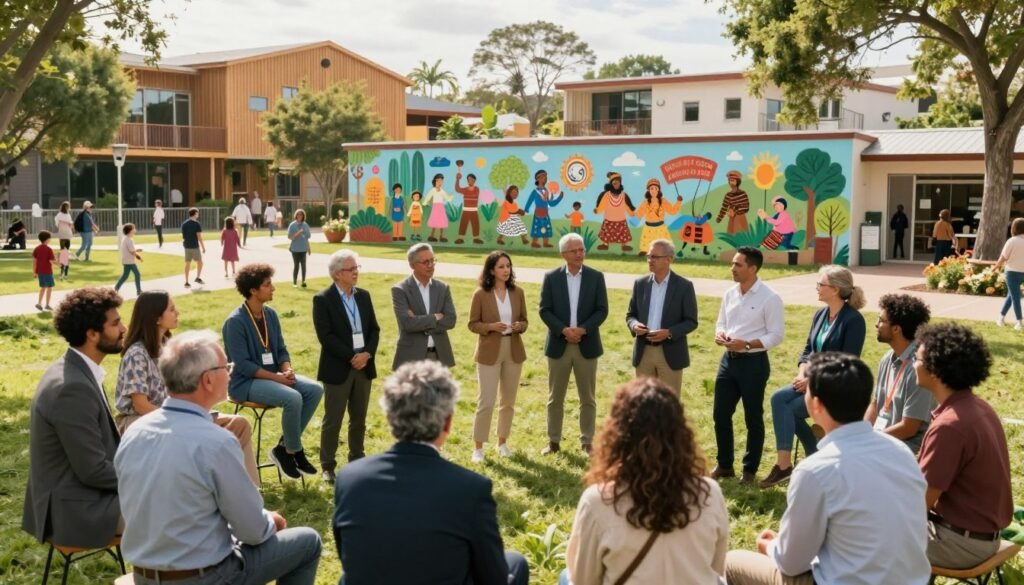
They allow a community to pool its collective knowledge and available resources. This shared strength helps overcome even the most difficult challenges.
Strong relationships between residents and municipal government are vital. These connections create a reliable support network capable of weathering any future crisis.
Resilience means more than just surviving adversity. It is about thriving by creating systems that are inclusive, equitable, and responsive.
These systems must meet the needs of all people. When a community works together, it develops innovative answers far more effective than any top-down approach.
Integrating Technology and Sustainable Practices in Local Solutions
Advanced building techniques and energy-saving designs are revolutionizing how we house people in dense metropolitan areas. For a major city like New York, home to over 8.3 million residents, these innovations are essential.
They offer scalable answers for the entire 18.8 million-person metro region. This integration is a cornerstone of effective community strategies.
Adoption of Modular Building Technologies
Modular construction is transforming the housing sector. It allows for faster, more cost-effective building of high-quality residential units.
This method is ideal for addressing severe shortages in urban environments. It provides a practical path for sustainable growth in a crowded city.
Energy Efficiency and Modern Construction Methods
Energy efficiency retrofits are a key component of urban strategy. They improve public health by reducing indoor pollutants and lowering family utility costs.
Modern methods like micro-units and smart design help maximize space. A recent progress report confirms sustainable standards are now a top priority for agencies.
These technological advancements ensure new housing is both affordable and climate-resilient. Smart infrastructure further supports community health by optimizing building systems.
Conclusion
The journey toward a stronger, more equitable neighborhood is built on persistent effort and shared purpose. Creating meaningful change is a continuous process that demands dedication from everyone involved.
By using the strategies and resources outlined in this guide, residents and municipal leaders can tackle pressing challenges together. This collaborative work is the foundation for real progress.
Protecting community autonomy and strengthening democracy are essential. They ensure towns remain responsive to the people they serve.
We encourage you to advocate for policies that reflect your neighborhood’s values. Use this information to make your voice heard in civic processes.
Together, we can build a future where every community has the power to thrive. It is a future shaped by the collective action of its people.
FAQ
What are community-based strategies and why are they important?
Community-based strategies are actions designed to tackle specific issues right where people live. They are vital because they directly address the unique needs of a city or neighborhood. These efforts use local knowledge and resources to create more effective and sustainable outcomes for residents.
How can cities create more affordable housing?
Cities can promote affordable living by updating zoning rules and investing in public housing. A great example is New York City’s Housing New York plan. It uses public land and partnerships with developers to build and preserve thousands of affordable homes for residents.
What role do public health services play in neighborhood safety?
Strong public health services are a cornerstone of community safety. When people have access to quality medical care, mental health support, and wellness programs, it builds a healthier, more stable population. This proactive approach helps prevent crises and creates safer environments for everyone.
Where can community leaders find funding for improvement projects?
Leaders can explore a mix of public grants, private investments, and public-private partnerships. Organizations like the Local Initiatives Support Corporation (LISC) provide crucial capital and guidance. Tapping into these financial tools is essential for turning plans for parks, clinics, or housing into reality.
What legal tools help protect a community’s ability to make its own rules?
Communities can use “home rule” authority, where granted by state law, to govern local affairs. Advocacy and clear communication with state legislators are also key. Forming coalitions, like those supported by National League of Cities, helps defend local policies from being overridden by state preemption.
Can new technology help with community development?
Absolutely. Modern methods like modular construction, used in projects in Los Angeles, speed up building and reduce waste. Integrating energy-efficient designs and smart technology into new developments also lowers long-term costs for residents and improves sustainability.