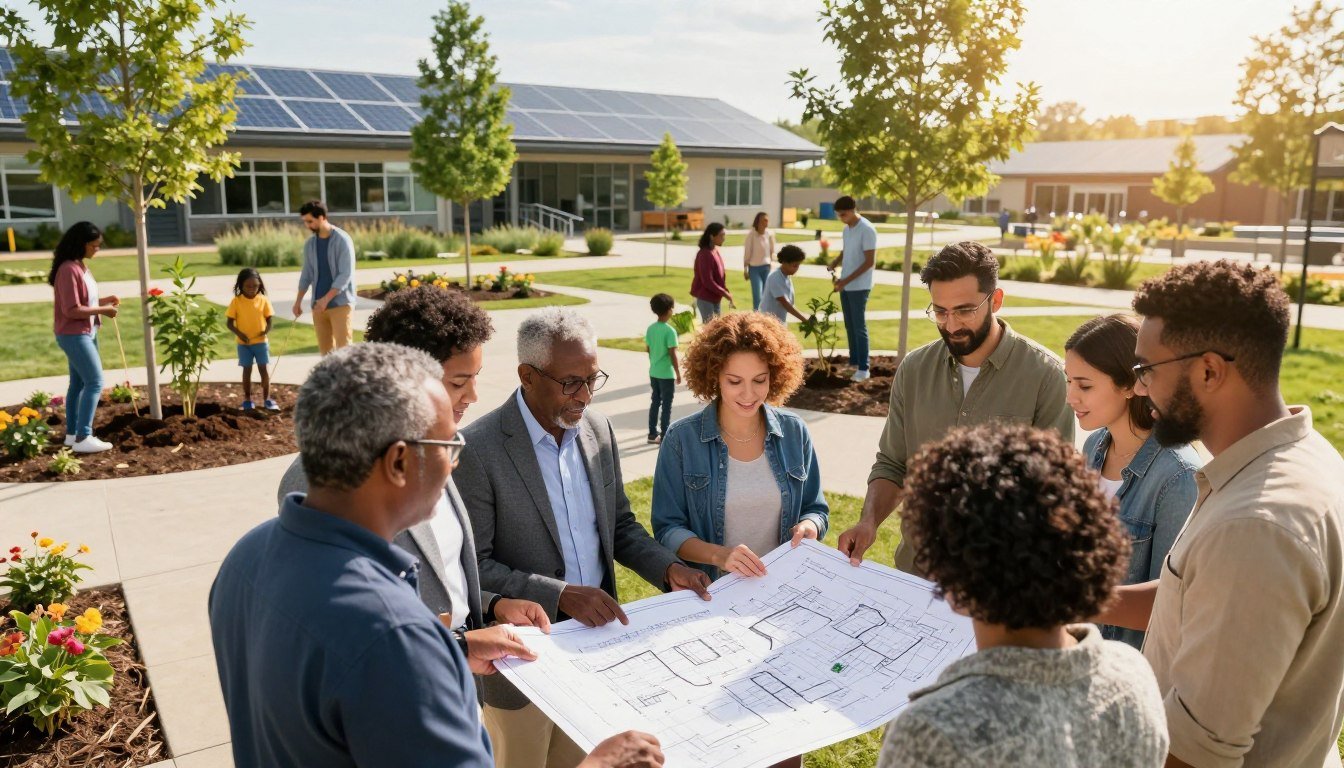
What if the key to revitalizing our cities lies not in grand government plans, but in the hands of the people who live there?
This idea sparked a major shift in the 1960s. The community development movement arose as a direct response to the disruption caused by top-down urban renewal. Cities like Philadelphia became hubs for new, locally-based improvement programs.
This field of practice focuses on giving residents greater control over the future of their own neighborhoods. It thrives on a collaborative approach. Successful growth requires government agencies and local organizations to agree on sharing responsibility for policy and resources.
President Lyndon Johnson later championed this idea as “maximum feasible participation” in his War on Poverty. The principle was simple: involve the people most affected by the plans.
Today, these strategies have evolved. Modern initiatives combine housing, business opportunities, educational facilities, and social services. The goal is to build more sustainable and equitable urban areas. Understanding this history is essential for supporting current revitalization efforts.
Key Takeaways
- The movement began in the 1960s as a reaction to disruptive government urban renewal projects.
- Its core mission is to provide local residents with control over their neighborhood’s future.
- Effective progress depends on collaboration between government and local groups.
- The concept of “maximum feasible participation” was a central pillar of the War on Poverty.
- Strategic management of resources is crucial to meeting local needs.
- Modern programs integrate diverse elements like housing, education, and economic opportunities.
- Historical context is key to understanding and supporting today’s urban growth.
Understanding the Historical Context of Community Development
Historical efforts to rebuild cities after World War II set the stage for today’s participatory planning models. This journey began even earlier, with ideas from colonial reports.
Colonial Legacy and Early Influences
British Colonial Office reports in 1944 highlighted literacy training and social welfare. This early focus shaped later concepts for local progress.
Urban Renewal and Post-War Initiatives
After the war, many urban renewal plans displaced residents. This led to criticism and a search for better methods.
In Philadelphia, local organizations showed a different path. The Friends Neighborhood Guild rehabilitated nineteen old buildings from 1952 to 1957. They created eighty-four units of high-quality affordable housing.
Another landmark was Guild House. This 91-unit complex provided modern homes for elderly citizens. It opened at 711 Spring Garden Street.
The Bright Hope Baptist Church led the Yorktown project in 1958. It built 635 new single-family homes. This project used 153 acres of land in North Philadelphia.
To manage large grants, the Philadelphia Council for Community Advancement formed in 1962. It handled funds from the Ford Foundation and federal programs.
These post-war initiatives aimed to attract capital investment. They focused on areas with declining populations and weak services.
By rehabilitating existing structures, these groups proved local action could revitalize an area. The Rev. Leon Sullivan’s Opportunities Industrialization Center also played a key role.
These early projects laid the groundwork. They proved local institutions could manage large-scale improvement work successfully.
Evolving Community Planning and Policy Frameworks
The 1970s marked a pivotal shift in how cities accessed and managed federal funds for local improvement. The Community Development Act of 1974 consolidated eight separate programs into one annual block grant.
This gave municipalities broad discretion to allocate resources. They could now target specific housing and service needs in their areas.
Government-Led Initiatives
The new Community Development Block Grant (CDBG) program changed urban investment. City officials gained control over funding decisions.
This required new structures for public input. Philadelphia created a Citizen Participation unit to manage the process.
Citizen Participation and Policy Impact
Local organizations quickly organized to influence this new system. The Philadelphia Council of Neighborhood Organizations formed in 1976.
Led by Joseph M. Kakalec, this coalition ensured officials heard resident needs. Their advocacy successfully redirected money toward affordable housing.
Groups like the Housing Association of Delaware Valley challenged city spending. They argued for neighborhood priorities over administrative costs.
This era proved organized public action could shape policy and resource allocation. It set a lasting precedent for grassroots involvement in urban management.
Community Development: Key Strategies and Best Practices
Transforming a neighborhood requires more than good intentions. It demands strategic action and smart resource use.
Effective Resource Allocation
Smart funding turns plans into reality. The Northside project in Spartanburg shows how.
It secured $250,000 in local foundation donations. Donors matched these funds to support mixed-income housing and school improvements.
Purpose Built Communities provided expert consulting. This helped the city create a strong strategic plan.
Sustainable Neighborhood Projects
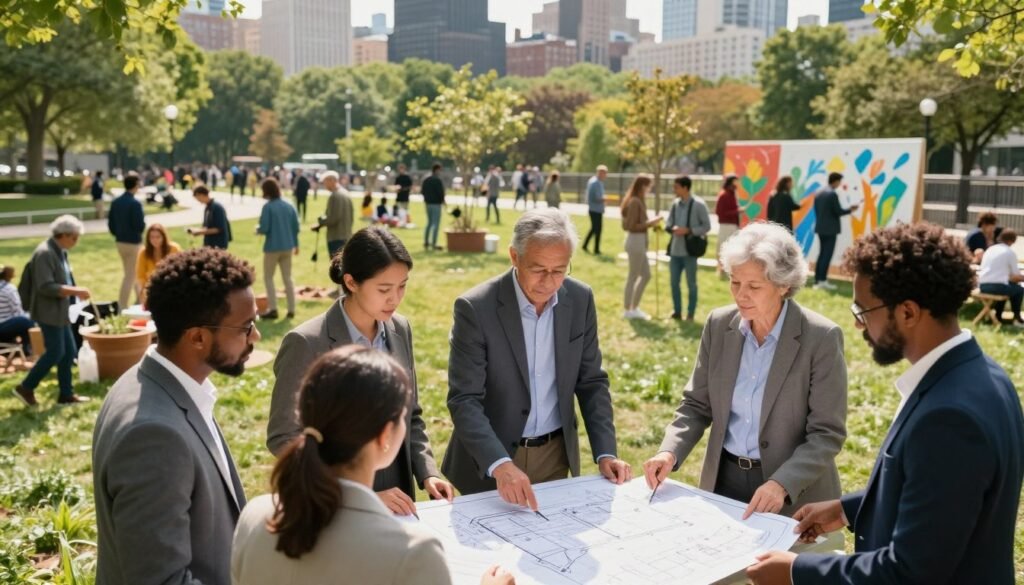
Long-term success needs a focus on quality of life. Spartanburg City Manager Ed Memmott highlighted this need.
Healthy areas require good schools and walkable streets. They also need convenient access to goods and services.
These elements attract business investment. Companies look for them when choosing locations.
Leaders must build a clear vision. All stakeholders should work toward the same long-term goals.
This practice ensures revitalization efforts meet resident needs and last for years.
Government and Community Collaboration for Change
Federal policy shifts in the late 1960s unlocked new tools for building affordable homes. The National Housing Act of 1968 moved government programs toward greater private sector control. This change encouraged partnerships between local groups and public agencies.
Initiatives in Housing and Infrastructure
Sections 235 and 236 of the Act were crucial. They provided mortgage insurance for owner-occupied and rental housing projects. This opened doors for many local organizations to participate.
The Mt. Olivet Senior Housing project in West Philadelphia shows this teamwork. A church worked with the Philadelphia Redevelopment Authority. Together, they created needed homes for elderly residents.
Another strong example is the National Temple Non-Profit Corporation. This group developed over three hundred apartments and townhouses in North Philadelphia. It proved nonprofit corporations could be highly productive developers.
Federal Section 8 voucher programs added vital support. They provided rental assistance subsidies to finance housing ventures. These subsidies helped make projects financially possible.
Such public-private partnerships remain a cornerstone of modern work. They leverage resources from both sectors to meet local needs. Often, basic infrastructure upgrades are included for long-term sustainability.
This collaborative model demonstrates that government support is essential for large-scale housing success. It allows for high-quality results that serve the people.
Grassroots Movements Shaping Modern Communities
From protesting highways to reclaiming vacant homes, citizen-led movements have written key chapters in urban history. These efforts show how local action can directly challenge top-down plans and create lasting change.
Neighborhood Activism and Social Capital
Local activism builds vital social connections. When residents organize, they gain a stronger voice in city decisions.
This participation helps direct resources to meet real needs. Neighborhood associations often lead this crucial work.
Case Studies of Local Empowerment
In 1973, Chinatown activists successfully stopped an expressway project. They voiced strong objections at City Hall hearings.
The federal Model Cities program, started in 1966, spurred many local groups into action. The Architects Workshop, founded in 1969, offered free design services to over ninety organizations each year.
Edward A. Schwartz established the Institute for the Study of Civic Values in 1973. It provided key support for local initiatives.
Role of Community-Based Organizations
These groups tackle specific local problems. T. Milton Street organized the North Philadelphia Block Development Corporation in 1977.
It helped families move into vacant housing seized by the government. Such organizations prove that resident-led activities are powerful tools for improvement.
Their legacy continues to influence modern community development by emphasizing local voice.
Innovative Partnerships in Education, Health, and Services
A pharmacy school downtown, a new medical clinic, and a massive sports park show how diverse sectors can unite for common good. These collaborations address fundamental resident needs beyond basic infrastructure.
Integrating Educational Opportunities
Presbyterian College opened its School of Pharmacy in downtown Clinton in 2010. This move created a vital hub for education and local healthcare services.
It also generates skilled jobs for the area. Such institutions act as anchors for long-term economic opportunities.
Supporting Health and Social Welfare Programs
The Pelion Family Practice opened in October 2011. It used federal block grant resources to serve an uninsured population.
Recreational facilities also play a key role. North Myrtle Beach is building a 160-acre sports complex managed by its Parks Department.
Projects like the Hartsville Community Garden tackle food security. They donate fresh produce to local food banks.
The City of Easley’s garden was created with the United Way. These partnerships prove holistic community development works.
They combine health, learning, and recreation for total well-being.
Urban Renewal: Tax Incentives and Real Estate Revitalization
Philadelphia’s real estate boom offers a clear case study in how tax abatements can drive private investment. Between 1979 and 2015, house prices in the city increased by more than 150 percent.
A ten-year tax abatement program served as a powerful incentive for this growth. It encouraged builders to invest in Center City and other areas.
Impact of Tax Abatement and Private Investment
Private financing played a key role. Project HOME purchased a nine-story building near Rittenhouse Square. This created 144 units of mixed-income housing.
The Philadelphia Chinatown Development Corporation secured $33 million through a federal investment program. This funded the Eastern Tower mixed-use project.
As property values rose, advocacy groups formed the Philadelphia Campaign for Housing Justice. They promote inclusionary zoning mandates.
Another initiative, the Campaign to Take Back Vacant Land, focuses on creating a Philadelphia Land Bank. This aims to stabilize low-income areas against rising costs.
These efforts highlight a complex balance. Urban renewal must fuel economic growth while protecting long-term residents from displacement. Smart policy ensures revitalization meets broad needs.
Leveraging Nonprofit and Private Sector Resources
New financial tools emerged in the mid-1980s, changing how affordable housing and local services were funded. This era saw a strategic push to blend public resources with private and philanthropic investment.
Community Development Financial Institutions
The Reinvestment Fund opened in Philadelphia in 1985. It provided independent nonprofit capital to reinvest in poor neighborhoods.
The 1986 Tax Reform Act created the Low Income Housing Tax Credit. This became a vital source of funding for new housing ventures.
Public-Private Partnerships in Community Renewal
Local organizations diversified their work. They moved into commercial corridor business and public health initiatives.
These groups survive by marshaling external resources. They draw investment from government, philanthropy, and the private sector.
The 1990 HOME Investment Partnerships Program offered further support. Public-private partnerships are now essential for large-scale strategic plans.
Mayor W. Wilson Goode’s administration expanded city contracts with local organizations. The ability to secure diverse funding is a key indicator of success.
Current Trends and Future Directions in Community Development
Innovative tools like community land trusts are gaining traction as a powerful answer to housing instability in many cities. These trusts acquire real estate to ensure lasting affordability for low-income households.
This approach represents a strategic shift. It prioritizes long-term resident well-being over short-term gains.
Adapting to New Policy Environments
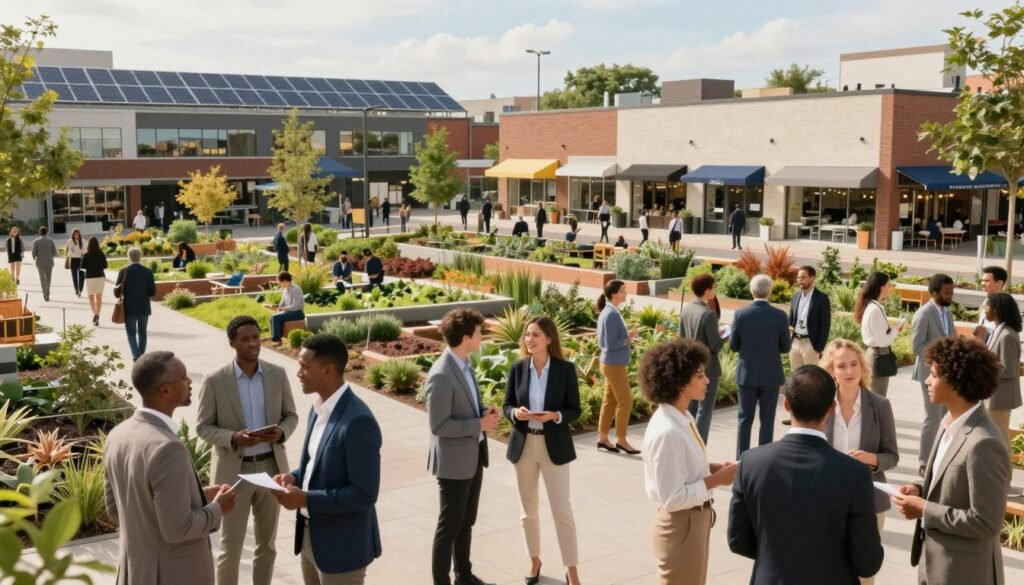
Successful organizations must remain flexible to navigate changing policy landscapes. They maintain a clear direction for wider social and economic transformation.
Examples like the ACORN-sponsored Community Land Association of Pennsylvania show this adaptability. It used land trusts as a tool for neighborhood stabilization.
Innovative Urban Strategies
Modern work increasingly focuses on social justice and strengthening local networks. Practitioners seek to reconnect informal education with collective action.
The North Camden Land Trust, formed in the late 1970s, successfully managed the rehabilitation of vacant houses. In Philadelphia, the United Hands Community Land Trust provided affordable housing.
The future lies in balancing economic growth with the happiness of people. By learning from the past, leaders can build more resilient and inclusive neighborhoods.
Conclusion
The enduring lesson from decades of urban transformation is that sustainable progress flows from resident-led initiatives. This practice remains vital for cultivating local democracy and mutual aid in neighborhoods across the country.
History shows successful change requires blending grassroots action, government support, and private sector investment. Together, these resources address critical needs like affordable housing and essential services.
Moving forward, organizations must adapt to new policy environments. The core focus must stay on empowering people to solve their own problems.
By fostering strong local networks, we ensure cities remain vibrant places to live. The power of community development lies in collective work toward a more equitable future for everyone.
FAQ
What are the origins of modern neighborhood planning in the United States?
The foundations of today’s local work stem from early 20th-century efforts and post-war urban renewal. These early programs often focused on large-scale physical changes but sometimes overlooked the social fabric and needs of existing residents, leading to important lessons for current practice.
How can local areas ensure their planning is effective and sustainable?
Successful initiatives rely on smart resource allocation and long-term vision. This means aligning projects with genuine resident needs, securing diverse funding, and focusing on lasting improvements to housing, green spaces, and local business districts to create resilient places.
What role do partnerships play in improving local conditions?
Collaboration is essential. Strong alliances between municipal agencies, nonprofit groups like Habitat for Humanity, and private companies can tackle complex issues. Together, they can build affordable homes, upgrade infrastructure, and support essential services more effectively than any single entity alone.
How do grassroots groups influence change in their own neighborhoods?
Local activism and organized resident groups drive meaningful change from the ground up. By building social capital and advocating for their needs, these organizations can influence policy, launch vital programs, and hold larger institutions accountable, ensuring that growth benefits everyone.
Why are education and health services considered key parts of area improvement?
Thriving places require more than buildings; they need healthy, educated residents. Integrating after-school programs, adult education, and accessible clinics addresses core well-being. Organizations like Enterprise Community Partners often support these integrated approaches to foster holistic prosperity.
What financial tools help revitalize underinvested urban areas?
Tools like Tax Increment Financing (TIF) and New Markets Tax Credits are powerful. They encourage private investment in real estate and commercial projects by offering incentives. When used wisely with clear public goals, these tools can spark renewal, create jobs, and increase the local tax base.
What are some emerging trends shaping the future of this field?
Current trends include a stronger focus on climate resilience, digital equity, and adaptive reuse of existing buildings. Planners are also using data-driven methods to guide decisions and forming innovative cross-sector partnerships to address evolving challenges like economic shifts and housing affordability.