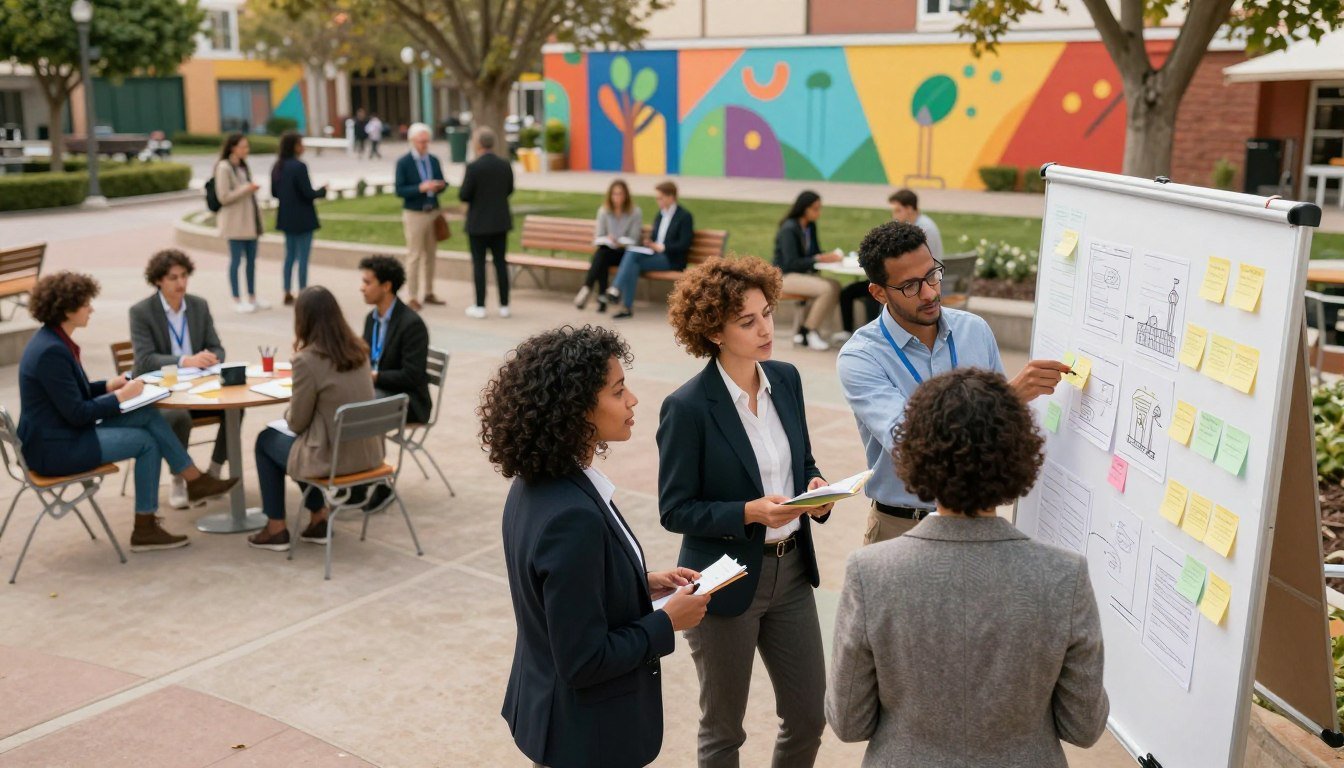
Have you ever wondered why some neighborhoods flourish while others face persistent struggles, even when resources seem similar?
Creating positive change starts by looking closely at the challenges right outside our doors. Across the United States, local issues impact daily life. For example, the USDA estimated that about 10.2% of the population experienced food insecurity in 2021.
Lasting improvement requires a dedicated commitment from residents. It begins with thorough research to truly understand an issue. In Texas, the Anna Independent School District connects student learning to real-world needs through makerspace labs.
This approach provides vital support and shows how schools can be part of the solution. Addressing these challenges is a shared effort. Every person can contribute to a positive outcome.
When we prioritize the health and well-being of our neighbors, we build a stronger, more resilient local area. Finding a better way to engage everyone ensures the strategies we use are sustainable and truly work for the people they serve.
Key Takeaways
- Effective local change requires a dedicated commitment to identifying challenges that impact residents.
- Conducting thorough research is essential to understand the complex nature of local issues.
- Connecting school learning to real-world needs provides strong support for students and the area.
- A collaborative approach where everyone feels empowered leads to more lasting solutions.
- Prioritizing the health and well-being of neighbors creates a more resilient community.
- Engaging local stakeholders ensures strategies are both sustainable and relevant.
Introduction to Community Problem Solving
The fabric of a local area is often tested by unique pressures that demand collective attention. These hurdles shape daily life and require a dedicated approach to understand and address them.
Defining Local Community Challenges
Every neighborhood has distinct issues. For instance, the USDA reported that 12.5% of families with children experienced food insecurity in 2021. This highlights a critical local challenge.
Such difficulties can involve a lack of public resources or access to health services. Recognizing these issues is the essential first step.
The Importance of Local Engagement
Local people possess the unique insight needed for long-term solutions. Their direct experience is invaluable for crafting relevant strategies.
When students examine their own areas, they discover why academic learning matters. This connection provides a powerful answer to real-world relevance.
Areas thrive when their members help identify root causes. Fostering dialogue between neighbors bridges the gap from identifying an issue to taking collaborative action.
Effective Community Problem Solving Strategies
Strategic frameworks provide the necessary roadmap for a community aiming to improve its shared spaces. Lasting change requires more than goodwill. It needs a clear, actionable plan.
Public health is deeply connected to local conditions. Research from the National Institutes of Health shows a specific risk. Children from low-income families face a 2.31 times higher chance of obesity due to food insecurity.
This data underscores why a methodical response is critical. A structured approach prioritizes the well-being of vulnerable groups.
Step-by-Step Guides for Tackling Issues
Begin by thoroughly assessing the specific challenge. Gather input from those affected to understand root causes.
Next, develop a collaborative plan with measurable goals. This phase ensures every proposed solution is vetted for long-term impact.
Then, take coordinated action while maintaining open communication. Finally, review outcomes and adapt the strategy as needed.
Expert Tips and Best Practices
Experts emphasize transparency and accountability for all participants. Sustainable solutions are built when groups address systemic barriers together.
Consider economic constraints and resource availability. A multifaceted way of thinking leads to more resilient outcomes.
Following proven best practices turns complex problems into achievable steps.
Fundamental Principles Behind Community Change
Lasting local transformation rests on a set of core beliefs that guide collective action. These principles move us from simply reacting to issues toward building a resilient future for all residents.
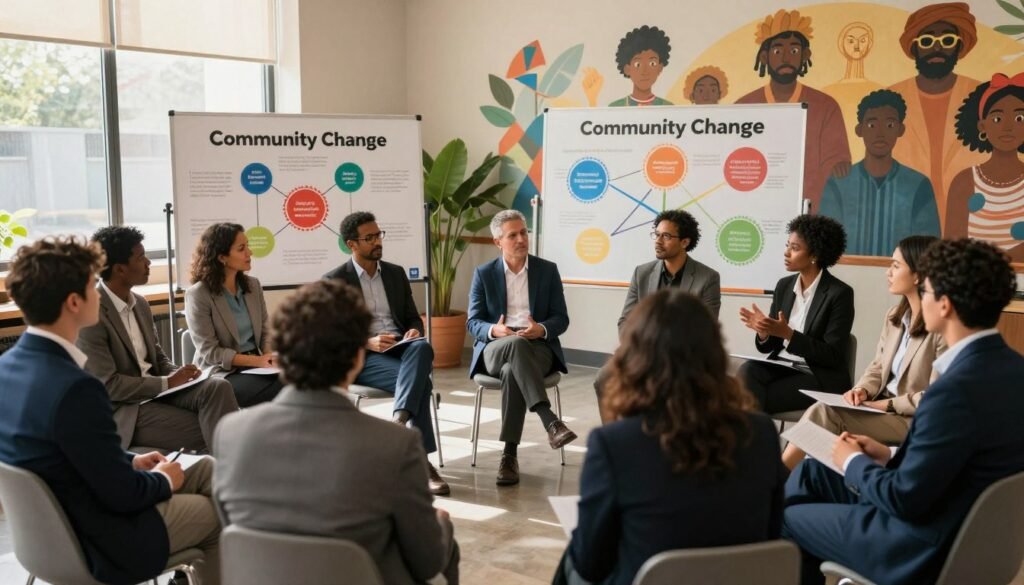
Understanding the Roots of Community Problems
Effective change requires digging beneath the surface. We must analyze data to find out why certain conditions persist.
For example, the CDC reported that 9.7% of the U.S. population lacked health insurance in 2020. This created significant barriers to medical care.
Such statistics reveal systemic gaps. Identifying these root causes is the first step toward meaningful improvement.
The Role of Empathy and Collaboration
Empathy is the foundation for all cooperative work. It allows area members to see the world through the eyes of those most affected.
When people share their lived experiences, they create a more inclusive path forward. This collaborative spirit helps develop answers that serve the entire population.
True progress happens when we address underlying systemic hurdles. By fostering teamwork, neighborhoods can leverage diverse talents. This builds a more equitable and healthy future for everyone.
Integrating Design Thinking and Makerspace Concepts
Schools across the country are transforming classrooms into hubs for tangible invention and social impact. This powerful blend of creative process and hands-on building equips young people with vital tools.
Students learn to identify needs and prototype answers. They move from abstract ideas to working models.
Real-World Examples from Educational Makerspaces
Anna ISD in Texas provides a strong example. Their makerspace labs let students use design thinking to tackle real-world challenges.
Young people build physical prototypes for identified needs. Another initiative, Project Invent, offers a structured program.
It guides students to engineer solutions for social good alongside local members. This partnership ensures relevance and support.
Innovative Curriculum Integration Techniques
Educators weave these concepts directly into lesson plans. This creates a supportive environment for practicing complex tasks.
Access to industrial-grade tools is a key advantage. It allows the effort needed to turn a creative idea into a functional solution for others.
This approach builds technical skills and deepens understanding of the world. Students gain confidence in their ability to contribute meaningful solutions.
Leveraging Community Partnerships for Local Change
Collaborative networks built on trust and shared expertise are the engines of sustainable local progress. These alliances connect schools, nonprofits, and businesses to address shared goals for neighborhood improvement.
Engaging Local Experts and Stakeholders
Local professionals bring vital knowledge to the table. Partnerships with groups like the Wounded Warrior Project give students deep insight into public health challenges.
This access turns classroom theory into practical understanding. It provides a real-world context for academic learning.
Building Trust and Collaborative Networks
Trust grows from consistently listening to stakeholder needs. Mutual respect forms the foundation for every successful alliance.
When schools partner with local organizations, they create unique opportunities. Students gain skills that extend far beyond the classroom walls.
Effective partnerships pool resources and diverse expertise. They develop innovative solutions that improve public health and safety for all residents.
Addressing Local Challenges: Health, Housing, and Safety
The well-being of any area depends on securing three foundational pillars: public health, affordable shelter, and personal safety. These interconnected issues demand specific, data-informed approaches for meaningful improvement.
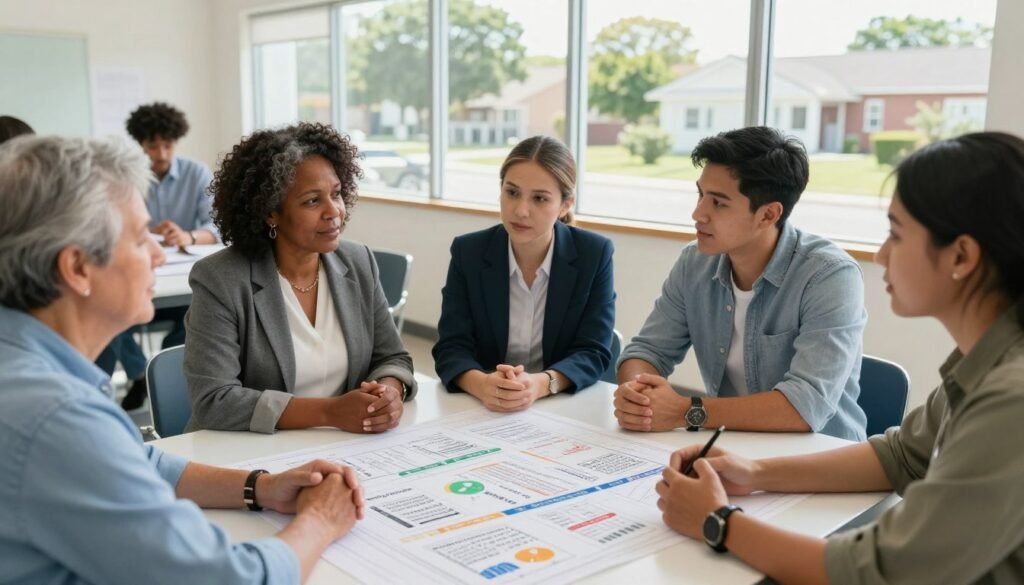
Tackling Food Insecurity and Public Health Barriers
Improving access to nutritious food starts by asking the right questions. Local initiatives, like shared gardens, offer fresh produce and foster connections. These projects provide a direct answer to a critical need.
Public health is also tied to the physical environment. The broken windows theory notes that visible neglect can signal a lack of care. Addressing such decay is a step toward safer, healthier outcomes for all residents.
Improving Access to Affordable Housing
The housing market faces intense pressure. CoreLogic reported investors bought 28% of single-family homes in early 2022. This trend significantly limits options for local families.
Addressing this crisis requires a deep understanding of these market forces. Strategic answers must come from collaborative effort. Preparing young people with relevant skills equips them to handle these complex life challenges.
Creative Problem Solving Techniques and Tools
A collection of practical tools can transform how a team analyzes challenges and develops actionable plans. These structured techniques move groups beyond simple discussion toward innovative outcomes.
Utilizing Mental Maps and Impact & Effort Matrices
Mental Maps help students visualize connections between different aspects of a situation. This clarity is vital for maintaining good mental health during complex projects.
The Impact & Effort Matrix is another powerful method. It allows groups to prioritize actions based on potential benefit and required work.
Employing Forced Analogy, Backward Working, and Other Methods
Forced analogy pushes youth to break traditional thinking patterns. It asks them to compare their challenge to an unrelated object, sparking fresh ideas.
The “Working Backward” method starts with the desired solution. Teams then identify all steps required to reach that specific goal, ensuring efficiency.
Exploring the Digital Card Strategies for Innovative Solutions
Sets of digital cards provide groups with a full toolkit. These resources offer methods like the ones described for structured collaboration.
This approach supports collective effort. It guides people from initial analysis to a final, workable plan for meaningful change.
Empowering Youth and Communities Through Educational Outreach
When students are given the tools to make a difference, they become powerful agents of local improvement. Organizations like NTC have spent over 40 years developing programs that empower young people to take an active role.
Integrating Civic Engagement Projects in Schools
Schools that integrate civic engagement projects provide practical learning experiences. Students gain skills needed to navigate complex social issues and advocate for positive change.
This hands-on approach transforms the classroom into an innovation hub. Young people apply academic concepts to real-world challenges they care about.
Encouraging Student-Led Community Initiatives
Student-led initiatives ensure solutions are relevant to local needs. They reflect diverse perspectives from the youth involved in creating them.
Educators provide consistent support for these programs. This helps build the confidence required to tackle pressing health issues facing their generation.
These efforts create a healthier, more equitable world for everyone. They show young people that their contributions matter.
Conclusion
Empowering the next generation with practical abilities ensures a legacy of positive local impact. Students gain lifelong skills that directly improve public health and vitality. These tools help them address real-world needs with confidence.
Schools provide essential support through integrated learning opportunities. Effective programs foster innovation and collaboration. This environment prepares youth to become engaged citizens.
By applying these strategies, we develop sustainable solutions. Investing in such efforts builds a healthier future for all. Collective action remains our most valuable asset for progress.
FAQ
What are the first steps to take when addressing a neighborhood issue?
Begin by clearly defining the specific challenge. Gather a small group of invested residents to discuss it. Listen to everyone’s perspective to understand the full scope. Then, research what resources or local data already exist. This initial collaboration sets a strong foundation for effective action.
How can schools play a role in local improvement efforts?
Educational institutions are powerful hubs for engagement. They can integrate civic projects into their curriculum, allowing students to apply their learning to real-world situations. This might involve partnerships with local nonprofits or youth-led initiatives that tackle issues like public space beautification or support for senior citizens.
What is an Impact & Effort Matrix, and how is it useful?
This is a simple but powerful tool for prioritizing actions. Your group plots potential solutions on a grid based on the expected impact (high or low) and the required effort (high or low). It visually helps teams focus on “quick wins” (high impact, low effort) and plan for longer-term strategic work.
Why is empathy considered a key principle in creating change?
Lasting improvement requires understanding the lived experiences of all people affected. Empathy moves efforts beyond just fixing a symptom to addressing root causes. It builds trust and ensures that proposed solutions are genuinely helpful and respectful to those most impacted by the issue.
Can you give an example of a creative technique used in group brainstorming?
Forced Analogy is one effective method. It asks participants to compare their challenge to something completely different, like a car engine or a rainforest. This breaks conventional thinking and can spark innovative ideas. For instance, “How would a library solve our access to health services problem?”
How do you sustain momentum in a long-term project?
Celebrate small victories publicly to keep members motivated. Ensure tasks are shared and that no one person carries too much load. Regularly revisit your shared goals and be open to adapting your approach. Consistent, transparent communication within your network is essential for maintaining effort over time.