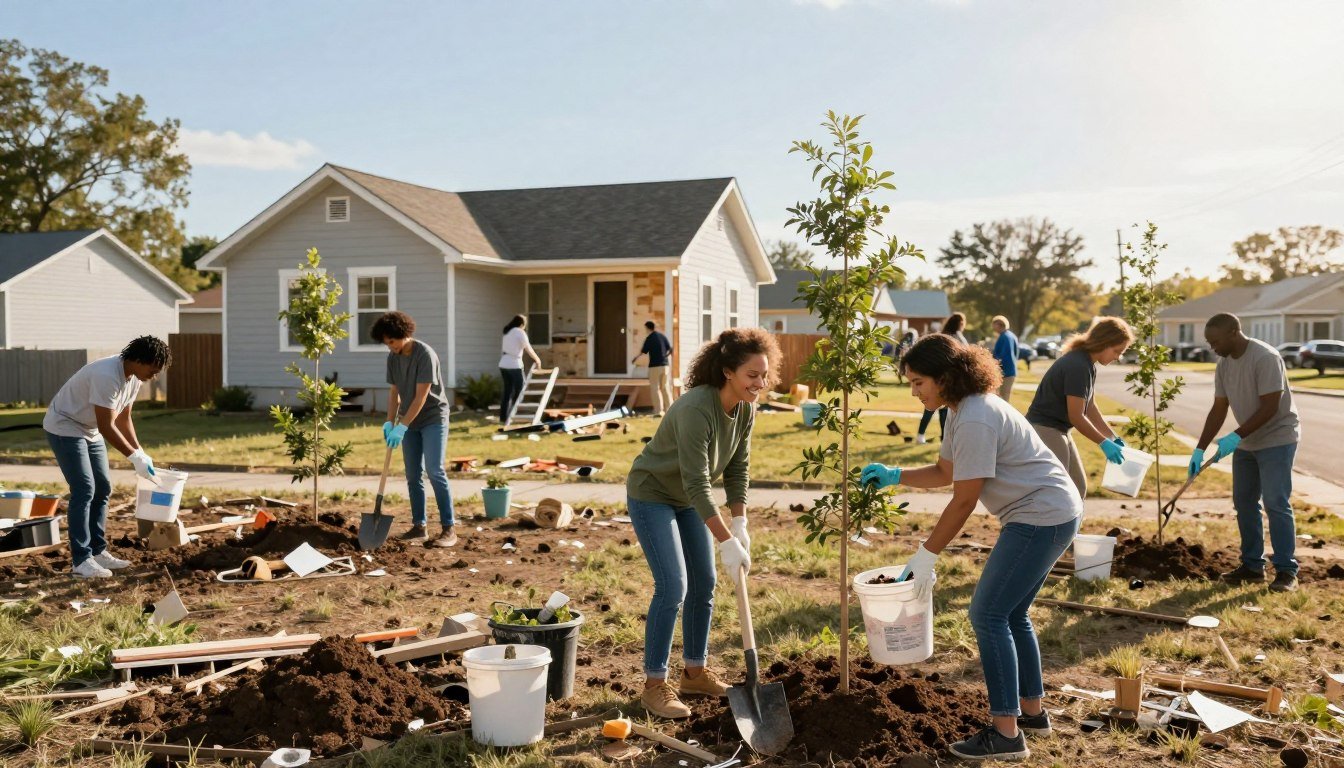
Is simply voting once a year enough to call yourself an active citizen? What if real change happens when we roll up our sleeves together?
After Hurricane Sandy in 2012, neighbors didn’t wait for official help. They grabbed shovels and supplies. This powerful response shows how local action tackles public issues.
This is about individuals and groups taking responsibility. It’s a collective effort to improve shared spaces and well-being.
Such involvement builds stronger, more resilient social networks. It ensures every voice can contribute to solutions.
Strengthening our communities requires this hands-on commitment. It turns shared challenges into opportunities for unity.
Key Takeaways
- Public involvement is a process where people take collective action to address public concerns.
- It improves the quality of life in neighborhoods and towns.
- Events like the Hurricane Sandy cleanup demonstrate rapid community mobilization in a crisis.
- Effective participation requires valuing all voices in the process.
- Active commitment helps diverse groups collaborate on complex problems.
- This work builds a foundation for a more resilient society.
- Strengthening communities addresses both immediate needs and long-term goals.
Introduction to Civic Engagement
At its heart, a functioning democracy relies on more than just periodic elections. It thrives on the ongoing contributions of its citizens.
This involvement is fundamentally instrumental to a healthy democratic system. It allows individuals to influence the direction of their local and national society.
Understanding this core concept means recognizing both political and non-political actions. These efforts aim to improve the overall well-being of the community.
When residents engage in their local environment, they help build a more robust democracy. This system better reflects the diverse needs and interests of everyone.
The process of participation ensures government institutions remain accountable. It fosters a healthier relationship between citizens and their leaders.
By prioritizing this active role, we create opportunities for people to take responsibility. They can shape the future of their neighborhood and the broader society.
The Historical Context of Civic Engagement
Historical patterns of involvement show a dynamic story of connection and disconnection in American life. Research by scholars like Robert Putnam has documented these shifts.
His book “Bowling Alone” highlighted a notable decline in organized community life since the 1960s.
Impact of Past Movements on Community Life
Past social movements demonstrate the power of collective action. When people actively participate, they can steer societal direction.
This active role has historically strengthened local networks. It has improved the quality of life in towns and neighborhoods.
Lessons Learned from Historical Practices
One key lesson is that focusing only on voting is too narrow. A broader spectrum of activities is essential for healthy communities.
Historical data also shows a trend. While education access grew, many individuals stepped back from traditional group activities.
Understanding these trends helps explain why some neighborhoods thrive. Others struggle to maintain the social capital needed for effective participation.
Defining Civic Engagement: Principles and Practices
Defining the active role of citizens requires examining a spectrum of actions, from volunteering to advocacy. This public involvement includes individual volunteerism, organizational work, and electoral participation.
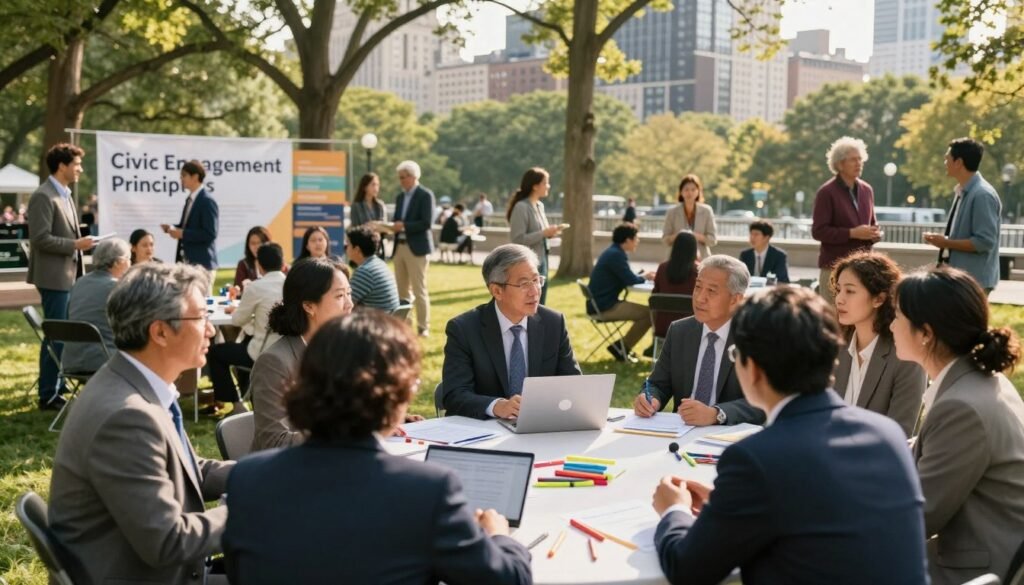
It takes many forms, all aimed at improving shared well-being. These practices are fundamental to a healthy society.
Differentiating Civic Engagement from Community Engagement
A key distinction lies in their scope. Community-based work often builds partnerships to co-create knowledge and drive local change.
Civic action, however, includes direct participation in democratic institutions. It involves a broader political dimension.
Core Elements and Benefits
Core elements involve contacting officials, raising funds, and solving problems. These actions tackle immediate local issues.
People who participate gain crucial knowledge. They learn how to navigate systems and advocate for their neighborhoods.
The advantages are significant. Active participation builds trust between residents and government. It leads to more innovative answers to public concerns.
The Role of Civic Engagement in Shaping Communities
The 2015 State of the World’s Volunteerism Report revealed a powerful link between volunteer action and governance. It shows how ordinary people can improve how they are governed.
Influence on Policy and Local Governance
Active participation in local governance allows individuals to influence policy decisions. This ensures the needs of the community are prioritized by elected officials.
For example, a diverse group of 37 online volunteers worked with the UN. They processed 386 research surveys across 193 Member States in just four months.
When citizens engage with their government, they help create more transparent systems. These systems better serve the interests of all community members.
By shaping policy through consistent involvement, towns can implement programs that address specific local challenges. This direct influence strengthens the fabric of our neighborhoods.
Civic Engagement in Education and Youth Development
Schools are more than just places for academic learning. They are training grounds for future community leaders.
Integrating public involvement into the curriculum prepares young people for active roles in society. This approach connects classroom lessons to real-world needs.
Service Learning and Experiential Opportunities
Service learning provides hands-on experience. Students collaborate with local organizations on projects that address community issues.
This method helps them develop practical skills needed for future work. They learn to apply their knowledge to find real solutions.
Developing Leadership and Civic Skills
Programs like The Democracy Commitment focus on this development. This national initiative helps community colleges educate students for democracy.
A 2014 case study found that active, adaptive leadership is key to success in these programs. Such training builds the capacity of young individuals to tackle complex challenges.
These educational initiatives prepare children and young adults to become informed, contributing members of their towns.
Community Involvement Strategies for Effective Civic Engagement
Universities and local governments are now formalizing partnerships to bridge the gap between ideas and action. This shift marks a strategic approach to public involvement.
These plans move beyond one-time events. They create a framework for sustained collaboration between residents and institutions.
Building Trust and Transparent Partnerships
Trust is the foundation of any successful strategy. A layer of openness between officials and the public addresses a fundamental challenge.
For example, Illinois State University revised its faculty policies in 2021-22. The changes now formally recognize community-engaged service and scholarship as vital academic work.
This policy shift encourages professors to apply their research to local issues. It strengthens the link between campus knowledge and neighborhood needs.
Effective plans often create democratic spaces for dialogue. Here, people can discuss concerns and work toward shared solutions.
Organizations that prioritize clear partnerships are better equipped to handle complex challenges. They foster long-term commitment from members.
Local agencies empower individuals by providing resources and information. This support helps residents participate in projects that lead to positive changes.
Challenges and Barriers in Civic Engagement
A closer look reveals that not everyone has an equal chance to take part in the activities that shape their neighborhood. Meaningful participation faces real hurdles that can exclude talented people.
Socioeconomic and Structural Obstacles
Research shows that income inequality and limited education access create major barriers. Geographic separation also keeps people from joining local projects.
These structural issues mean some groups lack the time, money, or information to get involved. Marginalized areas often have fewer resources to support their own initiatives.
Overcoming Distrust and Communication Gaps
A lack of trust between residents and officials is a deep challenge. Building it requires consistent, transparent communication from all sides.
Addressing these barriers is essential for inclusive programs. Organizations must create opportunities that welcome diverse individuals.
By identifying these obstacles, we can develop better solutions. This work ensures all voices help in community development.
Civic Engagement and Public Health
Public health is not just a matter of doctors and hospitals. It is also shaped by the actions of everyday citizens.
Research reveals a powerful link between social habits and physical well-being. A joint study by the Robert Wood Johnson Foundation and the RAND Corp found this connection.
Linking Voting, Volunteering, and Health Outcomes
Activities like voting and volunteering offer a dual benefit. They help shape public policy and improve personal health.
Government programs like the State Child Health Insurance Program (SCHIP) show how policy improves outcomes for over 12 million children. The same research links higher participation levels to lower rates of heart disease and depression.
Healthcare organizations can promote this work. They provide voting information and host registration drives for patients.
Linking public involvement to health initiatives creates a more resilient society. It empowers individuals to take control of their own well-being.
The Impact of Technology on Civic Engagement
The rise of the internet has fundamentally altered the landscape of public participation and community building. It is now a primary medium for social and political communication.
Research by scholars like Xenos and Moy highlights this shift. They note the internet supports civic engagement but also creates unique dynamics.
Digital Platforms and Online Participation
Digital platforms let people voice opinions and find others with shared interests from home. This transforms how individuals connect over local issues.
Online tools like virtual forums and digital voting provide new opportunities. People can now interact directly with their local government to influence policy.

Technology helps bridge major communication gaps. It allows organizations to share information and coordinate projects more efficiently.
This work benefits the entire community. These digital opportunities make it easier for everyone to get involved.
As digital participation evolves, it remains a powerful tool. It educates the public and fosters a new sense of community in the digital age.
Global Perspectives and Comparative Analysis
Looking beyond our borders reveals powerful lessons about how societies build trust and cooperation. Studying other nations helps us see what works in public life.
International examples show different paths to strong community ties. We can learn from these diverse approaches.
International Practices and Lessons for the U.S.
Robert Putnam’s research compared northern and southern Italy. It found that strong civic communities promote political engagement.
These areas also showed higher social trust. This trust makes collective action more effective.
Sheri Berman studied the Weimar Republic in Germany. Her work highlights the need for trust between people and political actors.
When this trust exists, public participation improves. It creates a healthier relationship with government.
In nations with authoritarian rule, political participation is often rare. This shows why protecting democratic freedoms is crucial.
The U.S. can learn from other countries about building better partnerships. Strong links between government and local organizations are key.
Analyzing these global cases helps us understand diverse forms of civic engagement. This knowledge is vital for shaping a healthy, functioning society.
Conclusion
Ultimately, the vitality of our shared spaces depends on sustained collective effort. This active participation addresses complex local issues and builds more resilient communities. Every action, from voting to volunteering, shapes our common future.
Ongoing learning and research provide the necessary knowledge for effective public service. They help individuals and groups navigate modern governance and contribute meaningfully.
We must support programs and policies that foster transparency and trust. Such initiatives ensure government institutions remain responsive. By committing to this work, we create a more equitable society where every voice matters.
FAQ
What is the main difference between civic and community involvement?
While both are vital, civic participation specifically connects individual actions to broader societal and governmental systems. It often focuses on influencing policy, voting, and advocacy to address public issues. Community work, like organizing a neighborhood clean-up, is a key part of this process but is one of many forms it can take.
How can participating in local activities benefit my health?
Studies show a strong link between active participation and better health. Volunteering and social connection can reduce stress and loneliness. Furthermore, when residents advocate for local resources—like parks or clinics—they help create a healthier environment for everyone, leading to positive changes in public wellness.
What are some simple ways for students to get involved?
Schools and colleges offer great entry points. Service-learning courses combine academic study with hands-on projects for local groups. Students can also join clubs focused on social issues, attend city council meetings, or use their skills to help nonprofits with research or digital communication.
Can using digital tools really make a difference in local issues?
Absolutely. Platforms like Nextdoor or SeeClickFix allow people to report problems and organize quickly. Social media campaigns can raise awareness and mobilize support for local initiatives. However, effective work still requires building trust and moving online discussions into real-world action and solutions.
What is a common barrier to participation, and how can it be overcome?
A> A major obstacle is a lack of accessible information and transparent communication from institutions. To overcome this, local government and organizations can proactively share data, host forums in accessible locations, and partner with trusted community leaders to bridge gaps and ensure all members’ concerns are heard.
Are there international examples that inspire effective practices in the U.S.?
Yes, many countries offer valuable lessons. For instance, nations with robust youth parliaments or participatory budgeting programs, like Portugal and Brazil, show how giving residents direct control over spending can build stronger skills and more responsive governance. These models inspire adaptation in American cities.