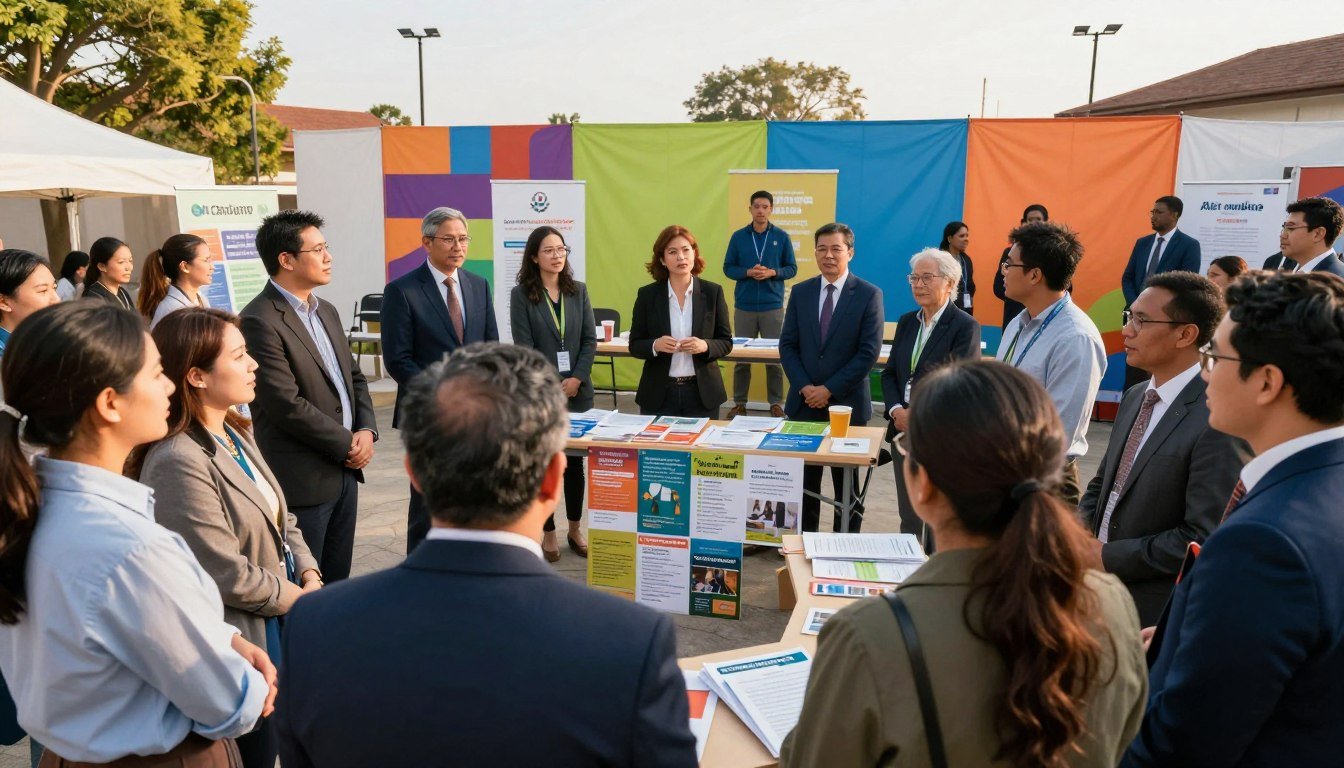
What if your single voice could actually shape the future of your neighborhood? This guide is about turning that question into a reality.
The concept is simple yet powerful. It involves enabling individuals to gain control over their lives. It means participating meaningfully in decisions that affect them.
This process transforms people from passive recipients of initiatives into active agents of change. By understanding your role in active participation, you can amplify your impact.
Your involvement contributes to a more resilient and inclusive development process for your local community and broader society.
We examine how you can effectively shape the future. Leveraging information and engaging with various institutional mechanisms is key for sustainable progress.
Our analysis provides actionable insights. It shows how this agency can be operationalized to ensure every individual has a voice in shaping their environment.
Key Takeaways
- Empowerment is about gaining control and having a say in decisions that affect you.
- It transforms people from passive observers into active contributors to change.
- Active participation significantly amplifies both individual and collective impact.
- This engagement is crucial for building more resilient and inclusive communities.
- Practical tools and reliable information are key to effective involvement.
- Everyone has a role in shaping their environment for sustainable progress.
- This guide provides actionable steps to begin your journey of active participation.
Understanding Citizen Empowerment Fundamentals
Grasping the core principles of civic agency starts with recognizing its foundational elements. This process enables individuals to gain control and participate in choices that affect their daily lives.
Access to Information and Participation Mechanisms
Reliable data forms the bedrock for informed action. People need ready facts about local issues and decision-making to engage effectively.
Public consultations and community workshops serve as essential tools. These mechanisms allow for direct input and voice in the development process.
Core Components and Sustainability
Building capacity provides the necessary skills for meaningful engagement. This ensures the concept moves from theory to practical reality.
Lasting initiatives require accountability from decision-making bodies. Responsive systems incorporate feedback, strengthening the entire community and broader society.
The Role of Citizen Empowerment in Economic Development
Recent events globally have underscored the critical need for economic strategies that are shaped by the people they affect. This approach moves beyond traditional planning.
It ensures growth is sustainable and meets real local needs. The connection between active involvement and a thriving local economy is powerful.
Local Business and Community Economic Strategies
Following periods of social demand for reform, there is a renewed focus on how citizen empowerment can drive local economic development. Projects like the one in Bordj Bou Arreridj, Algeria, show a successful model.
Non-governmental groups collaborated with public authorities there. This partnership improved local economic plans at the grassroots level.
Strengthening civil society allows for better mobilization and a shared vision. This is essential for a stable and prosperous economic environment.
Effective strategies require that people can influence local development. They must also hold authorities accountable for their actions.
Enhancing Social Justice Through Empowerment
Social justice moves from an ideal to reality only when inclusive processes actively listen to and value marginalized perspectives. This requires a deliberate shift in how decisions are made and who gets to make them.
Addressing Marginalized Voices
Historically, power imbalances have excluded many groups from full participation. Effective initiatives must directly tackle these barriers. They create pathways for input that are accessible and respected.
The role of inclusive policy is to provide a genuine platform. Here, people can advocate for their rights and influence resource distribution. This transforms the relationship between individuals and their society.
Focusing on equity ensures sustainability projects benefit the entire community. It moves beyond helping a privileged few. True fairness is achieved when every person has the agency to demand accountability from leaders.
This model of active involvement strengthens the fabric of social justice. It builds a system where fairness is woven into everyday governance.
Building Empowered Local Communities
True local progress happens when public services are designed with the people, not just for them. This approach transforms how a community functions and thrives.
Shared Decision-Making in Public Services
Involving residents in planning leads to better outcomes. The results directly address the specific needs of the neighborhood.
This collaborative method fosters a strong sense of ownership. People feel responsible for the long-term success of local initiatives.
Strengthening the role of local authorities is crucial. It makes sure services are transparent and answer to the public.
Such engaged local communities can manage resources wisely. They are prepared to tackle the unique challenges of daily life.
Practical Strategies for Citizen Participation
Effective involvement depends on having the right tools and clear pathways for input. Turning good intentions into real impact requires specific, actionable methods.
These strategies help bridge the gap between people and the decisions that shape their daily lives.

Creating Communication Channels and Workshops
Establishing clear lines for two-way dialogue is the first practical step. Online forums and regular community meetings provide accessible spaces for this exchange.
These channels allow for a direct flow of information and concerns. This improves the quality and responsiveness of public services.
Utilizing Participatory Tools for Engagement
Tools like community mapping and focused workshops actively solicit detailed input. They move beyond simple surveys to gather deeper insights.
This approach is crucial for co-creating solutions. It ensures projects address the specific needs of the local community.
Building internal capacity is also key. Training staff in facilitation improves the entire process.
By measuring the results, organizations can refine their methods. This leads to meaningful and sustainable development for society.
Operationalizing Empowerment in Government Initiatives
The success of any public initiative hinges on its ability to translate participatory ideals into daily operations. For a citizen, this means seeing their input directly shape the process.
Transparent Decision-Making Practices
Government bodies must clearly show how public feedback influences final choices. This openness turns abstract participation into tangible results.
Setting clear timelines for review and response builds public trust. It demonstrates a commitment to inclusive development that benefits the whole society.
Establishing Accountability Mechanisms
Systems must exist to ensure officials remain answerable for outcomes. These mechanisms make public services more responsive to the community.
Strengthening the capacity of staff to engage is vital. It ensures the public’s role is prioritized at every level of policy design.
Deepening Democracy with Citizen Empowerment
A healthy democracy thrives not just on elections, but on continuous public conversation between them. Strengthening the system requires moving beyond formal voting to create spaces for ongoing dialogue.
Inclusive Policy and Participatory Governance
New forums for discussion allow people to engage in meaningful policy development. These “democratic spaces” ensure governance reflects the diverse needs of the entire society.
As scholars note, democracy is an ongoing process of contestation. Sustainable models need a range of approaches and strong domestic support.
Building resilient democratic institutions and state capacity is a local effort. External actors cannot substitute for this internal foundation.
Creative institutional design significantly increases the role of the citizen. This empowerment leads to more responsive governance at every level.
Decentralization and Local Governance
Moving decision-making power closer to where people live is a key strategy for responsive governance. This shift allows a citizen greater opportunity to participate in local development and service delivery.
Research shows this approach strengthens the entire process. Studies in Southeast Asia highlight how community-driven projects improve local government institutions.
Empowering Local Authorities and Assemblies
True empowerment at this level requires transferring real authority and resources. Local assemblies must have the capacity to manage projects and budgets effectively.
As experts note, linking community action with decentralized governance enhances public service provision. This framework makes government more accountable to local communities.
The transformative potential depends on how the state facilitates the role of the people. Decentralization must also tackle deep inequalities to benefit all groups in society.
Empowering Through Access to Information
Transparent systems thrive when people have the tools to scrutinize decisions and demand answers. This access to information is a fundamental right. It allows individuals to hold government institutions accountable for public service delivery.
The Role of Independent Media
Free press acts as a vital watchdog over political processes. As experts note, it provides the clear facts needed for informed policy debate. This supports open dialogue across all levels of society.
Freedom of expression is a core human right. It underpins a truly participatory democracy. Independent media strengthens this entire role.
Enhancing Transparency for Better Outcomes
When people have information, they can demand that their rights are respected. This knowledge directly fights corruption and improves governance. It is a proven tool for poverty reduction.
Campaigns like the one in Delhi show how this works. Citizens used official data to challenge a flawed system. They generated public awareness and held the state accountable.
Building this capacity within communities mobilizes knowledgeable actors. They use information to shift social solidarity and manage local resources. This leads to more sustainable development for everyone.
Navigating Challenges in Citizen Empowerment
Sustainable community-driven change must overcome inherent difficulties like limited funds and competing priorities. Recognizing these hurdles is the first step toward designing stronger, more resilient systems for public involvement.
Resource Constraints and Apathy
Limited budgets and staff can stall even the best plans. Strategic allocation of resources and building partnerships are essential to provide the necessary support.
Apathy often stems from people not seeing the point. Clear communication must highlight how the process directly improves daily life and public service delivery.
Managing Conflicting Interests
Different groups in society will have different goals. Facilitated dialogue and transparent decision criteria prevent any single interest from dominating.
Power imbalances, often reinforced by local elites, require targeted outreach. This ensures marginalized voices are heard within government institutions.
Developing robust metrics is crucial. It measures real impact, ensuring efforts build genuine capacity at the local level.
Research and Analysis on Empowerment Outcomes
Outcome analysis reveals whether the promise of greater public voice translates into tangible improvements in daily life. Rigorous research is essential to understand these long-term effects on governance and equity.
Studies provide clear evidence. When people help manage local resources, environmental outcomes are often more sustainable. This holds true compared to top-down approaches used by distant government bodies.
Effective analysis must examine the role of institutions. It identifies how power is shared. The goal is to see if real change reaches the most marginalized groups in society.
This process is complex and not a straight line. It involves ongoing interactions at every level. Evaluating outcomes refines our knowledge.
It shows us how to build lasting capacity within communities. This ensures participation leads to durable change for the whole society.
Innovative Approaches in Empowerment and Accountability
New tools are reshaping how people interact with their local government. This makes participation more direct and impactful for everyone involved.
These methods move beyond traditional forums and meetings. They create dynamic channels for input and oversight.
Participatory Budgeting and Civic Tech Solutions
Participatory budgeting lets residents decide how to spend public funds. This gives them a direct role in allocating resources for their communities.
Civic tech solutions offer digital platforms for real-time engagement. They make it easier for the government to share information and get feedback quickly.
These tools help break down barriers to involvement. People with limited access to traditional institutions can now have a voice.
Transparency is strengthened through these innovations. They hold the state accountable and improve public service delivery.
Successful use requires a commitment to continuous learning. Strategies must adapt to meet changing needs in society at every level.
This process fosters real change and builds stronger local networks.
Global Insights on Social, Economic, and Political Empowerment
International experiences highlight the complex interplay between culture, politics, and successful public engagement. The effectiveness of any initiative depends heavily on local factors and the existing political system.
In nations transitioning to democracy, a clear need emerges. Strong civil society institutions are vital to support the role of the citizen. These groups provide structure for the participation process.
Economic and political agency are deeply connected. One strengthens the other. Both are required for people to demand real accountability from the state and improve service delivery.
Comparative research shows a consistent global goal. The core aim is enhancing personal and community agency. The specific mechanisms for achieving this change can vary widely between societies.
This global knowledge is crucial for designing better programs. Understanding these trends allows organizations to build capacity and adapt to unique regional challenges. It leads to more sustainable outcomes for local communities.
Enhancing Capacity Building and Skill Development
Effective public engagement requires more than goodwill. It demands concrete skills and knowledge that people can apply. Building this capacity is a critical investment for navigating complex policy and governance processes.
Skill development programs should focus on community organizing and clear communication. Training in digital tools is also vital for effective interaction with the government. This equips individuals to secure better service delivery and manage local resources.
Investing in a population’s knowledge ensures sustainable change. It allows communities to lead their own development at the local level. This approach strengthens the entire fabric of society.
Effective capacity building also involves training public officials. They learn to be more responsive and value the role of the citizen. This dual practice strengthens both the demand for accountability and the supply of responsive services.
It creates a system where institutions are more transparent. People gain better access to influence decisions. This leads to more equitable and positive outcomes for everyone involved.
Citizen Empowerment in Action: Real-World Examples
Concrete actions on the ground provide the most compelling proof that participatory methods work. Looking at specific cases shows how these ideas create better outcomes for local communities.
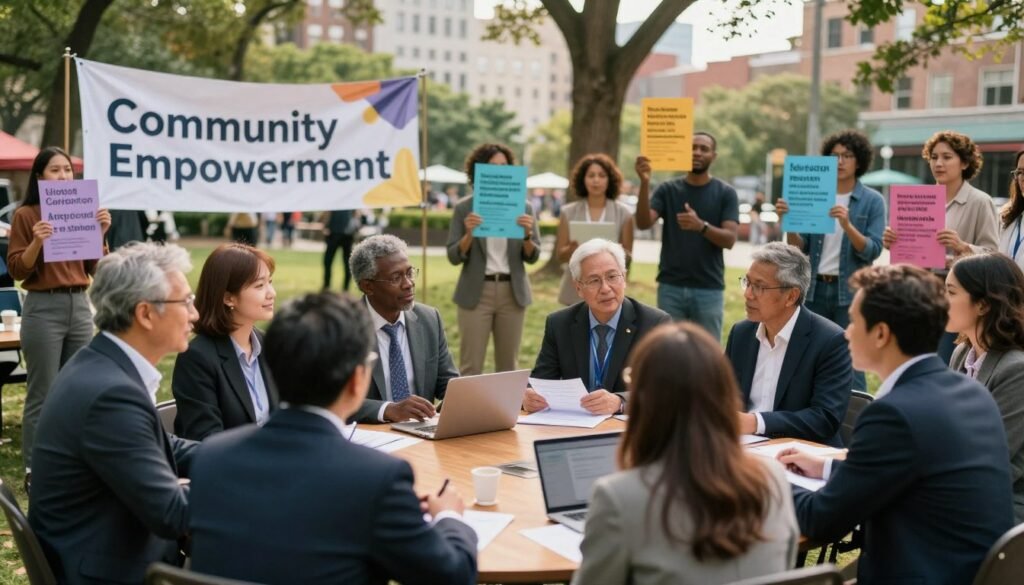
Case Study: Energy Conservation Initiatives
Energy projects often succeed when people are motivated to join community-led programs. This approach works better than top-down orders from government institutions.
These programs give residents direct access to information and tools. This knowledge allows them to manage local resources wisely.
The process builds capacity at the grassroots level. It leads to significant positive change in the local environment.
Case Study: Improving Local Service Delivery
A key example comes from research in Uttar Pradesh, India. Banerjee and others studied Village Education Committees in 2006.
Their work shows how these committees can improve primary education delivery. The role of the citizen in monitoring services was crucial.
Sustained commitment to this practice lets the community hold providers accountable. This form of empowerment benefits both the individual and the wider society.
Conclusion
The ultimate measure of a healthy society is the ability of its people to shape the institutions that serve them. This empowerment is a transformative process. It shifts power from top-down control to a model of shared ownership and responsibility.
Fostering an environment where every citizen has access to information builds the necessary capacity. This strengthens the role of individuals in building resilient democratic institutions. The long-term results include improved equity and better service delivery.
We must continue to analyze the factors that drive success. This analysis ensures efforts lead to meaningful and lasting change. The goal is a world where each person has the agency to contribute to a more equitable society.
Through the consistent practice of participatory governance, we amplify impact. It ensures every voice is heard at every level. This builds a more responsive government system for all communities.
FAQ
What are the most important parts of a successful community involvement program?
A strong program rests on two pillars: genuine access to information and clear ways for people to take part. Sustainability comes from building local skills and ensuring communities have real ownership over decisions and projects.
How does public participation help a local economy grow?
When residents help shape economic policy, it leads to strategies that support small businesses and create local jobs. This inclusive approach ensures development benefits everyone, not just a select few.
Can these processes really improve fairness in society?
A> Yes. By intentionally creating space for marginalized groups in policy discussions, we address systemic inequalities. This leads to more just outcomes in areas like healthcare, housing, and education.
What are some simple first steps a town can take to get people more involved?
Start by opening clear communication channels, like regular community forums or online portals. Hosting skill-building workshops on how local government works can also prepare more residents to contribute effectively.
How can government actions become more transparent and trustworthy?
Governments can adopt open data platforms and publish meeting minutes and budgets online. Establishing independent oversight committees creates accountability, showing taxpayers how resources are used.
What is a major hurdle to making this work, and how can it be overcome?
A> A common challenge is public apathy or fatigue. This is best tackled by demonstrating quick, visible wins from participation—like a fixed park or a new crosswalk—to build trust and show that input leads to real change.
Are there proven tools that help people collaborate on public spending?
A> Absolutely. Participatory budgeting is a powerful method where residents directly vote on how to spend a portion of the public budget. Civic tech apps also allow for real-time feedback on service delivery and project ideas.
Why is a free press considered important for community strength?
Independent media acts as a watchdog, investigating and reporting on government activity. This transparency gives people the knowledge they need to hold leaders accountable and advocate for better public services.