
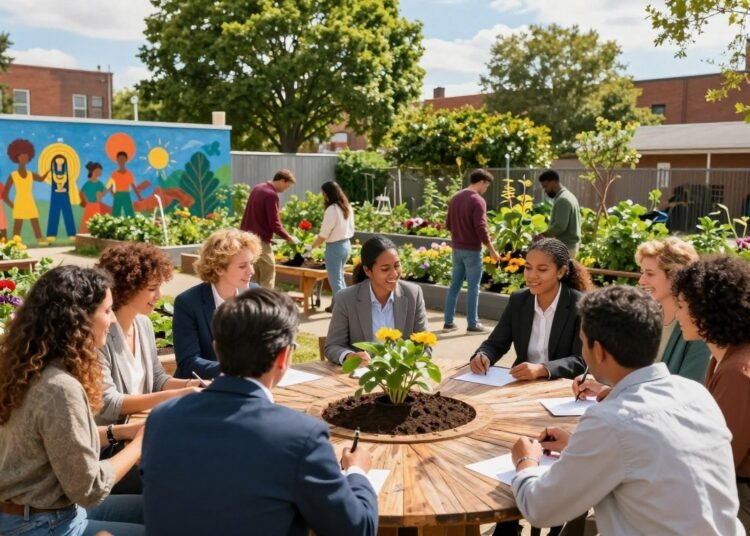
What if the key to solving our biggest social challenges lies not in grand federal programs, but in the power of our own neighborhoods?
This idea drives a powerful movement. Real, lasting improvement often starts right where people live.
The organization Community Solutions works on this principle. It empowers local change through systemic improvements across the United States.
This group acts as a vital catalyst. It builds cooperation between diverse groups within towns and cities.
A primary focus is on public health and social services. The goal is to build sustainable approaches that tackle root causes of inequality.
Every area deserves access to resources that promote stability. This initiative provides the framework to reach those essential goals.
Through strategic partnerships, the organization strengthens local leaders. These leaders implement effective change that improves overall well-being.
This work shows how dedicated services can transform local support systems. The aim is to better meet the needs of every person.
Key Takeaways
- The organization Community Solutions focuses on empowering change at the local level across the U.S.
- It acts as a catalyst by fostering collaboration between diverse local groups.
- A core priority is improving public health and social services access.
- The work aims to create sustainable approaches that tackle root causes of systemic issues.
- Strategic partnerships are key to empowering local leaders to drive improvement.
- The initiative provides a framework to help areas access stability-promoting resources.
- Dedicated services can transform local support systems to better serve all people.
Community Solutions in Action
The stark reality of homelessness affects over half a million people in the United States, a crisis demanding local action. Before the pandemic, more than 568,000 individuals lacked stable housing on a given night. This condition shortens lives by years and interrupts schooling for vulnerable children.
Empowering Local Services and Initiatives
The “Until we’re all home” project documents this fight. It shares stories from neighbors and formerly unhoused adults across six U.S. cities. Social workers and veterans provide firsthand accounts of the barriers to long-term stability.
These narratives offer a powerful framework for local groups. They help families navigate the complex housing crisis. The initiative provides a clear path forward for those in need.
Addressing Homelessness and Social Challenges
Homelessness creates a pervasive crisis that undermines mental health. It prevents families from finding secure housing and often leaves lifelong scars. Data shows deep systemic changes are required.
Black people represent 13 percent of the population but 48 percent of those experiencing homelessness. Local services must address these disparities directly. Dedicated support can help individuals overcome these profound challenges.
Leveraging Data for Community Change
Modern challenges require modern tools. For many neighborhoods, that tool is precise, real-time data.
This approach turns numbers into clear action plans. It helps local groups understand complex issues.
Data-Driven Insights and Fact Sheets
Detailed fact sheets highlight key social indicators. They cover demographics, poverty rates, and education levels.
Policymakers use these reports to grasp factors affecting life quality. This includes mental health trends impacting families.

Real-Time Community Data Analysis
The Built for Zero initiative supports 84 towns and cities. This network uses a data-driven system to make homelessness rare.
Leaders track individuals in real time. This allows for swift, targeted support.
Measuring Health and Social Outcomes
Measuring outcomes helps organizations track progress. It shows where to direct funding for housing and critical services.
This rigorous method gets results. Fifteen areas have ended chronic or veteran homelessness.
Four achieved functional zero, with four more on track in 2021. This proves systemic change is possible with the right information.
Engaging Local Organizations & Critical Services
Local organizations form the backbone of sustainable change, offering critical assistance where it’s needed most. Their direct connection to residents makes them essential partners in any effective initiative.
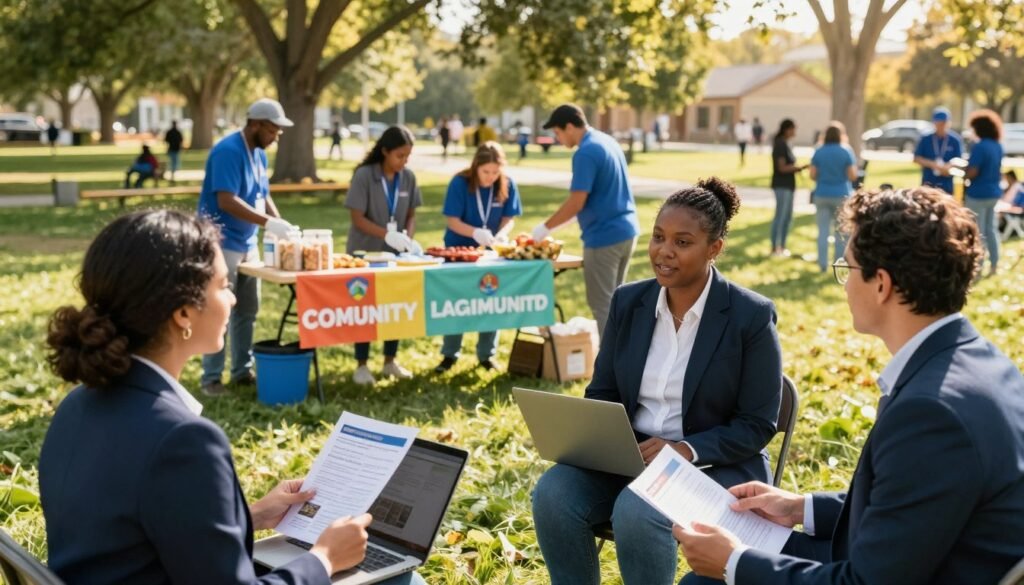
Connecting with Nonprofit Organizations
A dedicated team of 66 professionals works to align resources and incentives. They shift funding to reward areas for reducing homelessness and improving health outcomes.
This approach helps local leaders build a robust system that prioritizes stable housing for vulnerable adults and children.
Director of Strategic Partnerships Ana Paula Delja facilitates these crucial connections between groups. She ensures families receive the necessary support services to navigate a crisis.
Showcasing Successful Community Engagement
Successful engagement requires translating proof of what works into a new national norm. This influences better housing and public health policy for everyone.
Flexible funding allows towns to solve their unique challenges. It ensures the work of local teams leads to measurable, positive changes in lives.
Removing data and technology obstacles empowers local groups. They can sustain momentum and scale their impact, improving quality of life for people.
Conclusion
The journey toward lasting social improvement finds its most powerful engine in local, data-informed action.
Community Solutions remains dedicated to this work. It provides the tools needed to improve health and social outcomes.
Through the collective effort of 84 participating communities, real progress is being made. Ending homelessness for individuals and families is now a measurable goal.
By focusing on the needs of every family, local services help build a more equitable system. This creates positive change for all residents.
We encourage you to explore these solutions. Connect with groups making a difference in your own community.
Together, we can ensure every person has access to stable housing and vital support.
FAQ
What are some examples of local initiatives that address housing instability?
Many successful programs focus on a “Housing First” model, which provides permanent shelter without preconditions. This approach is often supported by coordinated local systems that use real-time information to connect individuals with resources, helping to reduce the number of people experiencing homelessness.
How does using information improve outcomes for families?
A> Data-driven insights allow teams to identify specific needs and measure the impact of services. By analyzing trends in health, economic stability, and education, organizations can tailor their support, allocate funding effectively, and demonstrate what works to improve quality of life for households.
Why is collaboration with nonprofit groups so important?
Nonprofit organizations are often on the front lines, delivering critical support directly to neighborhoods. Partnering with them ensures that strategies are grounded in real-world experience, leverages existing trust within populations, and creates a more unified and effective response to social challenges.
How can cities better support adult mental wellness?
Effective support involves integrating behavioral health services into primary care settings, training first responders in crisis intervention, and funding peer support networks. Shifting policy to focus on accessible, preventative care helps improve long-term wellness and reduces strain on emergency systems.
What does successful public involvement look like in neighborhood programs?
True engagement means residents help design and lead projects that affect them. This includes participatory budgeting, advisory councils, and employing individuals from the area. This leads to more sustainable change because the work reflects what people actually need and want for their own lives.