
What if the success of your favorite app had less to do with flashy features and more with how it makes you feel?
This idea is at the heart of user experience, a term coined by expert Don Norman in 1988. It focuses on creating meaningful and relevant interactions for every single person.
A well-crafted approach influences how someone interacts with a digital product or a physical service. The goal is to make these encounters intuitive and satisfying.
Understanding the core elements of a positive encounter is essential for modern tech careers. Resources like the Interaction Design Foundation’s vast library support this learning.
This guide covers the entire lifecycle, from initial ideas to final, human-centered solutions. You will learn to prioritize human needs while balancing business goals for long-term success.
Key Takeaways
- User experience is about the overall feeling a person has when interacting with a system.
- The term was popularized by Don Norman in the late 1980s.
- Good design prioritizes intuitive and satisfying interactions for the end-user.
- It applies to both digital interfaces and physical services.
- A positive experience is built by understanding and addressing human needs.
- The process spans from the first idea to the final execution of a solution.
- Mastering these principles is valuable for anyone in the technology industry.
Understanding the Fundamentals of UX Design
The formal definition of user experience, as set by global standards, focuses on human perceptions and reactions. Grasping these core ideas is the first step toward creating better products.
Defining UX and Its Impact
The International Organization for Standardization defines it as a person’s perceptions and responses from using a system. This means every interaction shapes the overall feeling.
Don Norman, who invented the term, argued that a product is a cohesive set of experiences. It’s more than just a tool; it’s the entire relationship between the person and the solution.
Key Differences Between UX and UI
User interface design deals with the visual look and style. In contrast, user experience design covers the whole journey of getting and using a product.
Usability is a vital part of this. It ensures a system is efficient and satisfying for the end user. However, it’s just one piece of the broader experience puzzle.
Successful creators must ask the who, why, what, and how of product use. This focus helps them build solutions that solve specific pain points for people.
The Importance of User Experience in Today’s Market
A company’s competitive edge increasingly depends on how effortlessly users can interact with its products and services. This focus delivers real value beyond aesthetics.
Investing in a quality approach helps reduce development costs. It creates a significant market advantage. Teams solve problems early, avoiding expensive fixes later.
A happy user will return to a business. This directly boosts revenues and builds long-term loyalty. Focusing on satisfaction turns casual visitors into repeat customers.
Consistent, intuitive interactions forge a strong brand reputation. They differentiate a product from competitors who overlook human needs. People remember how a solution made them feel.
Data confirms that prioritizing the user experience improves conversion rates. It strengthens customer relationships over time. This human-centered focus is now essential for growth.
Exploring the UX Design Process
Building a great product isn’t a straight line. It’s a flexible cycle of learning, creating, and refining.
This human-centered framework, often called design thinking, provides a clear path from concept to solution.
From Ideation to Execution
The standard design process starts by understanding people. Teams research to grasp needs and pain points.
They then define the core problem. Next, brainstorming generates creative solutions. These ideas become simple models for testing.
This structured flow ensures every choice aims to solve a real issue for the user.
Iterative Design and Continuous Improvement
The work doesn’t stop after one test. Feedback from real people fuels the next version.
This loop plugs findings back into the development cycle. It creates a living, improving product.
Continuous refinement ensures the final experience is grounded in evidence, not guesswork.
User Research Techniques and Best Practices
Before a single pixel is designed, the most critical work begins with listening. User research is the systematic study of your target audience. It gathers evidence to add realistic context to the entire creation process.
Conducting Effective User Interviews and Surveys
One-on-one interviews and surveys are powerful tools. They help identify specific goals, behaviors, and pain points. This direct feedback provides a clear picture of what people truly need.

Building Personas and Mapping User Journeys
From this research, teams build personas. These are fictional archetypes based on real data about behavior patterns. They keep the team focused on the human at the center of the work.
Mapping the user journey visualizes each step a person takes. It shows their interaction with a product or service over time. This reveals opportunities to improve the overall experience.
Grounding every choice in this evidence significantly reduces the risk of building a product that fails to meet real user needs.
Wireframing and Prototyping Essentials
The bridge between a great idea and a functional product is built with two key tools: wireframes and prototypes.
Wireframing is the process of building a skeletal framework. It prioritizes page elements for a website or app. This blueprint defines the high-level structure of screen layouts and navigation paths.
Prototyping is essential for testing functionality. It identifies problems before final implementation. Designers create a simulation of the final product to gather feedback on interaction and flow.
Low-Fidelity vs. High-Fidelity Wireframes
Low-fidelity wireframes are often sketched on whiteboards or paper. They help teams explore solutions quickly. The focus is on structure, not visual details.
High-fidelity wireframes are full-resolution screens. They depict the user interface at the pixel level. These are used for final developer handoff.
These essential tools enable teams to communicate ideas clearly. They help stakeholders and developers visualize the plan before committing to expensive coding. This process ensures the final experience is intuitive and effective.
Usability Testing and Iterative Feedback
The moment of truth for any product arrives when actual users attempt to complete tasks with it. Usability testing is the most common method creators use to validate their work. This critical phase involves observing how real people interact with a solution.
Setting Up Usability Tests
Effective user testing requires clear goals and a representative group. You need to define what you want to learn before participants begin. This preparation ensures the feedback you collect is specific and actionable.
Analyzing Test Results for Better Design
Careful analysis of testing data reveals specific problems in the workflow. This evidence guides rapid iterations for continuous improvement. Qualitative responses from live sessions provide insights that automated tools often miss.
Companies like Micron develop advanced environments to automate some tests. However, human observation remains irreplaceable. Frequent usability testing ensures every aspect of the final product meets human needs through ongoing iterative feedback.
Interaction and Visual Design Principles
Creating a seamless digital experience requires mastering two interconnected disciplines: interaction and visual design.
Interaction design centers on how a product behaves when a person engages with it. It shapes the dialogue between the user and the system to build efficient and delightful encounters.
Visual design uses elements like colors, images, and symbols to convey a message. It establishes the overall look and feel, representing the brand ideals to the audience.
Designing Intuitive User Flows
Crafting intuitive user flows ensures a person can achieve their objectives without confusion. It maps the best possible path through a product.
Interaction specialists must communicate the priority of information. This keeps the interface clear and responsive at every step.
By combining visual and interaction principles, teams build solutions that are both aesthetically pleasing and highly functional. This harmony turns user tasks into satisfying experiences.
Information Architecture and Navigation Strategies
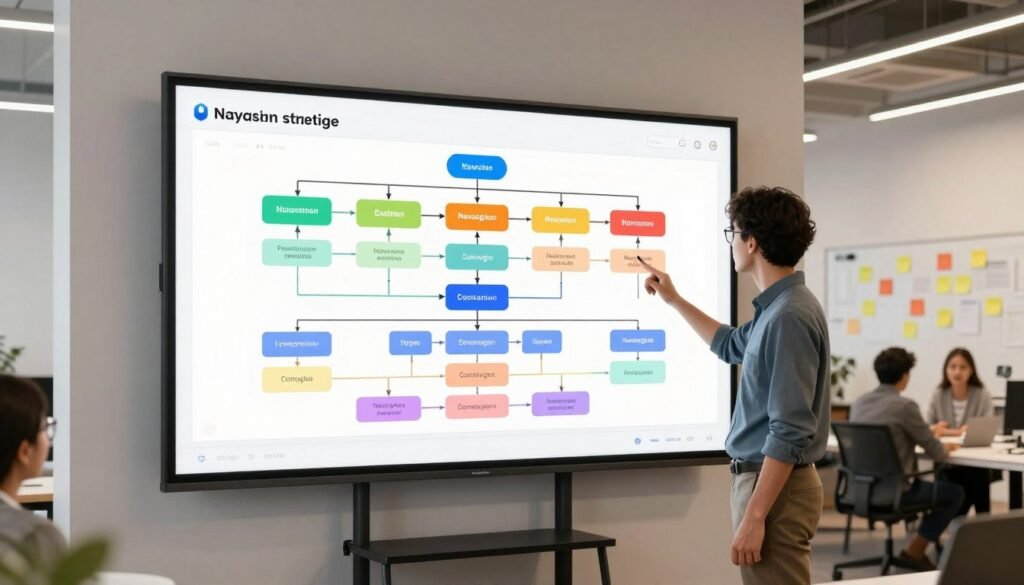
Imagine a library where every book is in the perfect place, making it easy for anyone to find exactly what they need. This is the goal of information architecture for digital products.
Organizing Content for Optimal Findability
Information architecture is the art and science of structuring information. It supports usability and findability for the end user. Proper navigation strategies help people locate content quickly, which is vital for a positive overall experience.
Designers must consider how pages are structured and labeled. Metadata and logical grouping ensure information is easy to navigate. This clear organization reduces the learning curve for new users.
Accessibility is a key part of this structure. Guidelines state that content must be Perceivable, Operable, Understandable, and Robust. This ensures all users can interact with the digital product effectively.
By structuring content clearly, teams help users achieve their goals with minimal effort. A solid foundation in information architecture turns complex data into a simple, intuitive journey.
Integrating Design Thinking into UX Projects
At its core, design thinking is a mindset that reframes challenges as opportunities for human-centered innovation. This problem-solving approach can be applied to specific products or an entire company’s strategy.
This methodology encourages creators to challenge their assumptions. It helps teams empathize with the user before defining the real problem.
Don Norman encourages applying this knowledge to broader areas. This includes society and the future of the world, not just digital interfaces.
By integrating this process, organizations foster a culture of creativity. They gain a structured framework for tackling complex challenges.
The entire user journey is considered from start to finish. This thinking ensures the final solution is both useful and deeply relevant to people’s lives.
Tools and Technologies in Modern UX Design
The modern toolkit for creating digital products is more powerful and collaborative than ever before. These platforms help teams move efficiently from research to a final, polished solution.
Survey, Wireframing, and Prototyping Tools
Specialized software streamlines every phase of the project. Survey tools like Typeform gather quantitative data from a large group of users quickly.
Whiteboarding applications such as Miro help distributed teams brainstorm and map ideas visually. For creating the final interface, professionals rely on platforms like Figma and Adobe XD.
These instruments allow creators to build high-fidelity mockups and interactive prototypes for stakeholder review.
Collaboration and Remote Testing Platforms
Remote work is common, requiring robust digital hubs for teamwork. These platforms keep everyone aligned, from initial sketches to final feedback.
They also enable unmoderated usability testing with participants anywhere. This allows teams to conduct research and gather insights on a global scale.
Using these technologies ensures the final product is tested and refined with real user input, leading to a better overall experience.
Career Insights: Building a Future in UX
With a median total salary of $149,000 per year in the United States, a profession in user experience design is both financially rewarding and intellectually engaging. This field offers the chance to apply creativity and analytical thinking across many different industries.
Essential Skills and Competencies for UX Designers
Success in this role requires a blend of human and technical abilities. Essential skills include clear communication, deep empathy, and effective collaboration. Critical thinking and proficiency with industry-standard tools are also vital for solving real-world problems.
Many professionals build their careers through practice and a strong portfolio. This collection of work is the most effective way to demonstrate your abilities to employers in the tech sector. Individuals often transition from backgrounds like graphic design or software development.
As the industry evolves, continuous learning is key. Staying updated on new technologies and methodologies ensures you remain competitive. This commitment to growth turns a job into a lasting, future-proof career.
UX design for Business Growth: Driving Results
Beyond aesthetics, the true value of a well-crafted digital experience lies in its power to generate revenue and loyalty. Focusing on the customer journey is a strategic investment for any company.
This approach helps a business by reducing development and support costs. It creates a strong competitive advantage in the market.
A smooth service reduces the friction a customer faces. This leads directly to higher conversion rates and increased brand loyalty.
A good user experience ensures people return to the service, which directly contributes to business revenues. Every interaction is a chance to build trust.
By aligning human-centered goals with commercial objectives, teams create profitable products. This builds long-term value for both the user and the business.
Future Trends in UX and AI Integration
Artificial intelligence is no longer just a buzzword; it’s becoming a core partner in shaping how we build for people. The future of user experience is being reshaped by this powerful integration between human insight and machine capability.
Embracing New Technologies in UX Research
Contemporary software utilizes artificial intelligence to automate tedious tasks, such as data sorting and pattern recognition. This enables teams to analyze user feedback on an unprecedented scale, uncovering patterns faster.
Yet, these systems cannot grasp the emotional nuances behind the data. Human empathy and creative interpretation remain essential for true understanding of behavior.
Preparing for a Dynamic Industry Evolution
Staying competitive requires an openness to new tools and methodologies. Educational resources, such as Google’s UX Design Professional Certificate, provide structured training on responsible application.
This prepares creators to use AI productively and ethically in their workflow. The goal is to enhance the final product, not replace human judgment.
Human-centered design remains the unwavering core of the profession. As the industry evolves, this principle ensures technology amplifies our ability to meet user needs in a meaningful way.
Conclusion
Ultimately, the success of any digital solution hinges on its ability to meet real human needs seamlessly. Mastering this craft requires a deep understanding of the people you serve, the product you’re building, and the structured methodology behind it all.
Following a clear, step-by-step process is the best way to create solutions that feel intuitive and work effectively. Each phase of the journey, from initial research to final testing, refines the overall experience.
We encourage you to keep practicing your skills and building a strong portfolio. This is essential for advancing your career in this dynamic field. The most successful outcomes are always those that keep the needs of the user at the heart of every decision.
FAQ
Who coined the term "user experience" and what does it encompass?
The term “user experience” was popularized by Don Norman while at Apple. It encompasses all aspects of a person’s interaction with a company, its services, and its products. This holistic view focuses on solving real user problems and ensuring every touchpoint is intuitive and satisfying.
What is the core difference between UX and UI?
Think of it as a house. User experience (UX) is the foundation, floor plan, and electrical wiring—it’s the structural feel and logic. User interface (UI) is the paint, furniture, and fixtures—it’s the visual and interactive surface. Both are essential, but UX comes first to ensure the space is livable.
Why is investing in user experience critical for business success?
A superior user experience directly impacts your bottom line. It reduces customer frustration, decreases support costs, and builds brand loyalty. When users find your product or service easy and enjoyable, they are more likely to return and recommend it to others, driving growth and revenue.
What are the key phases in a standard UX process?
The process is typically iterative and includes several key phases: research to understand user needs, ideation to brainstorm solutions, creation of wireframes and prototypes, usability testing with real people, and implementation followed by ongoing analysis and refinement based on feedback and data.
How do effective user interviews uncover true pain points?
Skilled interviewers ask open-ended questions and listen more than they talk. The goal is to understand the user’s story, motivations, and emotional reactions, not just their stated preferences. This qualitative research reveals the root causes of problems that surveys might miss.
When should a team use low-fidelity versus high-fidelity wireframes?
Use low-fidelity sketches or wireframes early on to quickly explore ideas and layout concepts without distraction. High-fidelity wireframes or prototypes are used later to test specific interactions, visual hierarchy, and content with tools like Figma or Adobe XD before development begins.
How does usability testing lead to better products?
Observing real users interact with your prototype highlights unforeseen obstacles and pain points. This direct feedback is invaluable. It moves the team beyond assumptions, providing concrete evidence for design decisions and ensuring the final product is genuinely intuitive and accessible.
What principle is most important for designing intuitive user flows?
Clarity is paramount. Each step in a user flow should have a clear purpose and logically lead to the next. Eliminating unnecessary complexity and aligning with the user’s mental model ensures they can accomplish their goals efficiently, enhancing overall satisfaction.
How does information architecture improve a website or app?
Strong information architecture organizes content logically, making it easy for people to find what they need. Good labeling, clear categorization, and thoughtful navigation reduce cognitive load and prevent users from getting lost, which is fundamental to a positive experience.
What is the role of design thinking in UX projects?
Design thinking provides a human-centered framework for problem-solving. It emphasizes empathy for the user, encourages ideation through brainstorming, and promotes rapid prototyping and testing. This approach fosters innovation and ensures solutions are deeply aligned with user needs.
What are some essential tools for modern UX professionals?
The toolkit is diverse. For wireframing and prototyping, tools like Figma and Sketch are standard. UserTesting and Maze facilitate remote usability testing and research. Collaboration platforms like Miro help teams with design thinking workshops and journey mapping.
What core competencies are employers looking for in a UX designer?
Beyond technical skill with tools, employers seek empathy, critical thinking, and communication skills. A strong candidate understands user research methods, can articulate design rationale, collaborates effectively with developers, and is committed to an iterative process based on evidence.
Can good UX directly influence business metrics?
Absolutely. A well-executed user experience improves key performance indicators like conversion rates, task completion speed, and customer retention. By reducing friction and creating enjoyable interactions, it turns users into advocates, directly supporting business growth and competitive advantage.
How is artificial intelligence changing user research and experience design?
AI integration is automating data analysis, uncovering patterns in user behavior at scale, and powering personalized interfaces. It allows researchers to process vast amounts of feedback quickly and helps designers create more adaptive, predictive products and services, shaping a more dynamic industry future.