
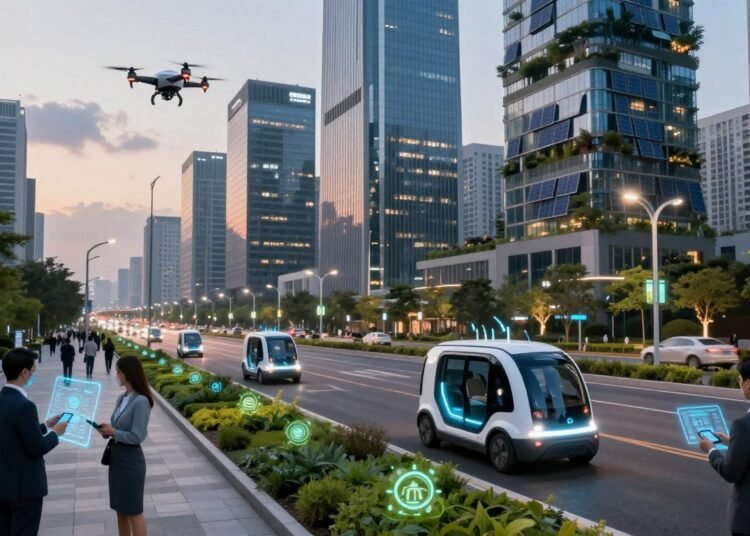
What if your morning commute, energy bill, and even public safety could be optimized by the very infrastructure of your town?
This vision is at the heart of modern urban development. The concept aims to dramatically improve the quality of life for residents through seamless digital integration.
Our metropolitan areas face immense pressure from rapid population growth. Leaders are turning to advanced solutions to manage resources, traffic, and public services more effectively.
Globally, urban centers are adopting these innovative systems. The goal is to enhance operational efficiency and promote long-term environmental sustainability.
This guide explores how data transforms the way people interact with their surroundings. We will look at the tools that make environments more responsive and livable.
Building future-ready communities relies on integrating these advanced systems. The result is a more connected, efficient, and sustainable place for everyone.
Key Takeaways
- Digital integration in urban areas focuses on improving daily life for residents.
- Rapid population growth is a key driver for adopting new technological solutions.
- Global metropolitan centers use data to boost efficiency and sustainability.
- These technologies change how people interact with public services and infrastructure.
- The future of urban living depends on creating connected and responsive environments.
- Local governments use these tools to address complex challenges while supporting economic growth.
Introduction to Urban Innovation and Technology
Urban centers worldwide are at a critical juncture, facing unprecedented growth that demands innovative approaches to management. This pressure requires a fundamental rethinking of how metropolitan areas operate and serve their residents.
Defining Urban Modernization
Urban modernization represents the strategic application of digital tools. These tools improve the efficiency and sustainability of infrastructure. The process involves restructuring management to promote social inclusion and economic development.
It moves beyond simple technology adoption. This approach creates more responsive environments for citizens. The goal is to enhance daily life through seamless integration.
Why Cities Need Smart Solutions
The United Nations forecasts the global population will reach 9.6 to 13.2 billion by 2100. Metropolitan areas are expected to absorb 80% of this growth. Traditional methods often fail to keep pace with such rapid expansion.
Advanced technological solutions help manage increasing demands on resources. They allow local governments to transition to proactive, data-driven management styles. This shift better responds to citizen needs while reducing environmental impact.
These frameworks support long-term planning for sustainable development. The result is more resilient and livable communities for future generations.
Exploring Smart City Fundamentals
The fundamental idea behind an intelligent urban area is to leverage data and connectivity for better living. This approach represents a shift in how metropolitan communities are planned and managed.
What is a “smart city”?
It is an urban model that uses digital tools, human capital, and governance. The goal is to improve sustainability, efficiency, and social inclusion for all residents.
This foundation connects people, processes, and technological solutions across sectors. Healthcare and transportation systems become more responsive.
Core Components and Technologies
Key investments drive this modernization. In 2022, the largest spending areas were visual surveillance, public transit, and outdoor lighting.
A 2024 study identified six spatial forms these areas take. These include science parks, innovation districts, and smart campuses.
These components rely on collecting information from citizens, devices, and buildings. The data optimizes the performance of essential infrastructure.
The result is a more integrated and efficient environment for everyone.
The Evolution and History of Smart Urban Development
The transformation of our towns into interconnected hubs didn’t happen overnight. It evolved through key technological milestones that reshaped how communities are managed.
From Early Urban Planning to Modern Innovations
Early interventions began in the late 1960s. The Community Analysis Bureau in Los Angeles used computer databases to direct municipal resources.
This was a shift from manual processes to data-driven management. Singapore demonstrated leadership by establishing its National Computer Board in 1981.
Historical Milestones in Technology Integration
A significant shift occurred in 2008. IBM launched its Smarter Planet initiative, encouraging global adoption of efficient systems.
Soon after, Cisco Systems partnered to establish the Connected Urban Development program. This focused on places like Amsterdam and Seoul.
By 2016, major corporations formed an alliance. This effort supported initiatives in Atlanta, Chicago, and Dallas.
These corporate partnerships became a driving force for technological advancement in metropolitan areas worldwide.
Leveraging IoT and Advanced Infrastructure
At the core of today’s urban advancement lies a vast web of connected devices talking to each other. This network forms the foundation for managing resources and services in real-time.
Role and Impact of Internet of Things
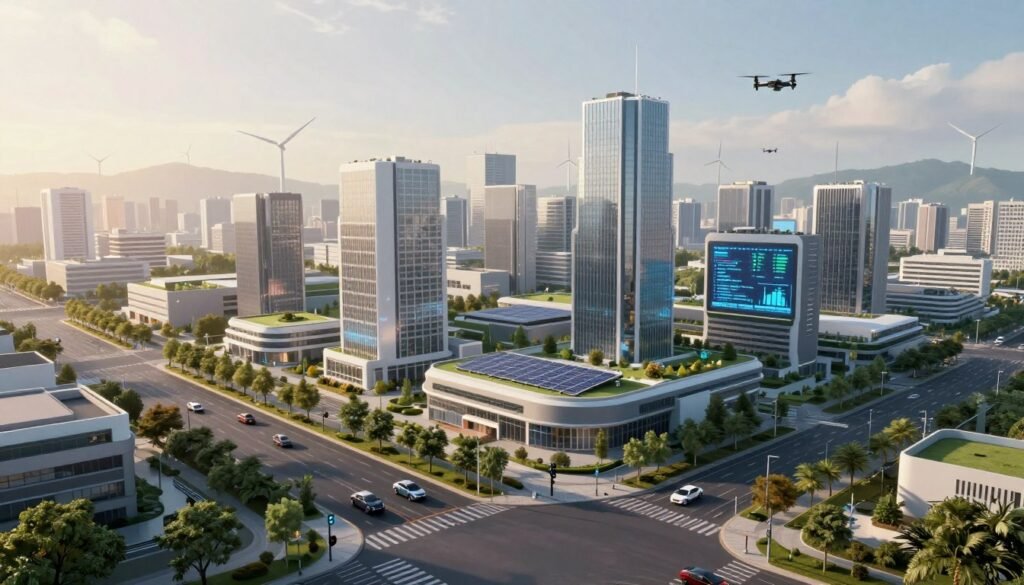
The Internet of Things acts as the digital backbone of a modern metropolis. Thousands of interconnected devices collect and transmit live information from the environment.
These sensors are critical linchpins for seamless data exchange. They allow vehicles and infrastructure to communicate instantly.
Officials deploy advanced sensors to monitor many conditions. They track air quality and check the structural health of public buildings.
This integration makes a metropolitan area more responsive. Connected devices provide the data needed for intelligent automation.
Modern wired infrastructure must support these wireless technologies. Reliable connectivity is essential for a growing network of devices.
Energy Management and the Emergence of Smart Grids
The shift towards renewable sources demands a new kind of electrical network that can adapt in real-time. These advanced systems are pivotal for sustainable metropolitan growth.
Integrating Renewable Energy and Sustainability
Smart grids permit greater penetration of variable renewable energy sources like solar and wind power. They dynamically balance supply with consumer demand.
This technology is essential for integrating renewables into the existing power infrastructure. It ensures a stable and efficient electricity supply for communities.
Case Studies in Smart Energy Solutions
Regions like Zhejiang Province in China showcase rapid deployment. They have installed over one million charging stations for electric vehicles.
These management systems monitor outages and regulate power use on demand. A key advantage is the simultaneous reduction of operational costs and carbon footprint for residents and local governments.
Data Analytics and Enhanced Decision-Making in Urban Environments
The true power of a modern metropolis lies not in its steel and concrete, but in the streams of information flowing through its digital veins.
Importance of Big Data in City Planning
Analytics allow municipalities to transform raw data into actionable insights. These insights directly improve the quality of life for all residents.
By examining large datasets, planners can identify patterns in human behavior. This knowledge helps design more efficient public services and infrastructure.
Cognitive technologies, like artificial intelligence, are trained on information from connected devices. AI can quantify the impact of policy decisions in real time.
Open data portals let residents and businesses engage with the information that shapes their environment. Sharing this knowledge widely allows everyone to derive direct benefit from it.
Effective information management is crucial for secure growth. It ensures collected insights foster innovation and transparency for everyone.
This approach moves urban management from guesswork to evidence-based strategy.
Smart Transportation and Mobility Innovations
A revolution in how we navigate our communities is being powered by real-time data and connectivity. These advancements are making daily commutes smoother and more reliable for everyone.
Implementing IoT for Traffic Optimization
Internet of Things sensors are now crucial for managing traffic flow. They collect live information from roads and intersections.
This data allows signals to adjust their timing based on current conditions. Places like Kansas City have deployed connected streetlights and public Wi-Fi along transit routes.
The system monitors vehicle movement to ease congestion. A key benefit is the significant time saved for residents and the reduction of harmful emissions from idling cars.
Autonomous Vehicles and Improved Transit Systems
Self-driving cars represent the next major shift in mobility. They promise to lower the total number of private vehicles on the road.
This reduction directly leads to fewer detrimental gases in the atmosphere. Modern transit networks also use live data to coordinate services.
Buses and trains can adapt their schedules to match real-time rider demand. This technology ensures public transportation meets the needs of its users more effectively.
Enhancing Public Services and Safety Through Technology
Real-time alerts about dangers, from gunfire to floods, are changing the face of urban security. Digital tools are now central to protecting residents and improving essential services.
Smart Surveillance and Emergency Response
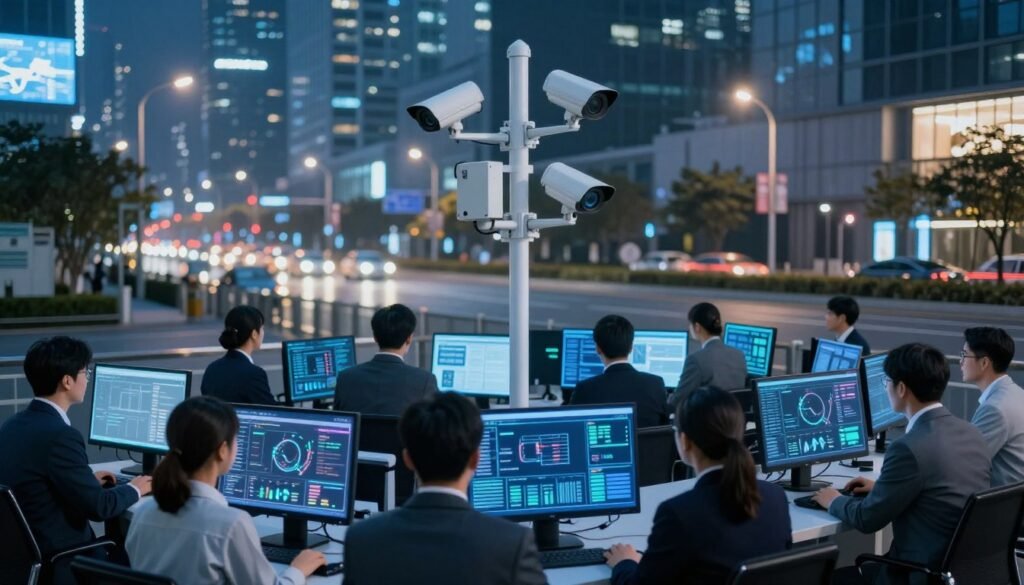
Metropolitan areas deploy extensive networks of connected devices. These systems monitor public spaces to identify threats as they happen.
For example, San Diego installed 3,200 intelligent sensors in 2017. This initiative aimed to streamline traffic and boost community security.
Modern detectors can identify specific sounds like gunshots. They also provide early warnings for natural disasters such as hurricanes or floods.
By analyzing live camera feeds, municipalities can dispatch help faster. This leads to quicker emergency response times, directing aid precisely where it’s needed most.
These technologies allow for more effective monitoring of neighborhoods. The result is a safer environment for everyone who lives and works there.
Government Initiatives and Public-Private Collaboration
Effective digital transformation in our communities hinges on a critical three-way partnership that extends beyond municipal hall.
This alliance connects civic leadership, corporate innovation, and active residents.
Policies Driving Smart City Progress
Local government initiatives provide the essential framework for progress. They create rules and incentives that encourage private investment.
These policies allow companies to safely deploy new technology across a metropolitan area.
Most technical work to maintain a digital environment happens through independent contractors. Strong partnerships with these experts are vital for long-term success.
Transparency is a key goal for every project. Open data plans ensure initiatives remain accountable to the people they serve.
By uniting public oversight with private execution, communities become more responsive and inclusive. This collaboration builds a foundation that supports both technological advancement and social equity for all residents.
Sustainability and Environmental Impact in Smart Cities
Building a future-ready community demands a deep commitment to ecological responsibility and resource conservation. The United Nations notes that over half the global population already lives in urban areas, a figure set to reach 68%. Managing this growth requires innovative approaches to preserve our planet.
Green Initiatives and Reduction of Carbon Footprints
Modern technologies are crucial for efficient resource management. Advanced systems help metropolitan areas optimize energy use and cut fossil fuel consumption. For water, sensors measure and guarantee drinking quality at the source. They also detect leaks in pipes, preventing the waste of precious resources.
A major green initiative is the shift to electric public transportation. Moving buses and trains to electric power significantly decreases a community’s carbon footprint. This change directly improves local air quality, creating a healthier environment for all residents.
These integrated efforts allow for sustainable expansion. They ensure that growing populations can enjoy a high standard of living without compromising the environment for future generations.
Challenges and Future Directions for City Technologies
The future development of intelligent infrastructure depends on solving today’s pressing issues of network reliability and data governance.
These hurdles are critical for metropolitan areas adopting new systems.
Data Privacy and Cybersecurity Concerns
Vast networks of connected devices collect immense amounts of information from residents.
This creates a major vulnerability. Leaders must ensure all collected data is anonymized and shielded from potential hacking.
Strong cybersecurity is a non-negotiable foundation for public trust.
Balancing Technological Advancements with Community Needs
Innovation must serve people, not the other way around. A community provides a sense of authenticity that sensors cannot program.
Planned projects face unique social tests. For example, Saudi Arabia’s Neom is being built without an established population.
Its challenge is attracting people to an area lacking a cultural fabric. Focusing on the benefits of open data encourages resident engagement.
This ensures the technology serves the public interest and improves daily life.
Conclusion
Our collective future in populated areas hinges on adopting innovative solutions that prioritize people and the planet. The evolution of urban management represents a significant leap forward in improving quality of life. Integrating tools like the Internet of Things and advanced analytics makes communities more efficient and sustainable.
While data privacy and connectivity hurdles exist, the benefits for economic growth are clear. Successful urban planning requires collaboration between local governments, the private sector, and residents. This partnership builds truly connected and inclusive environments.
Looking ahead, continued adoption of modern technologies will define tomorrow’s resilient metropolitan centers. The ultimate goal is to create responsive places where everyone thrives.
FAQ
What exactly defines an urban area using advanced technologies?
An urban area leveraging advanced technologies integrates digital solutions and data analytics into its core operations. This approach focuses on improving efficiency, sustainability, and the quality of life for residents. It connects infrastructure, services, and information through platforms like the Internet of Things.
How does the Internet of Things improve metropolitan management?
The Internet of Things places sensors and connected devices throughout municipal infrastructure. These tools collect real-time information on everything from traffic flow to energy use. This data allows for proactive maintenance, optimized resource allocation, and enhanced public services.
What are the primary benefits for residents in these innovative urban areas?
Residents experience tangible improvements in daily life. Benefits often include reduced commute times through optimized traffic signals, lower utility bills from efficient energy grids, and increased public safety via connected surveillance and faster emergency response.
Are there concerns about privacy with so much data collection?
Yes, data privacy and cybersecurity are critical challenges. Collecting vast amounts of information from citizens and infrastructure requires robust governance. Successful initiatives implement transparent data policies, strong encryption, and clear protocols on who can access sensitive information.
How do these developments promote environmental sustainability?
Technological integration directly supports green goals. Smart grids incorporate renewable sources like solar and wind. Intelligent water systems detect leaks to conserve resources. Furthermore, data analytics help planners reduce a community’s overall carbon footprint through efficient routing and building management.
What role do local governments play in fostering this innovation?
Local governments are essential drivers. They create supportive policies, invest in foundational digital infrastructure, and often partner with private sector firms. These collaborations bring in technical expertise and funding for large-scale projects, from modernizing transit to deploying broadband.
Can older, established municipalities become "smart"?
Absolutely. Many older metropolitan areas successfully retrofit existing infrastructure. Upgrades can start with discrete projects, like installing intelligent street lighting or a unified data portal for civic services. The key is a strategic, phased plan that addresses the community’s most pressing needs first.