

What if your role in society extended far beyond just casting a vote every few years?
This idea is at the heart of a powerful concept. It’s about stepping up to shape the communities and systems that affect our daily lives. In places like San Marino, a political coalition has even built its governance approach around this very principle.
True involvement means more than a trip to the ballot box. As Jonathan Tisch suggested, even busy professionals can contribute their unique skills to help others. This creates a stronger, more responsive society for everyone.
Our shared future depends on informed and responsible individuals. Quality education is the bedrock that prepares people for this role. It provides the tools needed to understand complex issues and work within our democracy.
This article serves as a guide. It will explore how you can navigate the relationship between individual citizens and public institutions. The goal is to show you a clear path toward making a meaningful, lasting impact.
Key Takeaways
- Being an engaged member of your community involves more than just voting in elections.
- The concept is used as a formal governance model in some parts of the world, like San Marino.
- Contributing your professional skills is a powerful way to help those in need.
- A strong educational foundation is critical for understanding and participating in civic life.
- This guide provides a roadmap for influencing the institutions that deliver public services.
- Individual action, when informed and deliberate, strengthens the entire democratic system.
Introduction to Active Citizenship
Every individual holds the power to affect how public services are delivered. This idea moves past basic voting. It’s about having a voice in the systems that touch our daily routines.
Defining Active Citizenship and Its Importance
This concept rests on three pillars: choice, empowerment, and taking part in policy processes. It means people can shape decisions in their community. Your role extends to the workplace, civil groups, and even private life.
Everyone has the right to express opinions to local institutions. This participation lets you control your life and state preferences for your neighborhood. It builds a stronger democracy from the ground up.
Overview of the Ultimate Guide Approach
Our guide offers a clear path. We show how volunteering and professional skills create a vibrant civic environment. You’ll learn about a range of activities.
We help you find the best way for personal engagement. This structured approach turns knowledge into meaningful action.
Historical Evolution of Citizenship and Civic Engagement
Our understanding of what it means to belong to a polity has shifted across centuries. Early ideas focused on legal status and basic rights. Modern thought emphasizes participation and the political power of all groups.
Tracing the Roots: From Classical Theories to Modern Practices
Classical liberal traditions defined a person’s role in society largely through legal frameworks. Over time, this evolved to recognize the agency of diverse individuals in shaping their governance.
A key moment came in 1998 with Scotland’s Osler Report. It made active citizenship a core theme for national community policy. This formalized the link between public learning and civic development.
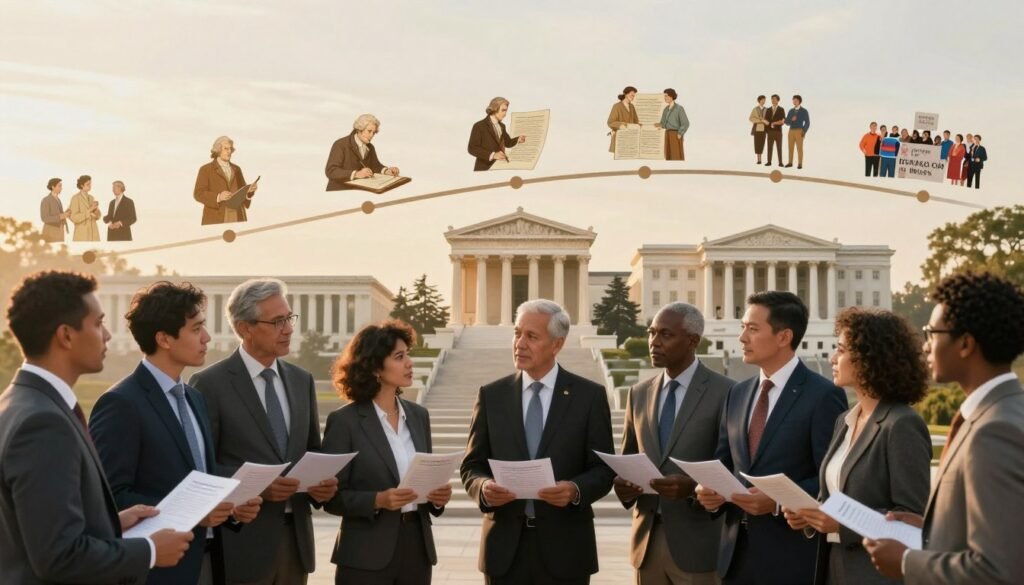
Key Milestones in U.S. Civic Education
In the United States, a major change occurred in Florida’s schools. The state restored mandatory civics classes around 2011. This move aimed to boost student understanding of their democratic rights.
Such educational reforms show how past lessons shape current teaching. They prepare young people to take part in local government. Knowing this history helps us see the changing role of public institutions.
Active Citizenship in Practice
When tragedy strikes, it can ignite a powerful sense of duty and mobilization among those affected. Abstract ideals about civic life are proven through tangible action in the real world.
These practical efforts show how individuals can organize to demand reforms. They turn personal grief or concern into a collective force for change.
Real-World Examples and Student-led Movements
A profound example emerged after the 2018 shooting at Marjory Stoneman Douglas High School. The surviving students channeled their loss into a national movement for gun safety.
These young people used social media to coordinate school walkouts and lobby trips. They traveled to state capitals and Washington, D.C., to speak directly with government officials.
Their activities demonstrated a direct line from public participation to policy decisions. They exercised their constitutional right to assemble and petition, a core democracy principle.
This movement highlighted the role of applied knowledge. Many organizers used skills from their civics education to navigate the political system.
It proved that informed engagement holds real power. Even young citizens can hold leaders accountable and shape their community and society.
Empowering Communities Through Citizenship Education
From Ontario to Denmark, schools are transforming how young people prepare for their role in public life. This shift moves learning beyond theory into applied skills. The goal is to build a foundation for direct community involvement.
Innovative Approaches in Schools and Higher Education
Institutions are making this learning mandatory. Mohawk College in Ontario runs a compulsory course through its Language Studies Department.
It teaches essential skills for public participation. Denmark includes a 36-lesson course in its teacher education curriculum. This prepares educators to foster civic engagement in their own classrooms.

Integrating Social Media and Modern Engagement Strategies
Modern strategies use digital tools. Social media provides direct access points to government affairs.
This approach bypasses traditional town hall meetings. It meets students and people where they already spend their time.
Policy Impacts and Community Initiatives
This foundational knowledge has real-world effects. Students gain the confidence to interact with local boards.
They learn to address local challenges directly. This bottom-up focus empowers them to propose credible solutions for public funding. Such engagement can shape local policy from the ground up.
Challenges and Barriers to Active Citizenship
The path to meaningful community engagement is often blocked by systemic and ideological hurdles. These challenges can make people feel their voice does not matter in the democracy.
Neoliberal Influences and Exclusions
Some economic ideas frame citizenship in purely individual terms. This view can strip away the political facets needed for real community change.
Market-driven policies often exclude marginalized groups. They may lack the resources to take part in the process.
In 2017, the Albert Shanker Institute gathered global activists. Figures like Han Dongfang discussed threats to civil society institutions.
Institutional and Policy Roadblocks
Government dysfunction and political polarization create major barriers. They make it hard for citizens to influence public policy.
Many individuals feel disconnected from politics. They lack a sense of their own power to solve problems.
These systemic issues require critical examination. True participation depends on accessible institutions and fair decisions.
Opportunities and Strategies for Enhanced Civic Engagement
Moving from awareness to impact involves learning specific methods for interacting with local government. This shift turns concern into tangible results for your neighborhood.
Transformative Education and Skill Development
Real learning must go beyond textbook facts. As former Senator Bob Graham wrote, people can fight city hall and win by knowing how to talk to officials.
Studies show more schooling links directly to higher civic participation. This proves the value of a good education.
Schools should teach practical skills. Students need to judge information sources in an age of fake news. This builds critical thinking for a healthy democracy.
Effective Tactics for Community and Government Interaction
Successful action starts by finding the right person in charge. You must gather solid proof to back your idea for local change.
This hands-on approach gives individuals a true sense of their own power. It is a strong antidote to feelings of helplessness.
When people feel they can shape policies, they engage more. This strengthens our shared community and public trust.
Conclusion
The true measure of a democracy lies in the everyday actions of its people to shape their collective destiny. Active citizenship is not a fixed status but a living practice, claimed through ongoing social struggle.
Our schools must merge foundational knowledge with civic values. This prepares all students for meaningful participation in our democratic system.
The future of our republic relies on a vibrant civic sector. Here, people from diverse backgrounds collaborate. We must challenge structural inequality so every person can influence public policy.
Ultimately, our society‘s health is proven when individuals stand up and demand change. Their action strengthens our shared community and public trust.
FAQ
What are some real-world examples of people making a difference in their communities?
There are countless examples! Students have organized climate strikes through groups like Sunrise Movement, advocating for policy change. Locally, individuals often start neighborhood clean-up projects or volunteer with organizations like Habitat for Humanity to build affordable housing. These actions show how direct participation can lead to tangible improvements in society.
How can schools better prepare young people for involvement in democracy?
Schools are moving beyond textbooks. Innovative programs include project-based learning, where students tackle local issues. Service-learning courses combine academic study with hands-on community work. Furthermore, schools can simulate democratic processes, like holding mock elections or debates, to build essential knowledge and skills for informed participation.
What are the biggest hurdles that prevent greater public participation?
Significant barriers exist. Many people feel they lack the time or specific knowledge to engage effectively. Institutional roadblocks, like complex government processes, can be discouraging. Additionally, certain policies and societal structures can unintentionally exclude voices, making some feel their efforts won’t lead to meaningful change.
Can social media and digital tools truly enhance civic life?
Absolutely. Platforms like Twitter and Facebook allow for rapid information sharing and mobilization around causes. Tools like Change.org enable individuals to start petitions and gather support directly. When used critically, these digital spaces create new opportunities for organizing, discussion, and holding institutions accountable.
What practical steps can an individual take to become more engaged?
Start local and find what fits your life. You can attend a public meeting for your town council or school board. Volunteering for a local non-profit, such as a food bank or library, addresses community needs directly. Another powerful step is to simply have conversations with neighbors about shared concerns, which can spark collective action.