What if you could maintain your current quality of life while spending significantly less each month? Many Americans are discovering that Morocco offers exactly this opportunity.
The North African nation presents a compelling financial picture for expats and travelers. With expenses 1.57 times lower than the global average, your dollar stretches much further here. The average monthly salary after taxes is approximately $420, covering basic needs for many residents.
This comprehensive guide explores what it takes financially to settle in this vibrant country. We’ll examine how daily expenditures compare to those in the United States and other Western nations.
You’ll discover specific price breakdowns covering housing, utilities, food, and transportation. Whether planning a short visit or long-term relocation, understanding local economic conditions is essential for budgeting success.
The financial realities of life here include salary expectations and purchasing power. This information helps you make informed decisions about lifestyle choices and location preferences across Moroccan cities.
Key Takeaways
- Morocco ranks 141st globally for affordability, making it significantly cheaper than most countries
- Monthly expenses for one person average $729 with rent included
- The country is 1.57 times less expensive than the world average
- Average net salary after taxes covers living expenses for 0.6 months
- Family of four can expect monthly costs around $1,729 including housing
- 75.3 years life expectancy indicates good healthcare and quality of life
- 18.4% English-speaking population facilitates easier transition for Americans
Economic Overview of Morocco’s Living Costs
Navigating the economic environment requires insight into currency dynamics and regional price variations. The country’s financial structure creates distinct advantages for budget-conscious individuals.
Currency and Exchange Rate Dynamics
The Moroccan Dirham (MAD) serves as the official currency. Exchange rates fluctuate regularly, impacting purchasing power for expatriates.
Average monthly earnings range between 2,500-3,500 dirhams. This translates to approximately $250-$400 USD. Highly skilled professionals can earn significantly more than entry-level positions.
Impact of Economic Zones on Prices
Major urban centers like Rabat and Casablanca command premium prices. Property values in these cities reach 25,000-28,000 Dhs per square meter.
Smaller cities offer more affordable alternatives. The same apartment costing 3,000 Dhs monthly in Casablanca might be 1,500 Dhs in Fes. Understanding these regional differences helps optimize budget allocation.
Economic zones range from developed business districts to traditional markets. This diversity creates varied price structures across different areas.
Cost of Living in Morocco: Monthly Expense Breakdown
A detailed look at monthly outlays helps expatriates and families plan their financial strategy. Understanding how expenses distribute across categories reveals significant savings opportunities compared to Western nations.
Budgeting for a Single Person
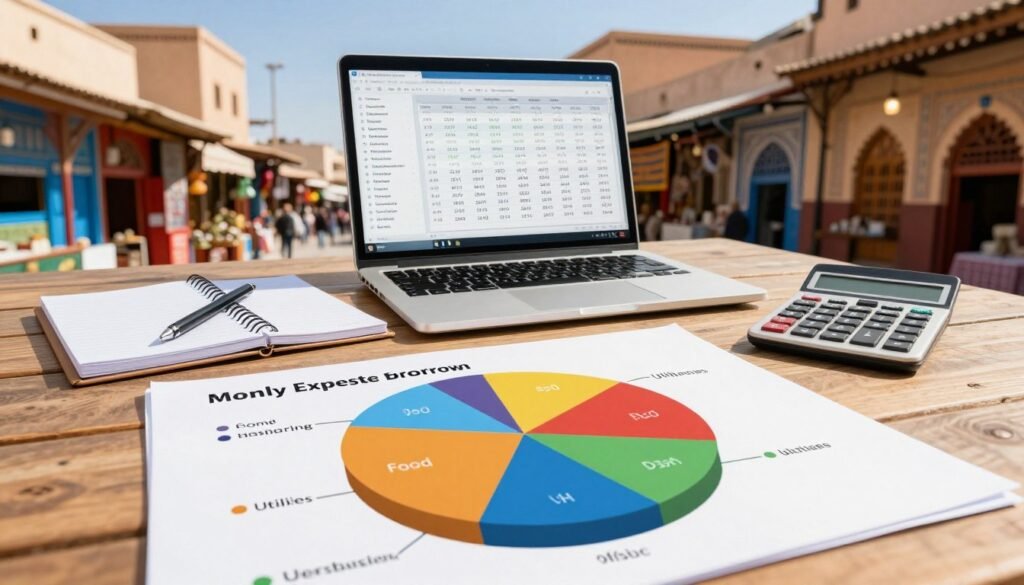
Individual monthly expenses typically range from 5,000 to 10,000 MAD. This translates to approximately $500-$1,000 per month. The total varies based on city selection and lifestyle preferences.
Rent constitutes the largest portion of monthly costs. Utilities, groceries, and transportation follow as consistent expenses. Healthcare and entertainment represent variable spending categories.
Foreign income provides substantial purchasing power advantage when compared to local salary levels. This creates comfortable living standards for expatriates.
Typical Expat and Family Expense Ranges
Family budgets multiply across all categories. Larger housing needs and increased food costs significantly impact monthly totals. Educational expenses for children add another dimension to family financial planning.
The affordability gap becomes particularly evident when comparing to the United States. Rent, food, and transportation typically cost 50-70% less than major American cities.
Monthly budgeting requires balancing fixed and variable expenses. This approach ensures financial stability while maintaining desired lifestyle standards.
Housing, Rental, and Utility Costs
Finding suitable accommodation presents the most significant financial decision for newcomers. Your location choice between urban centers and suburban areas creates substantial budget differences.
A one-bedroom apartment in the city center averages 3,213 MAD monthly. The same apartment outside central districts costs just 1,890 MAD. This represents a 41% savings for suburban living.
City Center vs. Suburban Living
Family housing shows even greater price variations. Three-bedroom apartments cost approximately 747 MAD in prime locations. Suburban options average 416 MAD for comparable space.
The cities of Rabat and Casablanca command premium rental rates. Smaller cities like Essaouira offer significantly lower prices. Your city selection dramatically impacts housing expenses.
Insights on Property Purchase and Rental Trends
Utility costs remain manageable for most budgets. Basic utilities for a standard apartment average 380-486 MAD monthly. Electricity represents the primary utility expense.
Water expenses stay reasonable throughout the country. Internet service adds approximately 37 MAD for 50 Mbps+ connections. These utility costs create predictable monthly outlays.
Property purchase presents attractive investment opportunities. City center properties average 1,507 MAD per square meter. Mortgage rates around 4.6% make ownership accessible.
Shared apartment living offers exceptional affordability. Monthly rates between $150-$300 appeal to students and young professionals. This option provides substantial savings over private accommodations.
Daily Living: Food, Groceries, and Transportation
Daily budgeting revolves around two key areas: nourishment and movement. Understanding these expenses helps maintain financial stability while enjoying local offerings.
Grocery Shopping and Dining Out Costs
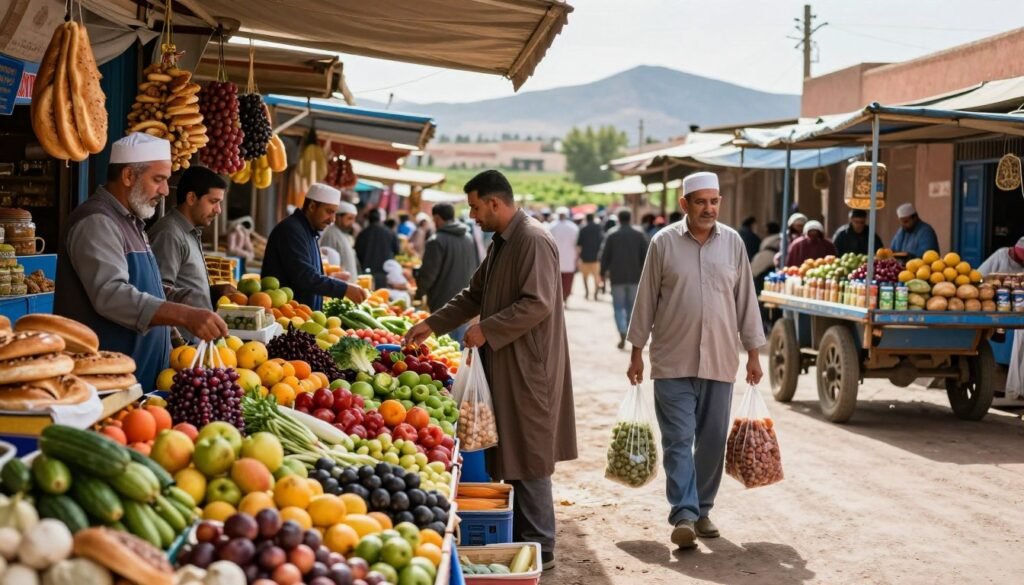
Food expenses remain remarkably affordable for residents. A single person typically spends 1,000-1,500 MAD monthly on groceries.
Local markets offer the best prices Morocco provides for fresh produce. Staples like bread, rice, and eggs create economical meal options.
Dining out presents excellent value compared to Western nations. An average restaurant meal costs just 40 MAD. Mid-range establishments charge 250 MAD for three-course dinners.
Local Transportation and Vehicle Ownership Expenses
Public transport provides cost-effective mobility solutions. Monthly passes cost 200 MAD for unlimited city access.
Single tickets run 5 MAD for pay-as-you-go convenience. Taxis start at 7 MAD with reasonable per-kilometer rates.
Gas prices average 1.53 MAD per liter. Vehicle ownership involves significant upfront investment due to import taxes.
The combination of affordable food and efficient transport creates manageable daily expenses. This structure supports comfortable lifestyles within reasonable budgets.
Healthcare, Education, and Personal Care Expenses
Healthcare and education planning form essential components of financial preparation for life abroad. These services impact both your monthly budget and long-term satisfaction with your relocation experience.
Healthcare Services and Insurance Outlays
Medical care remains accessible for most residents. A private doctor visit costs approximately 261 MAD for a 15-minute consultation.
Basic medications provide significant savings compared to the United States. Cold medicine for six days averages 35 MAD while antibiotics cost around 108 MAD.
Comprehensive health insurance is recommended for expatriates. Annual premiums range between 10,000-25,000 MAD per year. This investment ensures access to quality private healthcare facilities.
Education Options and Childcare Investments
Education represents the most substantial expense for families. International primary school fees average 33,520 MAD annually. Prices vary widely from 15,000 to 65,248 MAD depending on the institution.
Preschool and kindergarten costs average 1,012 MAD per month. This adds another significant expense for families with young children.
The salary tax structure means the average person takes home 4,139 MAD monthly. This makes international education costs challenging for local families without foreign income.
Personal care expenses remain minimal throughout the country. Haircuts cost 56 MAD while toiletries like shampoo average just 3.67 MAD. These affordable prices help maintain grooming standards without straining your budget.
Entertainment, Leisure, and Lifestyle Considerations
Your leisure time in Morocco offers diverse activities that fit various budgets. Social life and personal wellness remain accessible across different income levels.
Cultural experiences blend traditional charm with modern amenities throughout the country. This creates rich lifestyle opportunities without significant financial burden.
Dining, Cultural Activities, and Fitness Costs
A monthly gym membership in business districts averages 383 MAD. Many modern fitness centers in Rabat and Casablanca feature comprehensive facilities.
Cultural engagements remain affordable for regular participation. Cinema tickets cost 65 MAD while premium theater seats run 484 MAD for two people.
Personal grooming services like a men’s haircut in expat areas average 56 MAD. Similar services in local neighborhoods may cost even less.
Entertainment budgets typically range from 500-2,000 MAD monthly depending on lifestyle preferences. Those who frequently visit restaurants and maintain active memberships trend toward higher spending.
Tips for Cost-Efficient Living and Enjoyment
Choose local restaurants where complete meals cost under 50 Dhs instead of European-style establishments. This strategy can save thousands of dirhams per month.
Public parks and beaches in cities like Agadir offer free recreation alternatives. Tennis court rentals cost 235.58 MAD per hour on weekends for more structured activities.
Rabat and Casablanca provide the most diverse entertainment options but at premium prices. Smaller cities offer more affordable alternatives while maintaining cultural richness.
Smart shopping at local markets rather than international brands significantly reduces clothing expenses. This approach helps manage overall lifestyle costs effectively.
Conclusion
Relocating to Morocco presents a unique financial opportunity for Americans seeking enhanced purchasing power abroad. The country ranks 141st globally for affordability, making it significantly cheaper than most Western nations.
Single individuals can expect monthly expenses around $729 including housing, while families of four average $1,729. These prices represent substantial savings compared to the United States.
Even premium cities like Rabat and Casablanca offer exceptional value. Life expectancy of 75.3 years indicates good healthcare and quality living standards.
Strategic budgeting allows for comfortable lifestyles at reasonable prices per month. Understanding regional variations helps optimize financial planning for long-term residency.
FAQ
What is the average monthly expense for a single person in a city like Rabat or Casablanca?
For a single person, monthly expenses typically range from 0 to 0. This budget covers a modest apartment outside the city center, groceries, utilities like electricity and water, and local transportation. Lifestyle choices significantly impact the final total.
How do utility bills, such as for electricity and water, factor into the budget?
Utility costs for a standard apartment are generally affordable, averaging around to per month. This includes electricity, water, and garbage disposal. Heating or extensive air conditioning use can increase these expenses, especially during extreme seasons.
Is it expensive to own a car versus using public transport in Morocco?
Owning a car involves significant costs, including fuel, insurance, and maintenance. Public transportation, like buses and trains in cities such as Casablanca, is far more economical. For daily commuting, a monthly transport pass offers excellent value compared to vehicle ownership expenses.
What are the price differences for groceries between local markets and international supermarkets?
Shopping at local souks and markets is considerably cheaper for fresh produce, meat, and bread. International supermarket chains have higher prices, more akin to those in the United States or Europe. A family can save a substantial amount on groceries by buying locally.
What should a family budget for education, such as an international primary school?
Education is a major investment. Annual tuition for an international primary school can range from ,000 to ,000 or more. This is a key expense for expat families and should be a primary consideration when planning a move and calculating the total cost of living in Morocco.
Are healthcare services and insurance affordable for expatriates?
Public healthcare is available at a low cost, but many expats opt for private health insurance for access to higher-quality facilities. A visit to a private doctor might cost around to . Comprehensive international health insurance plans are an additional monthly expense to factor into your budget.