Many professionals today operate outside conventional job structures. Freelancers, digital nomads, and entrepreneurs face unique challenges when planning international moves. The standard work visa often requires a local employer sponsor.
This creates a significant hurdle for location-independent workers. However, numerous countries now recognize the value of self-driven professionals. They offer specific pathways for those building their own businesses or working as independent contractors.
Our guide explores the global landscape of immigration options for non-traditional workers. We focus on understanding requirements across different nations. You’ll discover how to legally establish your professional presence overseas.
The process varies significantly by destination. Some countries welcome remote workers with streamlined digital nomad visas. Others have more complex business investor programs. Each option has distinct financial and documentation requirements.
Whether you’re planning a short-term stay or permanent relocation, proper planning is essential. Understanding the available pathways can save you time and prevent costly mistakes. This comprehensive resource provides the roadmap you need.
Key Takeaways
- Many countries now offer specific visa categories for freelancers and remote workers
- Traditional employment-based visas often don’t suit self-employed professionals
- Requirements vary significantly between different nations and visa types
- Financial documentation and business plans are typically crucial components
- Some destinations offer streamlined processes for digital nomads
- Long-term options may lead to permanent residency in some countries
- Proper preparation can significantly increase your chances of approval
Introduction to Self-Employment Visa Trends
Global workforce patterns have shifted significantly with the rise of remote professionals operating across borders. Traditional immigration systems struggled to accommodate this new reality for many people seeking international opportunities.
Governments worldwide now recognize the economic benefits of welcoming location-independent workers. These professionals contribute to local economies without competing for domestic jobs, making them attractive additions to any country.
The COVID-19 pandemic accelerated remote work adoption, prompting nations to create specialized programs. Current trends show increasing flexibility in requirements and streamlined processes for establishing legal residence.
Understanding these evolving patterns helps professionals time their applications strategically. New programs often offer more favorable terms than traditional immigration pathways, creating exciting opportunities for mobile workers.
Understanding Your Visa Options in the United States
Navigating American immigration pathways presents distinct hurdles for professionals without traditional employment ties. The United States lacks specific categories for freelancers or digital nomads seeking work authorization.
Most employment-based visas require sponsorship from a United States company. Employers must file Form I-129 with a $460 fee to petition for foreign workers.
The H-1B represents the most common work visa option. This program caps at 65,000 visas annually, plus 20,000 for advanced degree holders.
However, the H-1B requires a clear employer-employee relationship where the company controls your work. This structure makes it unsuitable for those running their own businesses.
The E-2 investor visa offers the closest alternative to self-employment authorization. This option demands substantial capital investment in a US-based enterprise.
For brief business activities, the B-1 visitor visa permits stays under six months. It allows meetings and negotiations but prohibits actual employment work.
The Visa Waiver Program provides another short-term solution for eligible nationals. Both temporary options strictly limit the type of activities permitted.
Exceptionally talented professionals might qualify for the EB-1 category without employer sponsorship. This path requires documented international recognition and remains highly selective.
Understanding these limitations proves crucial for compliance. Working illegally on tourist status can lead to deportation and future visa denials.
Differences Between Work Visas and Self-Employment Permits
Immigration systems worldwide draw clear legal boundaries between traditional employee sponsorship and independent work authorization. These categories serve fundamentally different purposes in immigration law.
A standard work visa typically requires a sponsoring employer who petitions for the worker. This company assumes responsibility for employment and maintains control over assignments.
The employer manages compensation, schedules, and overall supervision. This creates a dependent relationship between the visa holder and the sponsoring organization.
Self-employment permits recognize that professionals operate independently. They manage their own clients or business operations without single-employer oversight.
The application process differs significantly between these authorization types. Work visas demand employer documentation proving no qualified local workers exist.
Independent professional permits typically require demonstrating sufficient income or business viability. Financial requirements also vary substantially between these pathways.
Duration and renewal processes present another key distinction. Work visas often tie to specific employment contracts requiring new petitions for employer changes.
Self-employment authorization generally offers more flexibility for taking different clients. Understanding these differences helps avoid inappropriate category applications.
Digital Nomad and Freelance Visa Case Studies
Several forward-thinking countries now offer dedicated authorization programs that recognize the unique needs of digital professionals. European nations have emerged as leaders in creating accessible pathways for remote workers.
Insights from European Digital Nomad Visas
Estonia’s program requires proof of €3,504 monthly income over the previous six months. Application fees range from just €80 to €100 depending on the visa type.
Croatia offers one of the lowest income thresholds at approximately $550 USD monthly. However, the program currently cannot be renewed after the initial one-year period.
Comparing Popular Freelance Visa Programs
Cyprus provides a middle-ground option with its €3,500 monthly requirement for solo applicants. The program allows renewal for two years but has a 500-applicant cap.
Greece’s system requires €3,500 monthly after taxes with additional amounts for family members. The initial visa valid for one year can lead to renewable two-year residence permits.
These programs demonstrate significant variation in financial requirements and renewal options. Understanding these differences helps professionals choose the best fit for their circumstances.
Key Insights into visas for self-employed individuals
Modern professionals seeking international opportunities must navigate a complex web of authorization categories tailored to different work models. These programs recognize that today’s workforce often operates across multiple clients and platforms rather than traditional single-employer arrangements.
The fundamental distinction lies in how these permits acknowledge independent business operations. Unlike standard work authorization, they don’t require local employer sponsorship. This flexibility accommodates various professional setups from freelancing to entrepreneurial ventures.
Income verification remains a universal requirement across virtually all programs. Thresholds vary dramatically by destination, ranging from modest amounts to substantial monthly earnings. Applicants must demonstrate financial stability through documented income streams.
Most authorization programs emphasize that professionals won’t compete with local workers. This typically requires showing that clients or operations remain primarily outside the host country. The approach preserves local employment opportunities while welcoming economic contributors.
Understanding the temporary nature of most options proves crucial. Many programs offer stays from six months to several years rather than permanent residency paths. However, some do allow renewals or transitions to other categories over time.
The global trend shows increasing acceptance of remote professionals as legitimate immigration candidates. New programs emerge regularly, offering improved terms for location-independent workers. Staying informed about evolving options can reveal better opportunities.
Success depends on presenting a compelling case beyond minimum requirements. Immigration officials look for financial stability, professional credibility, and genuine intent to contribute positively. A well-prepared application significantly increases approval chances.
Eligibility Criteria and Required Documentation
Meeting eligibility standards demands careful preparation of financial and professional evidence that demonstrates sustainable remote work capabilities. Each country establishes specific criteria that applicants must satisfy.
The application process requires thorough documentation to prove you meet all necessary conditions. Understanding these requirements beforehand streamlines your submission.
Checklist of Essential Documents
All programs mandate a valid passport with at least six months remaining validity. Recent passport-sized photos and completed application forms are universal requirements.
Proof of accommodation through rental agreements or hotel bookings demonstrates you have housing arranged. Application fees vary by destination but represent a standard component.
Background checks from your home country ensure you meet security standards. Health insurance coverage protects both you and the host nation from medical costs.
Proof of Income and Work Contracts
Income verification represents the most critical eligibility factor across all programs. Countries set different thresholds based on local living costs.
Albania requires proof of $9,800 annually while Iceland demands $7,800 monthly. Bank statements covering the previous six to twelve months provide evidence of financial stability.
Work contracts with overseas clients or business registration documents prove your professional activities. Letters from future clients demonstrate continued income potential after relocation.
Navigating the Application Process and Timelines
Successfully obtaining authorization requires careful navigation of bureaucratic procedures. Each country establishes unique submission pathways with varying complexity levels.
Some nations offer fully digital submission systems while others mandate embassy visits. Understanding these differences helps you plan effectively.
Steps to Initiate Your Application
The journey begins with identifying the correct authorization category for your situation. Choosing the wrong type can lead to rejection and wasted fees.
Most processes start with online forms requiring detailed personal and professional information. The US DS-160 form serves as a comprehensive example of this stage.
Document preparation proves crucial before formal submission. Background checks and certified documents often require weeks to obtain.
Interview scheduling represents another critical step with significant timeline implications. Embassy appointment availability ranges from days to months depending on location.
Expected Processing Times
Processing durations vary dramatically between different immigration systems. Estonia delivers decisions within 30 days while Cyprus takes 1-3 months.
Albania maintains a maximum 12-week waiting period for applications. The United States process can extend up to 60 days after interview completion.
Some countries offer expedited processing for additional fees. Others maintain fixed timelines regardless of payment level.
Applicants should begin the process well before their intended travel dates. This accommodates potential delays in document verification or administrative reviews.
Maintaining communication with processing offices helps track application status. Prompt responses to information requests prevent unnecessary extensions.
US Work Visa Alternatives for Remote Professionals
Finding legal pathways for remote professionals in the United States requires understanding specific visa categories. The country lacks a dedicated program for digital nomads, making options more complex.
Short-term business visits are possible under the B-1 visa. This visa allows stays under six months for meetings and consultations.
It strictly prohibits actual employment work for US clients. The Visa Waiver Program offers similar 90-day access for eligible nationals.
For longer-term solutions, the E-2 investor visa is a key option. It demands substantial capital investment in a US enterprise that creates local jobs.
The EB-1 category offers a route for those with extraordinary ability. This type of petition does not require employer sponsorship.
It can lead directly to permanent residency but has very high standards. The popular H-1B work visa is less suitable for independent professionals.
It requires a traditional employer who controls your work. The L-1 visa helps entrepreneurs transfer to open a US branch of their existing foreign company.
Understanding these limited options in the united states is crucial. Working remotely on a tourist visa is illegal and carries serious risks.
Comparing International Options: Europe, Asia, and Beyond
Professional nomads seeking cross-border opportunities encounter a patchwork of national policies with varying accessibility. Each destination crafts unique entry pathways reflecting local economic priorities and administrative traditions.
European nations lead in formalizing remote work authorization programs. The continent offers diverse options from budget-friendly to premium tiers.
European Nations and Their Visa Programs
Croatia sets one of the lowest financial thresholds at approximately $550 monthly. However, this program lasts only one year without renewal options.
Estonia requires €3,504 monthly income but provides streamlined digital processing. Germany demands extensive documentation including professional authorization and revenue forecasts.
Greece and Cyprus both target professionals earning around €3,500 monthly. These programs allow multi-year renewals for establishing longer-term presence.
Asian destinations approach remote work differently. Thailand uses creative pathways like education visas requiring course enrollment.
Latin American options include Panama’s $36,000 annual requirement with nine-month renewable terms. Mexico offers one-year renewable authorization based on income verification.
Application complexity varies dramatically between nations. Some provide fully online processes while others require embassy visits and extensive paperwork.
Navigating Legal Considerations and Immigration Policies
Legal compliance represents the most critical aspect of international mobility for independent professionals. Immigration law varies dramatically across different nations, each with unique definitions of what constitutes work.

The fundamental distinction lies between tourist authorization and proper work permits. Tourist status typically prohibits any productive activities, even remote work for foreign clients.
Some Asian destinations have shown leniency toward digital professionals. This informal tolerance recognizes economic contributions without local job competition.
However, this approach offers no legal protections and can change suddenly. European enforcement tends to be stricter, particularly regarding the Schengen Area.
The Schengen visa allows stays for 90 days within any 180-day period. Border runs to reset this clock are increasingly scrutinized and rarely successful.
Unauthorized work carries serious consequences including deportation and multi-year entry bans. These violations also complicate future applications to any country.
Tax implications create another layer of legal complexity. Extended stays may trigger tax residency requirements in your host nation.
Regulations change frequently across all destinations. Verifying current requirements through official sources proves essential for compliance.
The Role of Financial Stability and Health Insurance
The foundation of any successful application rests on clear evidence of sustainable income and comprehensive health coverage. Countries want assurance that professionals can support themselves without local assistance.
Income thresholds vary dramatically across different authorization programs. Croatia requires only $550 monthly while Iceland demands $7,800. Most European options cluster around €2,500-€3,500 monthly.
Applicants need to prove consistent income through bank statements covering six to twelve months. Some countries also require minimum account balances beyond regular earnings.
When bringing family members, income requirements increase by 15-20% for spouses. Additional amounts apply for children to ensure adequate family support.
Health insurance represents a universal requirement across all programs. This protects both the applicant and host country from medical costs.
Some nations mandate coverage from specific local providers. Others accept international policies with adequate minimum coverage amounts.
Demonstrating financial stability goes beyond meeting minimum thresholds. Strong applications show diverse income sources and substantial savings.
Countries may verify documents by contacting banks directly. Submitting false information can lead to immediate denial and legal consequences.
Country-Specific Visa Success Stories and Challenges
Real-world experiences from different nations reveal both opportunities and obstacles in obtaining work authorization. Each destination presents unique advantages and hurdles that can significantly impact application outcomes.
Case Study: Croatia, Cyprus, and Germany
Croatia’s program offers an attractive low income threshold. However, the one-year limit without renewal options presents a major challenge for long-term planning.
Cyprus provides a balanced approach with reasonable financial requirements. The ability to renew for two years gives applicants extended stability. The 500-applicant annual cap requires strategic timing.
Germany maintains some of the most rigorous documentation requirements. Success often depends on the specific immigration officer and application location.
Case Study: Hungary, Italy, and Latvia
Hungary’s White Card stands out for its long-term potential. It allows renewals and creates a pathway to permanent residency for established professionals.
Italy demands proof of existing digital nomad experience plus educational credentials. The €28,000 annual income requirement filters for well-established applicants.
Latvia offers straightforward processing with one-year renewable terms. The country receives less attention than more popular destinations but provides solid options.
Exploring Additional US Visa Options and Procedures
Beyond the well-known H-1B, the United States offers several specialized visa categories that can accommodate professionals with unique circumstances. These alternatives provide pathways for those with extraordinary talent, specific nationalities, or unique professional backgrounds.
The O-1 visa serves individuals with extraordinary ability or achievement in their field. This type of petition can sometimes be self-filed, offering flexibility for those working with multiple clients.
P visas are designed for athletes, entertainers, and artists participating in specific events or exchanges. The E-3 visa provides a streamlined option exclusively for Australian citizens in specialty occupations.
TN status offers Canadian and Mexican professionals a reliable path without annual caps. Each option has distinct eligibility criteria and application nuances.
The standard application process involves several key steps. First, an approved employment petition is required for most categories. Applicants then complete the online DS-160 form.
This form requires detailed personal, professional, and travel information. The next step involves scheduling a consular interview and paying the required fee.
Interview preparation is critical for a successful outcome. Consular officers assess the applicant’s intent and qualifications during this meeting.
Processing can take up to 60 days after the interview. It’s vital to understand the difference between visa validity and authorized stay period.
A visa allows entry to the US, but the actual stay is determined by the I-94 record. Family members may also obtain derivative status through separate applications.
Expert Tips for a Successful Visa Application
The difference between approval and denial often lies in how well you prepare your submission package. Strategic planning and attention to detail can dramatically improve your chances.
Starting early proves essential for navigating complex processes. Unexpected delays frequently occur during document gathering and verification.
Common Application Pitfalls to Avoid
Many applicants submit bank statements showing irregular income patterns. This raises concerns about financial stability. Use accounts with consistent, documented earnings instead.
Another frequent mistake involves insufficient explanation of your business model. Simply meeting technical requirements often leaves immigration officers with unanswered questions.
Document inconsistencies create immediate red flags. Ensure employment contracts and application forms show matching dates and figures.
Best Practices for Compiling Documentation
Create a master checklist of all required items before beginning. Organize everything logically with clear labels and professional translations where needed.
Include supporting materials beyond minimum requirements. Client testimonials and portfolio samples demonstrate professional credibility effectively.
Truthfulness remains paramount throughout the process. Providing false information leads to automatic denial and potential future bans.
The Impact of Visa Policies on Self-Employment Growth
Government entry policies create either pathways or barriers for modern business professionals seeking international opportunities. These regulations directly shape entrepreneurial expansion and remote work possibilities across borders.
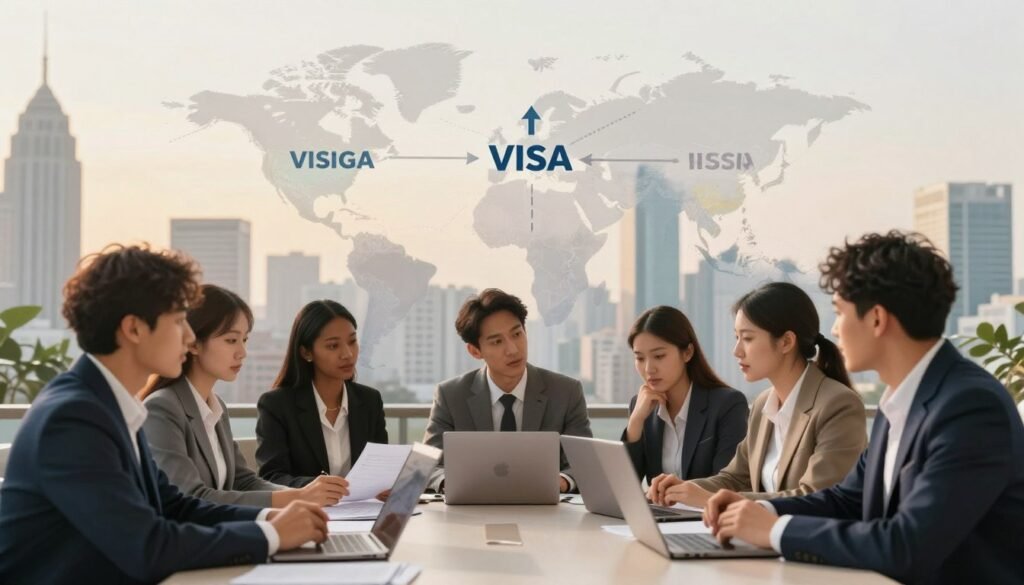
Countries now recognize that remote professionals boost local economies through spending without taking local jobs. The COVID-19 pandemic accelerated both remote work adoption and new visa program development.
Progressive policies give countries competitive advantages in attracting global talent. Professionals choose destinations where they can legally operate their business long-term.
Restrictive policies in major economies redistribute talent toward more accessible locations. This creates opportunities for welcoming countries to gain skilled professionals.
Digital work platforms enable global business, but visa policies determine whether this potential gets fully realized. Future policy evolution will likely continue accommodating location-independent professionals.
Conclusion
The journey toward international professional freedom requires navigating a complex global landscape of immigration policies. This guide has mapped the diverse pathways available to location-independent workers across dozens of nations.
Today’s professionals enjoy unprecedented visa options as countries recognize the economic value of remote contributors. European programs lead with accessible digital nomad visas, while the United States remains challenging without dedicated categories.
Success depends on thorough preparation and matching your financial profile to suitable programs. Income requirements vary dramatically by country, from Croatia’s modest threshold to Iceland’s premium standard.
The application process demands patience and attention to legal details beyond basic requirements. As remote work normalizes, policies will continue evolving to accommodate independent professionals seeking global opportunities.
Understanding your options empowers strategic decisions about where to establish your international base. With proper planning, you can build a sustainable location-independent career on solid legal foundations.
FAQ
What is the main difference between a standard work visa and a self-employment permit?
A standard work visa typically requires a sponsoring employer and a formal job offer. In contrast, a self-employment permit allows you to work for your own business or as an independent contractor. The key distinction is who you work for and the type of business structure you operate under.
Can I get a visa to start a business in the United States?
Yes, the E-2 Treaty Investor visa is a popular option for entrepreneurs. It requires a substantial financial investment in a real and operating U.S. enterprise. Another option is the L-1A visa for transferring an executive or manager from a foreign company to a U.S. office. Neither directly leads to a green card, but they are viable paths for business owners.
How much income do I need to prove for a freelance or digital nomad visa?
A> The required income amount varies significantly by country. For example, some European digital nomad visas require proof of a stable monthly income, often ranging from ,000 to ,000 or more. You must demonstrate sufficient funds to support yourself without needing local employment.
What are the typical processing times for these types of applications?
Processing times can range from a few weeks to several months. Factors include the specific country, embassy or consulate workload, and the completeness of your application. It’s crucial to apply well in advance of your planned move. Some programs offer expedited processing for an additional fee.
Is health insurance mandatory for these visa programs?
In almost all cases, yes. Most countries require applicants to have valid international health insurance that provides coverage for the entire duration of their stay. This is a standard requirement to ensure you will not become a burden on the host country’s public health system.
Can a self-employment visa lead to permanent residency?
It depends on the country’s immigration law. Some visas are temporary and do not offer a direct path to permanent resident status. Others, like certain business investment visas, may eventually allow you to apply for a green card or long-term residency after maintaining your status for a number of years.