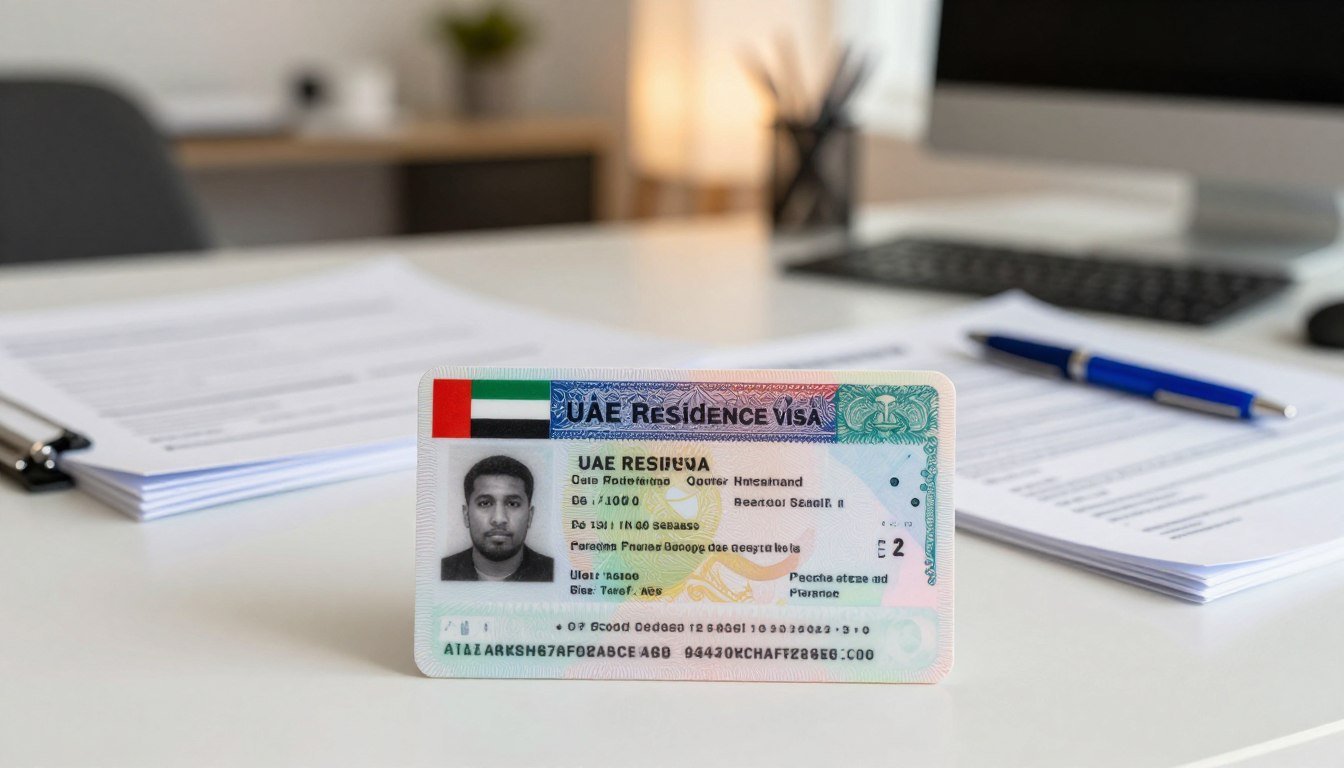
What if you could live and work in one of the world’s most dynamic countries with rights nearly equal to its citizens? The United Arab Emirates offers exactly this opportunity through its long-term stay programs.
While many people call it a residence permit, the official term is actually “residence visa.” This document allows foreigners to stay in the country for 1 to 10 years. The system is designed for flexibility and renewal.
You have multiple pathways to obtain long-term status. Options include employment, business investment, real estate purchase, retirement plans, and family sponsorship. Each category has specific requirements and benefits.
Approximately 90% of the population consists of international residents. This demonstrates the country’s welcoming approach to global talent. The established systems support expatriates in building successful lives.
This guide will walk you through eligibility criteria, investment options, application steps, and documentation needs. You’ll also learn about fees, renewal processes, and practical tips for success.
Key Takeaways
- The official term is “residence visa,” though “residence permit” is commonly used
- Multiple pathways exist including employment, investment, and family sponsorship
- Validity periods range from 1 to 10 years with renewal options
- Foreign residents enjoy comprehensive rights and access to services
- The application process involves specific documentation and fees
- Approximately 90% of UAE residents are international expatriates
- Long-term planning is essential for successful settlement
Overview of UAE Residence Permits
The Emirates’ immigration framework offers distinct pathways for global talent, investors, students, and family members to obtain legal status. Various authorization categories serve different purposes and target audiences.
Validity periods depend on the specific category. They range from one year for students to ten years for high-value investors. Renewal options exist when eligibility requirements continue to be met.
Unlike many nations, the country does not provide permanent residence in the traditional sense. Instead, it offers long-term renewable authorization that allows holders to live and work legally.
These documents permit unlimited entries and exits during their validity. However, staying outside the country for more than six months may lead to cancellation.
Eligible individuals include employees of local companies, property investors, and business entrepreneurs. Freelancers, university students, and family members of citizens also qualify.
Each emirate processes applications through its own residency office. Requirements remain largely consistent across all seven emirates despite independent processing.
Legal and Economic Benefits of UAE Residency
Legal authorization in this Gulf nation provides comprehensive benefits spanning financial, business, and lifestyle domains. Holders enjoy near-equal rights with citizens across essential services.
The legal advantages include access to government services, banking facilities, and educational institutions. You can open local accounts, obtain driver’s licenses, and enroll children in schools.
Financial benefits stand out significantly. Individuals pay no income tax on personal earnings. This makes the country one of the most tax-efficient destinations globally.
Businesses benefit from a corporate tax rate of only 9% on profits above AED 375,000. The government offers grants and financing support for key industries.
Free Zones provide additional tax optimizations. Companies can enjoy corporate tax exemptions for 15-50 years after registration.
Lifestyle benefits include a stable economy, excellent job opportunities, and high-quality public services. The environment ranks high for safety and low corruption.
Mobility advantages allow visa-free travel to numerous countries. You can obtain tax residency certificates and enjoy unlimited entry-exit during validity periods.
Eligibility Requirements for a UAE Residence Visa
Foreign nationals seeking authorization must first determine which category matches their situation. The system recognizes seven primary pathways: employment, education, family sponsorship, investment, property ownership, retirement, and exceptional talent.
Most applicants require a sponsor who assumes legal responsibility. Employers, educational institutions, or family members typically fulfill this role. Investors and property owners can often self-sponsor their applications.
Financial requirements vary significantly between categories. Employees need minimum salaries to sponsor family members, while retirees must prove substantial pension income or investments.
All applicants over 18 undergo mandatory medical fitness testing. They must also obtain local health insurance and provide biometric data for Emirates ID registration.
Age criteria differ across visa types. Retirement options begin at age 55, while student visas require enrollment in accredited institutions. Dependent children face age limits based on their sponsor’s status.
Specialized pathways exist for exceptional talents. Scientists, artists, and inventors can qualify for 10-year Golden Visas through specific accreditation processes.
Investment and Business Options for UAE Residency
Property ownership and business ventures offer direct pathways to long-term authorization in the Emirates. These investment routes provide flexibility for global citizens seeking legal status.
Real Estate Investment Criteria
Foreign nationals can secure a 2-year residence visa by purchasing property valued at AED 750,000 or more. For a 10-year Golden Visa, the investment threshold rises to AED 2,000,000.
Both completed properties and off-plan developments qualify for these programs. Investors in Dubai and Abu Dhabi can use mortgages for 2-year visas with a 50% down payment.

Family sponsorship benefits accompany these investments. Two-year visa holders can include spouse and children under 18. Ten-year visas extend to spouse, unmarried sons under 25, and unmarried daughters of any age.
Business Establishment and Entrepreneurship
Entrepreneurs can obtain a 5-year visa by investing AED 500,000 in an innovative company. This requires approval from relevant authorities and meeting specific innovation criteria.
Four pathways exist for 10-year entrepreneur visas. Options include investing AED 2,000,000 in a new or existing business, joining an approved startup incubator, owning a company with AED 1,000,000 annual revenue, or establishing and selling a company for AED 7,000,000.
Business registration in Free Zones offers 100% foreign ownership with tax exemptions. Mainland companies now also allow full foreign ownership with market access benefits.
Essential Steps to Secure a residence permit uae Application
Securing your legal status in the Emirates involves a clear, step-by-step procedure. The first critical action is identifying the correct category for your situation. You must choose between options like employment, investment, or family sponsorship.
Your sponsor must first obtain an Entry Permit. This allows you to legally enter the country. Only after arrival can you begin the official application for your long-term visa.
Gathering the correct documents is the next vital phase. You need proof like employment contracts, property deeds, or marriage certificates. Many papers require official attestation.
The submission process is efficient. Sponsors apply through online portals or typing centers. Approval typically takes just 2-3 business days.
After approval, you complete mandatory steps. These include a medical fitness test and securing local health insurance. You also provide biometrics for your Emirates ID.
The final step is receiving the visa stamp in your passport. You will also get your Emirates ID card. This card is essential for daily life and services.
It is crucial to complete all steps within 60 days. Delays can lead to fines or cancellation. Careful planning ensures a smooth application process.
Documentation Checklist for Your Visa Application
Proper documentation serves as the foundation for any successful visa application in the Emirates. Having the correct paperwork ready prevents processing delays and ensures approval.
All applicants need universal documents. These include a valid passport with six months minimum validity and recent passport photographs.
Completed application forms must accompany your submission. You should also provide copies of any existing entry permits or stamps.
Category-specific requirements vary significantly. Employment applications need attested educational certificates and work contracts. Investment cases require property ownership proofs and financial statements.
Family sponsorship demands relationship verification. Marriage certificates and birth certificates prove family connections. Additional documents may include certificates of no marriage for adult children.
Many documents require official attestation. This process involves notarization in your home country followed by embassy legalization. Some papers need further authentication upon arrival.
Financial proof demonstrates your ability to support yourself. Bank statements from the preceding three to six months are typically required. Employment contracts should show salary details meeting minimum thresholds.
Student applicants have additional educational requirements. These include diploma equivalency certificates and language proficiency test results. Institution application forms must be completed accurately.
Health Exams, Insurance, and Emirates ID Essentials
After arriving in the Emirates, residents must complete medical examinations, secure health coverage, and obtain official identification. These three requirements form the final steps in the authorization process.
All adult applicants undergo mandatory medical fitness testing. Government-approved centers conduct blood tests and chest X-rays. They screen for infectious diseases including HIV, hepatitis, and tuberculosis. Examination costs range from AED 250 to AED 700.
Health insurance is compulsory for every visa holder. Coverage must meet minimum standards set by local authorities. Policies typically cost between AED 500 and AED 5,000 annually. Many employers cover this expense for their employees.
You must complete both medical testing and insurance enrollment within 60 days of arrival. Some categories require proof of coverage before visa issuance.
The Emirates ID serves as your primary identification document. This card contains biometric data and personal information in Arabic and English. It enables access to government services, banking, and telecommunications.
Application involves online submission through the Federal Authority for Identity and Citizenship. You pay an AED 30 administrative fee plus AED 100 annual service charge. An in-person appointment collects your fingerprints, photo, and signature.
The ID card validity matches your visa duration. Carrying this identification is mandatory for all residents. It provides expedited immigration processing at airports and access to essential services.
Family Members and Dependents: Obtaining a UAE Family Visa
Bringing your loved ones to join you in the Emirates is a key benefit of securing your own long-term status. The system allows sponsors to include immediate family members through a straightforward process.
Male sponsors need a minimum salary of AED 4,000 monthly to include their spouse and children. They can sponsor unmarried daughters of any age and sons aged 18-21 who are university students.
For female sponsors, the rules differ significantly. They must earn at least AED 10,000 monthly and work in specific sectors like healthcare or education. Alternatively, they can seek special permission from immigration authorities.
Higher earners have additional options. Those making over AED 20,000 monthly can sponsor their parents. This provides complete family reunification possibilities.
Special provisions exist for difficult circumstances. Widows and divorced women can remain for one year without a new sponsor. Their children can stay if they had valid status under the previous sponsorship.
All adult family members must complete medical testing. The visa duration typically matches the sponsor’s authorization period. Documentation includes marriage certificates, birth certificates, and proof of income.
Options for Residence Permit UAE: Work, Study, and Freelance
Career-focused individuals can access the Emirates through three main channels: company-sponsored employment, accredited educational programs, and licensed freelance activities.
Employment-Based Residency Requirements
Foreign professionals with employment contracts from local companies can obtain legal status. The sponsoring employer handles all processing costs and work permits.
Authorization typically matches the contract duration, usually one year initially. Employees must complete medical tests and secure health insurance within two months.
Educational documents require attestation through the Ministry of Education. This costs AED 100 for bachelor’s degrees and AED 200 for PhD qualifications.
Student and Freelancer Application Pathways
Students enrolled at accredited universities receive one-year renewable status. High-achieving graduates may qualify for extended 5-10 year authorizations.
English proficiency tests like IELTS 5.5 or TOEFL iBT 70 are required. Freelancers need licenses from specialized free zones supporting their profession.
Annual license fees start around AED 5,000-6,000. This pathway allows remote work for foreign companies while maintaining Emirates residence.
Understanding Visa Renewal and Re-Entry Rules
Maintaining your legal status in the Emirates requires understanding renewal timelines and absence regulations. Sponsors must begin the renewal process within 30 days before expiration.
The procedure involves reassembling original documents and updated medical certificates. You must prove continued eligibility through employment, business operations, or property ownership.
A 30-day grace period begins immediately after expiry. During this time, you can legally complete renewal while remaining in the country.
Failure to renew or exit within this period triggers overstay penalties. Fines start at AED 25 daily for the first six months.
The critical six-month absence rule automatically cancels visas if you stay outside the country for more than 180 consecutive days. This ensures residents maintain genuine ties to the Emirates.
New 2023 regulations allow special re-entry permits for those with valid absence reasons. Applicants pay AED 100 for every 30 days beyond the 180-day limit.
Golden Visa holders and government employees are exempt from absence rules. Always track your expiry dates and consult immigration advisors for complex situations.
Comparing UAE Entry Permit and Residence Visa
The journey to establishing legal status in the Emirates begins with recognizing two distinct authorization types with different purposes and durations.
An entry permit serves as temporary clearance allowing foreigners to enter the country for specific short-term purposes. These documents typically last 30-90 days and function as tourist visas or preliminary authorizations.
Applications for entry clearance can be processed through airlines, travel agencies, or online portals. Fees range from AED 100 to AED 1,150 depending on the type and duration.
A residence visa provides long-term authorization for living, working, or studying in the Emirates. Validity periods extend from 1 to 10 years with renewal options available.
Holders of temporary entry documents have limited rights during their stay. They cannot work, access most government services, or open bank accounts.
Long-term authorization holders enjoy comprehensive privileges similar to citizens. These include employment rights, banking access, and family sponsorship capabilities.
The process follows a sequential pattern for most applicants. They first obtain entry clearance, arrive in the country, then complete requirements for long-term status.
UAE Residence Visa Fees and Cost Considerations
Understanding the complete financial picture is crucial for anyone planning their long-term stay in the Emirates. The total cost depends heavily on your chosen authorization category.

Initial fees start with the entry permit, ranging from AED 100 to AED 1,150. Core processing fees for the visa itself are around AED 100 for a one-year authorization.
You must also budget for mandatory ancillary costs. These include a medical examination costing AED 250-700 and health insurance premiums from AED 500 to AED 5,000 annually.
The Emirates ID involves an administrative fee of AED 30 plus an annual service charge of AED 100. Visa stamping fees add another AED 500 to AED 2,000 to your total.
Investment pathways require significant capital. A real estate visa needs a property purchase of at least AED 750,000. Business visas start with investments of AED 500,000.
Freelancers should expect annual license fees starting around AED 5,000. Always plan for your total budget, including potential document attestation and service charges.
Tips and Resources for a Smooth Application Process
A successful visa application journey relies on careful preparation and using the right official resources. Begin by gathering all required documents well in advance. Ensure certificates have proper attestation through correct channels.
Organize your paperwork systematically. Check that all documents have appropriate validity periods. This prevents delays during submission.
Submit your application through official channels like the ICA eChannels portal. Each emirate’s General Directorate processes requests independently. Free Zone companies must use specific authority portals.
The General Directorate typically processes applications within 2-3 days. Mobile apps like GDRFA Dubai provide convenient tracking. Licensed typing centers offer submission assistance.
Avoid common pitfalls like missing deadlines or staying abroad beyond 180 days. Respect local laws and cultural norms throughout the process. Professional guidance increases approval chances significantly.
Remember that refusals are rare given the country’s welcoming approach. Following requirements precisely ensures a smooth authorization process. Proper planning leads to successful outcomes.
Conclusion
Securing your place in one of the world’s fastest-growing economies begins with understanding the available pathways. The United Arab Emirates offers diverse routes including employment, investment, and family sponsorship.
Each category provides access to tax advantages and world-class infrastructure. The process is well-established, as shown by the country’s high percentage of international residents.
Careful evaluation of your goals ensures you choose the right authorization type. Proper preparation and documentation lead to successful outcomes.
Obtaining legal status in the United Arab Emirates represents a valuable opportunity for professional and personal growth. This investment opens doors to exceptional living standards in a dynamic global hub.
FAQ
What is the main difference between an entry permit and a residence visa?
An entry permit allows you to enter the country, while a residence visa is issued after arrival and legally permits you to live and work in the UAE for a specific period.
Can I sponsor my family members for a UAE family visa?
Yes, if you meet certain criteria, including a minimum salary requirement and suitable accommodation. You can sponsor your spouse, children, and, in some cases, parents.
Is health insurance mandatory for obtaining a residency permit?
Yes, having valid health insurance coverage is a mandatory requirement for all applicants, including sponsored family members, in most emirates like Dubai and Abu Dhabi.
How long does it typically take to process a residence visa application?
The processing time can vary but generally takes from a few days to several weeks, depending on the visa type, the sponsoring entity, and the completeness of your application.
What are the financial benefits of holding a UAE residency?
Key benefits include zero personal income tax, the ability to open local bank accounts, and access to favorable financing for property and other investments.
What happens if I stay outside the UAE for more than six months?
Staying outside the country for more than six consecutive months may lead to the cancellation of your residence visa. It is crucial to check the specific rules for your visa type.
Can I get a residency permit through real estate investment?
Yes, investing in property of a specific value, which varies by emirate, can make you eligible for a long-term investor visa, often valid for two, five, or ten years.