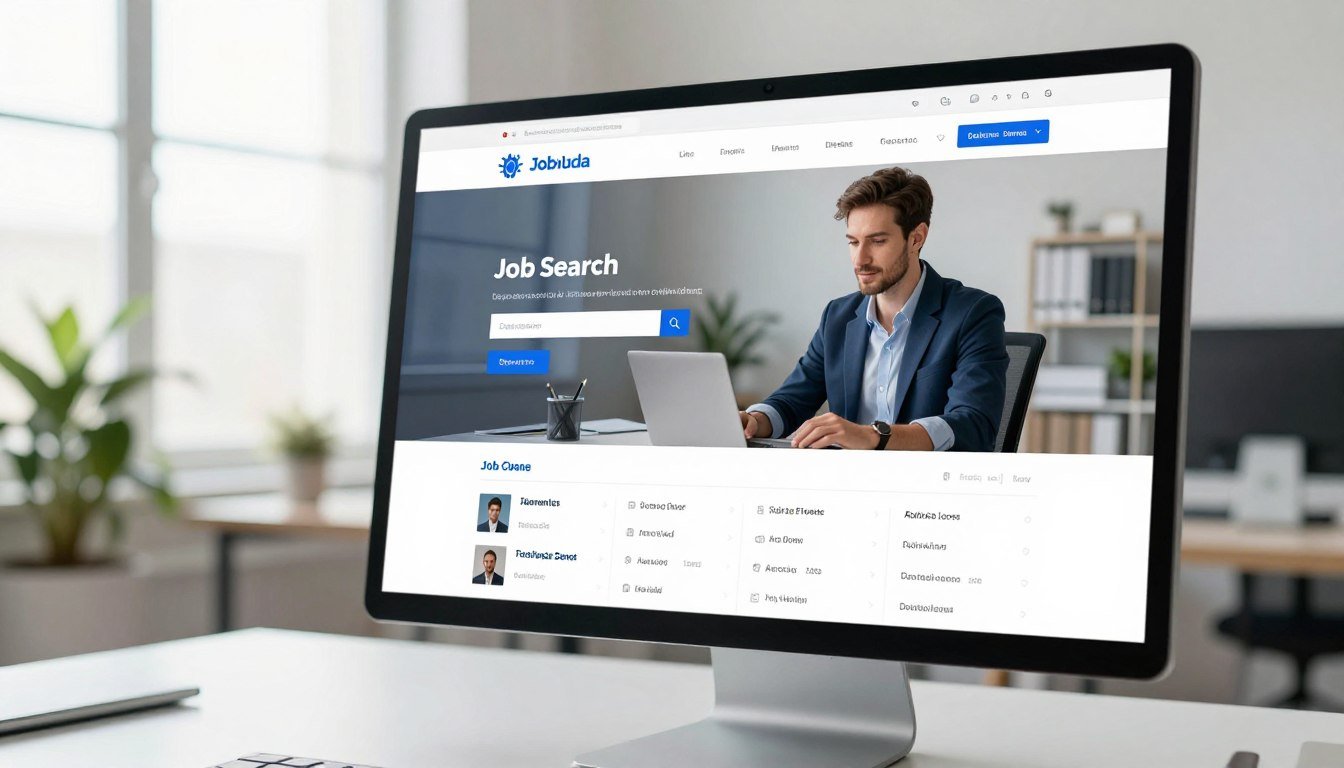
Are you tired of sending applications into a black hole? The job market today demands a smarter approach to your search.
Recent data shows slower growth and more competition. Job seekers now focus on long-term fit over quick wins. They want roles that match their skills and values.
This is where a powerful tool changes everything. ZipRecruiter connects applicants with real opportunities. It bridges the gap between talent and employers efficiently.
A recent survey found 91.4% of new hires are happy in their role. They found companies with the right culture and experience. This proves the value of smart matching technology.
Your career move deserves this strategic edge. Save time and meet your needs with the top choice in the United States.
Key Takeaways
- The current job market requires strategic searching for the best opportunities.
- Modern job seekers prioritize long-term cultural fit over short-term gains.
- AI-driven matching technology efficiently connects applicants with employers.
- Recent data shows extremely high satisfaction rates among new hires using smart platforms.
- Consolidated job databases save significant time in the application process.
- Focus on roles that align with both your skills and career values for better outcomes.
- ZipRecruiter gives you control over your job search journey and results.
Introduction: Navigating Today’s Cautious Job Market
Gone are the days of frequent job hopping; stability is the new currency for professionals. The post-pandemic hiring frenzy has cooled significantly.
Today’s job market is defined by caution from both employers and employees. This leads to slower hiring processes and more deliberate search efforts.
A major trend emerging from this climate is called “job hugging.” Workers are choosing to stay put in their current role due to economic uncertainty.
Recent survey data reveals 54.4% of new hires completely stop looking once they land a position. This is a sharp increase from just a year ago.
The priorities for job seekers have fundamentally shifted. Chasing the highest salary is no longer the sole goal.
Modern applicants now value cultural fit, workplace flexibility, and long-term security. They seek a career home, not just a paycheck.
This shift is reflected in application behavior. The median number of applications submitted has dropped.
Job seekers are applying more selectively, focusing on quality over quantity. This strategic approach is yielding results.
Nearly half of all new hires now find a role within one month. Furthermore, over half receive responses from companies within three days.
This shows that better alignment between talent and opportunities is happening faster. In this cautious environment, an efficient tool is not just helpful—it’s critical.
A platform designed for this new reality helps seekers find the right fit without wasting time. It connects you with roles that truly match your skills and needs.
This is where a modern employment marketplace makes all the difference. Let’s explore how such a platform is built for the market of today.
What is ZipRecruiter? A Modern Employment Marketplace
Finding meaningful employment requires more than just browsing online postings—it demands a strategic partner. This platform represents a fundamental shift from basic job boards to intelligent employment marketplaces.
It actively connects people with positions using advanced technology. The goal is to reduce friction for everyone involved in the hiring process.
From Kitchen Table to Public Company: A Brief History
ZipRecruiter began in 2010 around a kitchen table. Founders Ian Siegel, Joe Edmonds, Ward Poulos, and Will Redd saw a gap in how people found work.
They built a solution to make hiring simpler and faster. Headquartered in Santa Monica, California, the business grew rapidly.
By 2018, over 1.5 million businesses and 430 million job seekers had used the service. The platform expanded globally with offices in Tempe, Arizona, London, and Tel Aviv.
A major $156 million funding round in 2018 valued the firm at $1 billion. This investment fueled further innovation, including an AI matching algorithm developed that same year.
ZipRecruiter became publicly traded on the NYSE in 2021 under the ticker ZIP. This milestone marked its evolution from a startup to an established industry player.
Key partnerships, like the 2017 integration with Facebook, showed widespread adoption. ZipRecruiter became embedded in places where people already spent their time.
Transparency is part of its story. A 2018 data incident was resolved within 90 minutes, demonstrating responsive management.
This track record builds trust with users. It shows a commitment to security and continuous improvement.
Core Mission: Connecting Talent with Opportunity
The fundamental purpose is straightforward: efficiently link talent with the right opportunities. This contrasts sharply with passive job aggregators that simply collect listings.
Instead of making candidates search endlessly, the system pushes relevant jobs to them. This active approach saves precious time and mental energy.
For employers, it means reaching qualified applicants faster. The technology aims to shorten the often frustrating period between posting a role and filling it.
This creates a better experience on both sides of the transaction. Job seekers find positions that match their skills and desires.
Companies find employees who are genuinely interested and well-suited. The result is better long-term fit and reduced turnover.
The platform’s AI examines profiles, skills, and preferences. It then suggests openings that align with a person’s career goals and needs.
This intelligent matching is what defines a modern employment marketplace. It moves beyond being a simple database to becoming an active participant in the search.
Understanding this mission sets the stage for exploring the technology itself. Next, we’ll examine exactly how the matching engine works to benefit candidates.
How ZipRecruiter’s Matching Technology Works
What if your next career opportunity could find you instead of you searching for it? This is the fundamental shift powered by intelligent matching technology. The platform moves beyond simple job aggregation to become an active participant in your search.
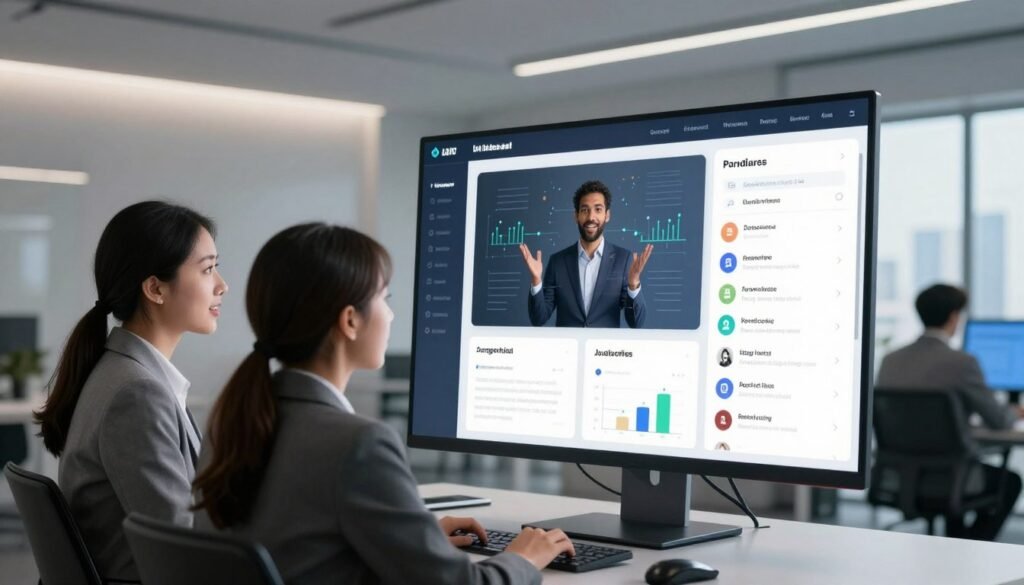
Traditional methods require checking multiple sites daily. This drains time and mental energy. The modern approach uses artificial intelligence to surface relevant positions automatically.
The AI Job-Matching Engine
The core of this system is an advanced algorithm developed in 2018. It was created at the company’s Israeli research and development center. This technology scans hundreds of job boards and employer career sites continuously.
Users begin by inputting their preferences. This includes location, keywords, and desired job titles. The AI then learns from these inputs and your interaction patterns.
Unlike basic aggregators, this engine actively learns what you want. It analyzes your skills, experience, and even implicit preferences. The goal is to predict which roles represent the best fit for your long-term goals.
The technology also helps parse Applicant Tracking System (ATS) keywords. This optimization improves your profile’s visibility to employers. It bridges the gap between how candidates describe themselves and what hiring software seeks.
Recent survey data shows this approach works. Nearly half of new hires found a position within one month using smart platforms. This efficiency gain proves the technology’s effectiveness in today’s cautious market.
Active Search vs. Passive Alerts: How You Get Notified
The platform offers a dual notification system to accommodate different search styles. You maintain control while the technology does the heavy lifting.
Active search lets you browse available listings manually. You can filter results by location, salary, company, and other criteria. This traditional approach is there when you want to take direct action.
Passive alerts represent the true innovation. The AI “searches for you automatically,” as the app description states. When it finds a strong match based on your profile, it sends you a notification.
This system surfaces opportunities you might otherwise miss. In a competitive job market, seeing roles quickly provides a real advantage. It increases your exposure to potential positions that align with your needs.
Some user reviews mention occasional off-target suggestions. The algorithm isn’t perfect, especially when preferences are broad. Refining your search criteria significantly improves match accuracy over time.
The design philosophy emphasizes reduced effort. As the platform states, “No pain, no gain has never been less true.” This technology handles the tedious parts of job hunting so you can focus on preparation and interviews.
This intelligent matching creates a better experience for everyone. Candidates find roles that match their skills and career aspirations. Employers connect with applicants who are genuinely interested and qualified.
The result is a more efficient hiring process with better long-term outcomes. This technology enables the specific features that make modern job searching faster and simpler.
Key Features for Job Seekers: Speed and Simplicity
Speed and simplicity now define successful employment searches in today’s competitive market. Modern platforms understand that your time is valuable and mental energy limited.
The right tool transforms a frustrating chore into an efficient process. It addresses the core needs of contemporary seekers who demand control over their career path.
One-Tap Apply: Reducing Friction in Applications
Traditional application methods create unnecessary barriers. Each role often requires a unique form, cover letter, and repetitive data entry.
This friction leads to application fatigue and burnout. The one-tap apply feature represents a fundamental shift in design philosophy.
With a single touch, your profile and resume are submitted to the employer. This drastic reduction in effort per application changes user behavior.
People apply to more relevant opportunities because the cost per attempt is minimal. This directly combats the exhaustion that halts many job searches.
The contrast with old methods is stark. Gone are the days of crafting customized letters for each position.
Consolidated Search Across Multiple Job Boards
Job hunting typically involves checking numerous websites daily. This fragmented approach wastes hours and creates confusion.
A consolidated search engine solves this problem elegantly. It aggregates listings from hundreds of job boards and company career sites.
You see everything in one clean interface instead of managing multiple browser tabs. This unified view provides a comprehensive picture of the market.
The technology continuously scans for new postings that match your criteria. You never miss a potential fit because it was hidden on an obscure board.
This efficiency explains recent survey trends. The median number of applications has dropped as searches become more targeted.
Mobile-First Design for Job Searching On the Go
Modern life happens on smartphones, and job searching should too. A mobile-optimized app provides crucial flexibility for busy professionals.
You can browse jobs during commute times, lunch breaks, or any spare moment. This accessibility is particularly valuable for employed candidates seeking discreet opportunities.
The interface is designed for thumb navigation and quick scanning. Notifications alert you to perfect matches as soon as they appear.
This constant connectivity puts you in charge of your search timeline. You’re no longer tethered to a desktop computer during business hours.
Mobile access supports today’s demand for work-life balance and personal agency. It turns dead time into productive career advancement moments.
User feedback highlights both strengths and areas for improvement. Many praise the “simple interface” that makes navigation intuitive.
Some reviews request a “not interested” option to further refine matching algorithms. Occasional technical bugs are noted, though rapid updates address most issues.
The platform’s 4.9-star rating across 457,000 reviews serves as powerful social proof. This consensus confirms its effectiveness for most users.
Privacy features include data encryption and straightforward deletion requests. These measures address security concerns in our digital age.
Together, these features create a streamlined experience that respects your cognitive resources. They reduce the mental load associated with finding new roles.
The outcome is a more sustainable and effective search process. This approach yields tangible results, as the next section’s data clearly demonstrates.
The Proof Is in the Data: ZipRecruiter’s 2025 New Hires Survey
Empirical research now confirms which strategies yield the best results for modern applicants. The Q3 2025 New Hires Survey provides concrete evidence of what works in today’s cautious employment landscape.
This comprehensive study tracks outcomes for thousands of successful placements. The findings reveal clear patterns in how people find satisfying work.
The data shows measurable improvements across key efficiency metrics. These results demonstrate the impact of intelligent matching technology on the entire hiring process.
Faster Searches and Quicker Responses: The Efficiency Gain
Speed defines successful job hunting in the current market. The survey reveals significant time savings for active seekers.
Nearly half (48.8%) of new hires secured a position within one month. This marks a substantial increase from the previous 40.5% rate.
Employer responsiveness has improved dramatically as well. Over 52% of candidates received a reply within three days of applying.
This acceleration suggests better alignment between talent and open roles. Intelligent platforms reduce the gap between application and response.
The efficiency gain translates directly to reduced stress. Candidates spend less time in uncertainty about their search status.
Moving Beyond the “Dream Job” to the Right Fit
The concept of a perfect job is evolving among today’s workforce. Survey data reveals a shift toward pragmatic satisfaction.
Only 38.7% of respondents reported landing their “dream job.” This represents a decrease from the previous 44.5% figure.
However, a remarkable 91.4% expressed happiness with their chosen role. This satisfaction rate increased from 88.7% in earlier surveys.
ZipRecruiter Economist Nicole Bachaud explains this trend clearly. “Today’s new hires are coming in ready to stay put,” she notes.
Bachaud continues, “Stability appears to be the winning strategy.” This reflects the broader culture of cautious optimism in the current market.
Applicants now prioritize realistic needs over fantasy scenarios. They seek roles that offer genuine benefits and growth potential.
The high satisfaction rate proves this practical approach works. People find jobs that truly match their skills and lifestyle needs.
The Decline of Mass Applications
The era of sending dozens of identical applications is ending. Survey data confirms a strategic shift in how people apply for jobs.
The median number of applications submitted dropped from 30 to 24. This 20% reduction represents a major change in job hunting behavior.
Modern tools help applicants target their efforts more precisely. Instead of scattering resumes, people focus on quality opportunities.
This targeted approach yields better results with less effort. It also protects mental health by reducing rejection exposure.
Intelligent platforms provide the control needed for strategic searching. Users can filter jobs by specific criteria that matter to their career.
The data clearly shows mass-applying becoming obsolete. Better tools enable smarter, more efficient application strategies.
These findings provide empirical validation for modern job search platforms. The technology delivers measurable improvements in speed, satisfaction, and efficiency.
This data-driven experience represents the new standard for finding work. It sets the stage for understanding what specific factors seekers value most in today’s landscape.
What Job Seekers Value Today: Insights from Real New Hires
Today’s workforce is making trade-offs that redefine traditional compensation priorities. The latest survey data reveals what truly matters to people accepting new roles.
This information comes directly from those who recently changed jobs. Their choices show a clear shift in workplace values across demographics.

Pay Matters, But It’s Not the Only Factor
Compensation remains the top reason for accepting a position, cited by 40.1% of switchers. However, a significant quarter of new hires actually accept lower pay.
The reasons for this choice reveal deeper priorities. Over half (52.8%) were unemployed and needed immediate work.
Another 32.1% wanted better schedule flexibility. A further 26.0% sought positions with lower stress levels.
Regional differences also appear in the data. Seekers in the West and South prioritize higher pay more often.
This likely reflects higher living costs in those areas. The contrast shows how local economics shape job decisions.
The Rising Trade-Off: Flexibility and Culture Over Salary
Modern applicants increasingly value intangible benefits. Workplace environment and schedule control now compete with dollar amounts.
Career expert Sam DeMase observes this trend clearly. “Workers are redefining their career expectations,” she notes.
DeMase continues, “They’re prioritizing flexibility and fit over traditional markers of success.” This represents a fundamental change in employment psychology.
The platform supports these modern priorities effectively. Listings highlight company culture and work arrangement details.
This helps candidates make informed decisions about potential roles. They can assess whether a job meets their lifestyle needs early in the process.
Gender Differences in Job Acceptance Priorities
The data reveals striking divergence between men and women. Women are 11.1 percentage points more likely to accept lower pay.
Specifically, 29.7% of women take pay cuts versus 18.6% of men. Their reasons highlight different valuation systems.
Women prioritize positive culture (24.0% vs. 13.6%), reduced stress (20.4% vs. 13.0%), and flexibility (34.6% vs. 27.7%). Men focus more on pay (56.2% vs. 50.6%), benefits (40.0% vs. 33.6%), and advancement (21.5% vs. 16.5%).
These different negotiation priorities may contribute to persistent earnings gaps. Each group optimizes for what they value most in employment.
A security paradox also emerges from the research. Men report landing more “dream jobs” (47.8% vs. 30.7%).
Yet they feel less secure in those positions (54.8% vs. 71.9%). This suggests different definitions of ideal work.
These insights help employers tailor their recruitment approaches. Understanding what diverse candidates value improves hiring outcomes.
Modern platforms address these complex trade-offs directly. They provide the tools help needed to navigate personal priorities.
This technology supports better mental health outcomes in the job search. People find roles that align with their complete lifestyle needs.
The next evolution involves artificial intelligence assisting with these decisions. Smart tools can help diverse applicants find their ideal balance.
How AI is Leveling the Playing Field for All Candidates
The democratization of job hunting arrives through intelligent algorithms that serve as equalizers across experience levels. Artificial intelligence now provides personalized support that adapts to individual backgrounds and career stages.
This technology particularly benefits two distinct groups facing unique challenges. First-time entrants and older workers re-entering the workforce gain crucial advantages from smart assistance.
The contrast in adoption rates reveals this transformative impact. Modern tools bridge traditional gaps in the hiring process.
AI as a Coach for First-Time Job Seekers
New entrants to the job market often lack practical experience with professional applications. Intelligent systems act as virtual coaches that demystify complex requirements.
Recent survey data shows 56.9% of first-time seekers found AI “very helpful.” Only 19.3% of experienced workers reported the same level of assistance.
This technology guides novices through ATS keyword optimization and proper resume formatting. It also provides interview preparation tips tailored to specific roles.
The platform’s matching algorithm helps applicants understand employer expectations. This reduces anxiety and improves mental health during the stressful search period.
Adoption continues into new positions. A remarkable 55.6% of first-time hires use AI daily or weekly in their roles.
This indicates that smart tools help build foundational skills for long-term career success. They provide ongoing support beyond the initial job placement.
AI as a Re-skilling Tool for Older Workers Re-entering the Workforce
Workers aged 65 and older demonstrate the highest engagement with learning technology. This group embraces AI as a bridge to contemporary workplace demands.
Data reveals 52.9% of these candidates use AI daily or weekly. This surpasses all other age groups, where usage falls at or below 20%.
The commitment to development is equally impressive. Exactly 50.7% of older workers learned a new skill specifically for their current role.
This rate compares favorably with younger cohorts in the workforce. It shows a proactive approach to remaining competitive in today’s market.
A clear contrast emerges with mid-career professionals. Only 39.2% of workers aged 35-44 and 24.4% of those 45-54 pursued similar upskilling.
This suggests some complacency among established employees. Meanwhile, older workers leverage technology to close experience gaps.
Career expert Sam DeMase observes this trend clearly. “AI levels the playing field by helping first-time job seekers gain experience and boosting older workers’ confidence,” she notes.
The platform’s mission extends beyond simple job matching. Its intelligent systems actively help candidates bridge both experience and skill divides.
This creates better long-term fit between talent and organizational needs. Employers gain access to motivated applicants committed to growth.
Workers maintain control over their professional development trajectory. They can pursue opportunities that align with evolving personal goals.
As you consider these advantages, practical questions about implementation may arise. The next section addresses common concerns to ensure you maximize this technology’s benefits.
Addressing Common Questions and Concerns
Before diving in, smart job seekers often have a few practical concerns. Getting clear answers builds confidence and helps you use any tool more effectively.
This section tackles frequent questions about how the platform works. We’ll cover profile tips, privacy, and how to get the best results from the matching technology.
Understanding Aggregator Limitations and Job Source Transparency
Some user reviews call the service “just an aggregator.” It’s true that it pulls jobs from many sources, including company sites and other boards.
You might sometimes click a listing and be redirected to an external site to apply. This is a common feature of comprehensive search platforms.
The contrast is clear. A single, aggregated view saves immense time versus visiting dozens of sites separately.
The benefits of seeing all opportunities in one place far outweigh this minor step. It gives you a complete picture of the market.
For the best experience, treat the platform as your discovery hub. Use it to find roles and then follow the application instructions provided.
Optimizing Your Profile for Better Match Accuracy
The AI matching engine is powerful, but it works best with clear signals from you. A detailed profile is your most important tool.
Use specific keywords related to your skills, titles, and industries. Think about terms employers and ATS systems would use.
Complete every section of your profile thoroughly. This includes your work history, education, and desired role details.
Refresh your search preferences regularly. As your career goals evolve, updating your profile ensures you see relevant jobs.
Some users have requested a “not interested” button to further train the algorithm. For now, providing specific feedback through support channels is the best way to shape your matches.
These steps give you more control and lead to higher-quality suggestions. Better matches reduce application fatigue and support your mental health during the search.
Privacy and Data Security on the Platform
Your personal information deserves careful handling. The app’s privacy policy explains what data is collected and how it’s used.
The service collects information like your location, resume files, and contact details. This data helps power the matching and alert systems.
This data is encrypted in transit. You also have the right to request deletion of your personal information.
Like many companies, the platform has faced security challenges. A 2018 incident exposed some email addresses and names.
That issue was resolved within 90 minutes. Security practices continually evolve to protect user data.
You can review your privacy options directly. Visit the CCPA opt-out page or the California Privacy Notice for more details.
If you encounter app issues, like an error saving contact info, try standard troubleshooting. Close and restart the app, or check for updates.
No platform is perfect, but the overall results speak volumes. A recent survey showed 91.4% of new hires were happy with their role.
This high satisfaction rate justifies working through minor inconveniences. The right tools help you find a position that is a great fit.
With these concerns addressed, you’re ready to start. Let’s walk through a simple, step-by-step guide to launch your search effectively.
Getting Started with ZipRecruiter: A Step-by-Step Guide
Ready to transform your career prospects? A clear roadmap eliminates guesswork and accelerates results. This practical guide walks you through the simple setup process.
Following these steps puts powerful tools to work for your job search. You gain control while the technology handles the heavy lifting.
The contrast with old methods is dramatic. What used to take hours now happens in minutes.
Step 1: Download the App or Visit the Site
Begin by accessing the platform on your preferred device. For the best experience, download the mobile app from the iOS or Android store.
The app was updated on December 15, 2025. This ensures you have the latest features and security improvements.
You can also visit the website directly from any computer browser. Both options give you full access to all opportunities.
The mobile-first design is ideal for searching on the go. You can browse jobs during spare moments throughout your day.
This flexibility is crucial for busy professionals. It turns waiting time into productive career advancement.
Step 2: Refine Your Search Preferences
Next, tell the system exactly what you’re looking for. Be specific about location, job titles, and relevant keywords.
Include your desired salary range and job type. Specify if you want remote, hybrid, or in-office roles.
Detailed preferences fuel the AI matching engine. The more precise your inputs, the better your alerts will be.
Think about terms employers use in their listings. This helps the system understand your ideal position.
Consider your long-term career goals too. The technology can surface roles that align with your growth path.
Step 3: Use Smart Tools to Manage Your Search
Now leverage the platform’s intelligent features. Set up passive alerts to receive notifications about new matches.
Use One-Tap Apply for quick submissions to interesting listings. Save promising jobs to review later when you have more time.
Track all your applications in one organized place. This gives you complete visibility into your search progress.
Check the app regularly for new suggestions. Refine your preferences based on the quality of matches you receive.
Enable push notifications to be among the first to know about relevant opportunities. Speed matters in today’s competitive market.
Commit just 15 minutes each day to review new matches. This small investment yields significant results thanks to automated searching.
Recent survey data proves this approach works. Following these steps helped 48.8% of new hires find a job within one month.
Take action now to capitalize on current market conditions. Your next career move begins with these simple steps.
Conclusion: Why ZipRecruiter is Your Top Choice for a Modern Job Search
The evidence is clear: modern job searching requires intelligent tools that work smarter, not harder. In today’s cautious market, strategic efficiency is paramount for candidates.
The 2025 survey proves this approach works. New hires found roles faster with higher satisfaction. This contrast with passive searching is dramatic.
Modern tools help you prioritize flexibility and culture over salary alone. They create better long-term fit for your career goals.
AI levels the field for all applicants. It reduces stress and supports your mental health during the search.
While no platform is perfect, the benefits are overwhelming. ZipRecruiter cuts time and uncertainty from your job hunt.
Take control today. Download the app and follow our guide to start your efficient search. Remember: 91.4% of new hires are happy in their role.
This platform is more than a tool—it’s your strategic partner for navigating today’s complex employment landscape.
FAQ
How does the matching technology work to find me the right job?
The platform uses a smart AI engine to analyze your profile and activity. It compares your skills and preferences against millions of open positions. You get personalized alerts for roles that fit your needs, saving you hours of manual searching.
Is it better to use the mobile app or the website for my search?
The service is designed for mobile-first use. The app offers full functionality, letting you search, apply, and manage alerts from anywhere. This on-the-go access is crucial in today’s fast-moving market where new opportunities appear daily.
What should I prioritize when choosing between multiple job offers?
Recent data from new hires shows a major shift. While pay is important, factors like workplace culture, schedule flexibility, and benefits are now top priorities for many. Consider the whole package, not just the salary, to find a role where you’ll thrive.
How can I make my profile stand out to employers?
Be detailed and specific. Clearly list your skills, experience, and career goals. The matching system uses this data to connect you with relevant employers. A complete profile increases your chances of being matched with the right open position.
I’m changing careers. Can this tool help me find a new role?
Yes. The AI technology can be a powerful resource for career changers. It helps identify transferable skills and matches them with suitable openings, acting as a guide for re-skilling and navigating a new industry.
How quickly can I expect to start getting interviews after applying?
Efficiency is a key benefit. The one-tap apply feature and smart matching mean your application reaches interested employers faster. Many users report quicker responses compared to traditional search methods, streamlining the entire hiring process.